James A O'Rourke, Stacey A Vincent, Isabel E I Williams, Eleanor L Gascoyne, Paul F Devlin
{"title":"Phytochrome-mediated shade avoidance responses impact the structure and composition of the bacterial phyllosphere microbiome of Arabidopsis.","authors":"James A O'Rourke, Stacey A Vincent, Isabel E I Williams, Eleanor L Gascoyne, Paul F Devlin","doi":"10.1186/s40793-025-00679-5","DOIUrl":null,"url":null,"abstract":"<p><p>The shade avoidance response triggers a dramatic promotion of elongation growth, accompanied by a significant reprogramming of metabolic pathways as plants seek to prevent overtopping and adapt to vegetative shade. Here we demonstrate that simulated vegetative shade results in significant changes in the structure and composition of the phyllosphere bacterial microbiome. Our study uncovered significant shifts in the diversity, occurrence, abundance and activity of bacteria within the phyllosphere microbiome. A comparison of responses in both wild-type plants and phytochrome mutants, which inherently exhibit a shade-avoidance phenotype, revealed both indirect responses to host plant physiology and direct responses to light among the microbiota. Hierarchical clustering of response patterns further suggested that over a third of the taxa constituting the core phyllosphere microbiome in our assay show some degree of response to vegetative shade. Bacteria that increased in abundance on plants with a shade-avoidance phenotype corresponded to genera associated with beneficial traits such as enhanced disease resistance and growth promotion. Our findings suggests that plants manipulate their phyllosphere microbiome under shade conditions as a strategy to optimise fitness when competing for light. We discuss the implications of our findings in terms of furthering our understanding of plant-microbe signalling in the shaping of the phyllosphere microbiome and the possibility of manipulating the phyllosphere microbiome for plant health in an agricultural setting at high planting densities.</p>","PeriodicalId":48553,"journal":{"name":"Environmental Microbiome","volume":"20 1","pages":"20"},"PeriodicalIF":5.4000,"publicationDate":"2025-02-06","publicationTypes":"Journal Article","fieldsOfStudy":null,"isOpenAccess":false,"openAccessPdf":"https://www.ncbi.nlm.nih.gov/pmc/articles/PMC11800596/pdf/","citationCount":"0","resultStr":null,"platform":"Semanticscholar","paperid":null,"PeriodicalName":"Environmental Microbiome","FirstCategoryId":"93","ListUrlMain":"https://doi.org/10.1186/s40793-025-00679-5","RegionNum":2,"RegionCategory":"环境科学与生态学","ArticlePicture":[],"TitleCN":null,"AbstractTextCN":null,"PMCID":null,"EPubDate":"","PubModel":"","JCR":"Q1","JCRName":"GENETICS & HEREDITY","Score":null,"Total":0}
引用次数: 0
Abstract
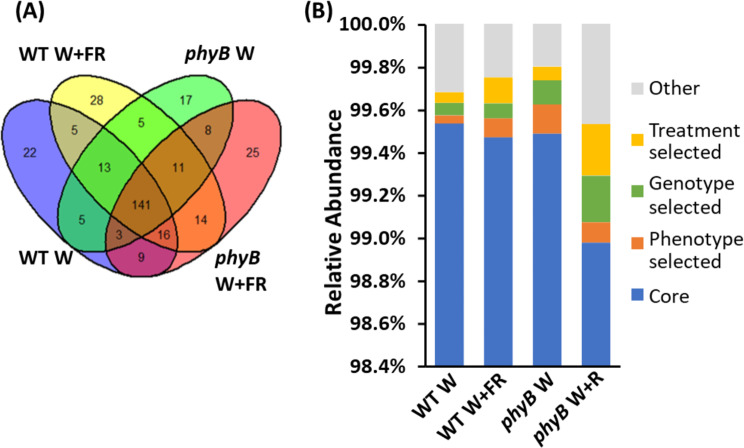
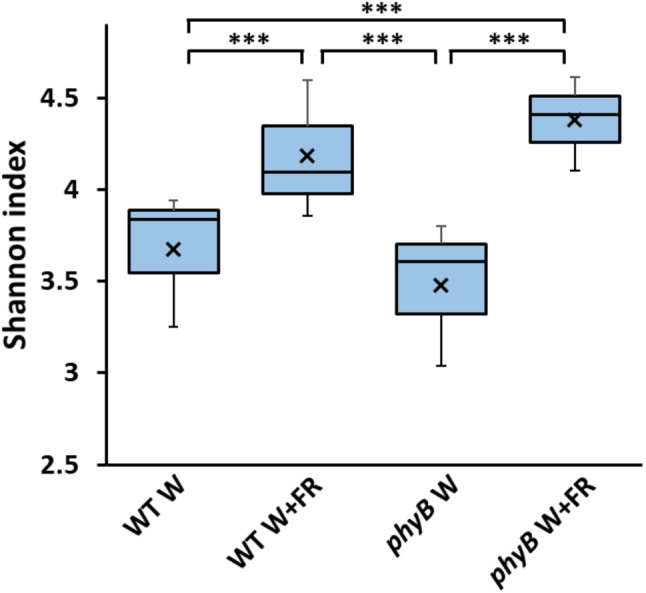
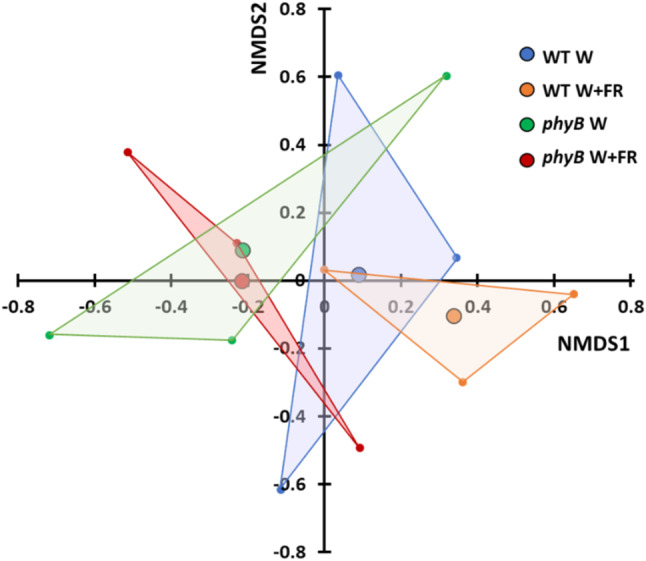
The shade avoidance response triggers a dramatic promotion of elongation growth, accompanied by a significant reprogramming of metabolic pathways as plants seek to prevent overtopping and adapt to vegetative shade. Here we demonstrate that simulated vegetative shade results in significant changes in the structure and composition of the phyllosphere bacterial microbiome. Our study uncovered significant shifts in the diversity, occurrence, abundance and activity of bacteria within the phyllosphere microbiome. A comparison of responses in both wild-type plants and phytochrome mutants, which inherently exhibit a shade-avoidance phenotype, revealed both indirect responses to host plant physiology and direct responses to light among the microbiota. Hierarchical clustering of response patterns further suggested that over a third of the taxa constituting the core phyllosphere microbiome in our assay show some degree of response to vegetative shade. Bacteria that increased in abundance on plants with a shade-avoidance phenotype corresponded to genera associated with beneficial traits such as enhanced disease resistance and growth promotion. Our findings suggests that plants manipulate their phyllosphere microbiome under shade conditions as a strategy to optimise fitness when competing for light. We discuss the implications of our findings in terms of furthering our understanding of plant-microbe signalling in the shaping of the phyllosphere microbiome and the possibility of manipulating the phyllosphere microbiome for plant health in an agricultural setting at high planting densities.
期刊介绍:
Microorganisms, omnipresent across Earth's diverse environments, play a crucial role in adapting to external changes, influencing Earth's systems and cycles, and contributing significantly to agricultural practices. Through applied microbiology, they offer solutions to various everyday needs. Environmental Microbiome recognizes the universal presence and significance of microorganisms, inviting submissions that explore the diverse facets of environmental and applied microbiological research.



 京公网安备 11010802042870号
京ICP备2023020795号-1
京公网安备 11010802042870号
京ICP备2023020795号-1

 分享
分享
 求助内容:
求助内容: 应助结果提醒方式:
 扫码关注我们
