{"title":"Dysbiosis and extraintestinal cancers.","authors":"Ruishan He, Pingqian Qi, Linzhen Shu, Yidan Ding, Peng Zeng, Guosheng Wen, Ying Xiong, Huan Deng","doi":"10.1186/s13046-025-03313-x","DOIUrl":null,"url":null,"abstract":"<p><p>The gut microbiota plays a crucial role in safeguarding host health and driving the progression of intestinal diseases. Despite recent advances in the remarkable correlation between dysbiosis and extraintestinal cancers, the underlying mechanisms are yet to be fully elucidated. Pathogenic microbiota, along with their metabolites, can undermine the integrity of the gut barrier through inflammatory or metabolic pathways, leading to increased permeability and the translocation of pathogens. The dissemination of pathogens through the circulation may contribute to the establishment of an immune-suppressive environment that promotes carcinogenesis in extraintestinal organs either directly or indirectly. The oncogenic cascade always engages in the disruption of hormonal regulation and inflammatory responses, the induction of genomic instability and mutations, and the dysregulation of adult stem cell proliferation. This review aims to comprehensively summarize the existing evidence that points to the potential role of dysbiosis in the malignant transformation of extraintestinal organs such as the liver, breast, lung, and pancreas. Additionally, we delve into the limitations inherent in current methodologies, particularly the challenges associated with differentiating low loads gut-derived microbiome within tumors from potential sample contamination or symbiotic microorganisms. Although still controversial, an understanding of the contribution of translocated intestinal microbiota and their metabolites to the pathological continuum from chronic inflammation to tumors could offer a novel foundation for the development of targeted therapeutics.</p>","PeriodicalId":50199,"journal":{"name":"Journal of Experimental & Clinical Cancer Research","volume":"44 1","pages":"44"},"PeriodicalIF":12.8000,"publicationDate":"2025-02-07","publicationTypes":"Journal Article","fieldsOfStudy":null,"isOpenAccess":false,"openAccessPdf":"https://www.ncbi.nlm.nih.gov/pmc/articles/PMC11804008/pdf/","citationCount":"0","resultStr":null,"platform":"Semanticscholar","paperid":null,"PeriodicalName":"Journal of Experimental & Clinical Cancer Research","FirstCategoryId":"3","ListUrlMain":"https://doi.org/10.1186/s13046-025-03313-x","RegionNum":1,"RegionCategory":"医学","ArticlePicture":[],"TitleCN":null,"AbstractTextCN":null,"PMCID":null,"EPubDate":"","PubModel":"","JCR":"Q1","JCRName":"ONCOLOGY","Score":null,"Total":0}
引用次数: 0
Abstract
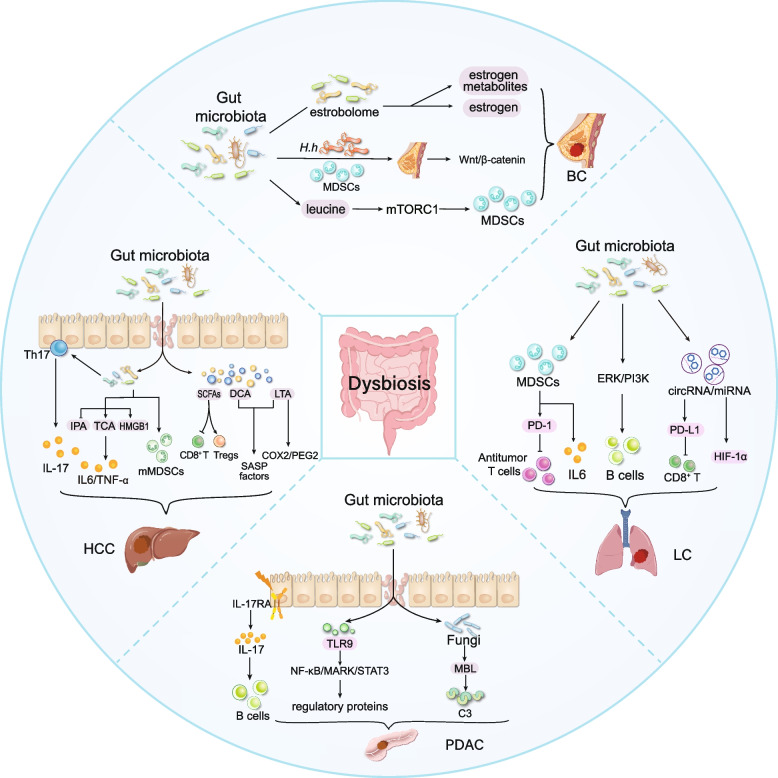
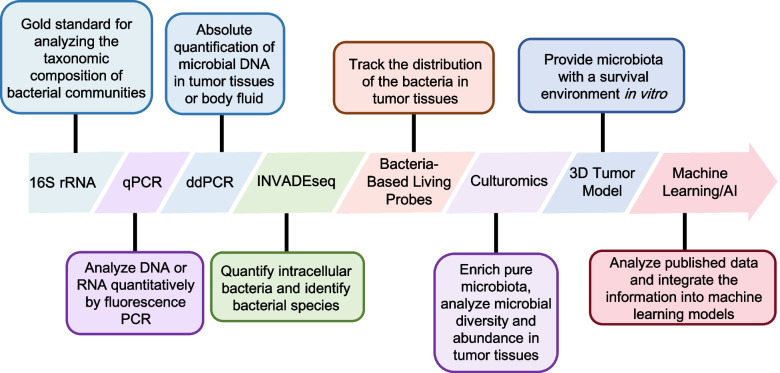
The gut microbiota plays a crucial role in safeguarding host health and driving the progression of intestinal diseases. Despite recent advances in the remarkable correlation between dysbiosis and extraintestinal cancers, the underlying mechanisms are yet to be fully elucidated. Pathogenic microbiota, along with their metabolites, can undermine the integrity of the gut barrier through inflammatory or metabolic pathways, leading to increased permeability and the translocation of pathogens. The dissemination of pathogens through the circulation may contribute to the establishment of an immune-suppressive environment that promotes carcinogenesis in extraintestinal organs either directly or indirectly. The oncogenic cascade always engages in the disruption of hormonal regulation and inflammatory responses, the induction of genomic instability and mutations, and the dysregulation of adult stem cell proliferation. This review aims to comprehensively summarize the existing evidence that points to the potential role of dysbiosis in the malignant transformation of extraintestinal organs such as the liver, breast, lung, and pancreas. Additionally, we delve into the limitations inherent in current methodologies, particularly the challenges associated with differentiating low loads gut-derived microbiome within tumors from potential sample contamination or symbiotic microorganisms. Although still controversial, an understanding of the contribution of translocated intestinal microbiota and their metabolites to the pathological continuum from chronic inflammation to tumors could offer a novel foundation for the development of targeted therapeutics.
期刊介绍:
The Journal of Experimental & Clinical Cancer Research is an esteemed peer-reviewed publication that focuses on cancer research, encompassing everything from fundamental discoveries to practical applications.
We welcome submissions that showcase groundbreaking advancements in the field of cancer research, especially those that bridge the gap between laboratory findings and clinical implementation. Our goal is to foster a deeper understanding of cancer, improve prevention and detection strategies, facilitate accurate diagnosis, and enhance treatment options.
We are particularly interested in manuscripts that shed light on the mechanisms behind the development and progression of cancer, including metastasis. Additionally, we encourage submissions that explore molecular alterations or biomarkers that can help predict the efficacy of different treatments or identify drug resistance. Translational research related to targeted therapies, personalized medicine, tumor immunotherapy, and innovative approaches applicable to clinical investigations are also of great interest to us.
We provide a platform for the dissemination of large-scale molecular characterizations of human tumors and encourage researchers to share their insights, discoveries, and methodologies with the wider scientific community.
By publishing high-quality research articles, reviews, and commentaries, the Journal of Experimental & Clinical Cancer Research strives to contribute to the continuous improvement of cancer care and make a meaningful impact on patients' lives.




 京公网安备 11010802042870号
京ICP备2023020795号-1
京公网安备 11010802042870号
京ICP备2023020795号-1

 分享
分享
 求助内容:
求助内容: 应助结果提醒方式:
 扫码关注我们
