{"title":"MAYA (Multiple ActivitY Analyzer): An Open Access Tool to Explore Structure-Multiple Activity Relationships in the Chemical Universe.","authors":"J Israel Espinoza-Castañeda, José L Medina-Franco","doi":"10.1002/minf.202400306","DOIUrl":null,"url":null,"abstract":"<p><p>Herein, we introduce MAYA (Multiple Activity Analyzer), a tool designed to automatically construct a chemical multiverse, generating multiple visualizations of chemical spaces of a compound data set described by structural descriptors of different nature such as Molecular ACCess Systems (MACCS) keys, extended connectivity fingerprints with different radius, molecular descriptors with pharmaceutical relevance, and bioactivity descriptors. These representations are integrated with various data visualization techniques for the automated analysis focused on structure - multiple activity/property relationships, enabling analysis for various problems set in user-friendly source software. The source code of MAYA is freely available on GitHub at https://github.com/IsrC11/MAYA.git.</p>","PeriodicalId":18853,"journal":{"name":"Molecular Informatics","volume":"44 2","pages":"e202400306"},"PeriodicalIF":3.1000,"publicationDate":"2025-02-01","publicationTypes":"Journal Article","fieldsOfStudy":null,"isOpenAccess":false,"openAccessPdf":"https://www.ncbi.nlm.nih.gov/pmc/articles/PMC11812492/pdf/","citationCount":"0","resultStr":null,"platform":"Semanticscholar","paperid":null,"PeriodicalName":"Molecular Informatics","FirstCategoryId":"3","ListUrlMain":"https://doi.org/10.1002/minf.202400306","RegionNum":4,"RegionCategory":"医学","ArticlePicture":[],"TitleCN":null,"AbstractTextCN":null,"PMCID":null,"EPubDate":"","PubModel":"","JCR":"Q3","JCRName":"CHEMISTRY, MEDICINAL","Score":null,"Total":0}
引用次数: 0
Abstract
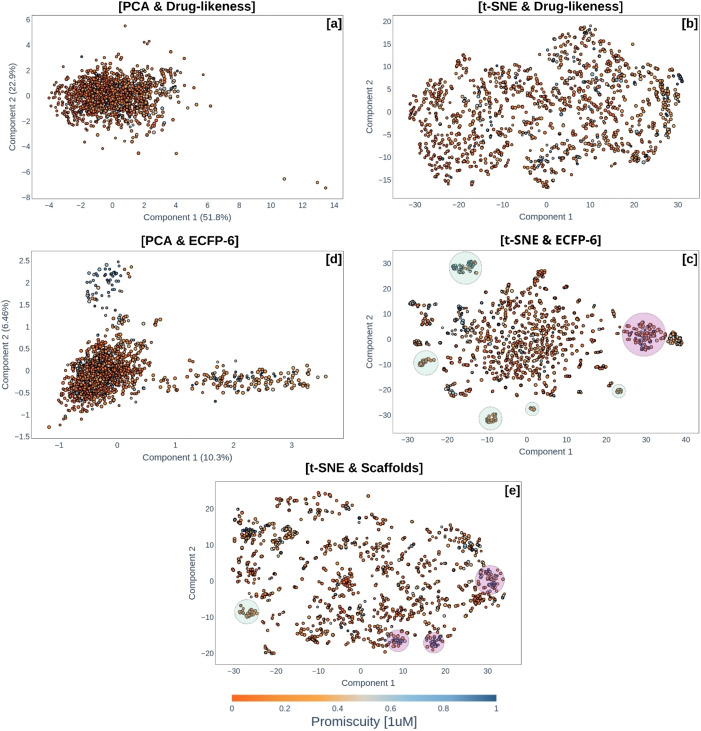
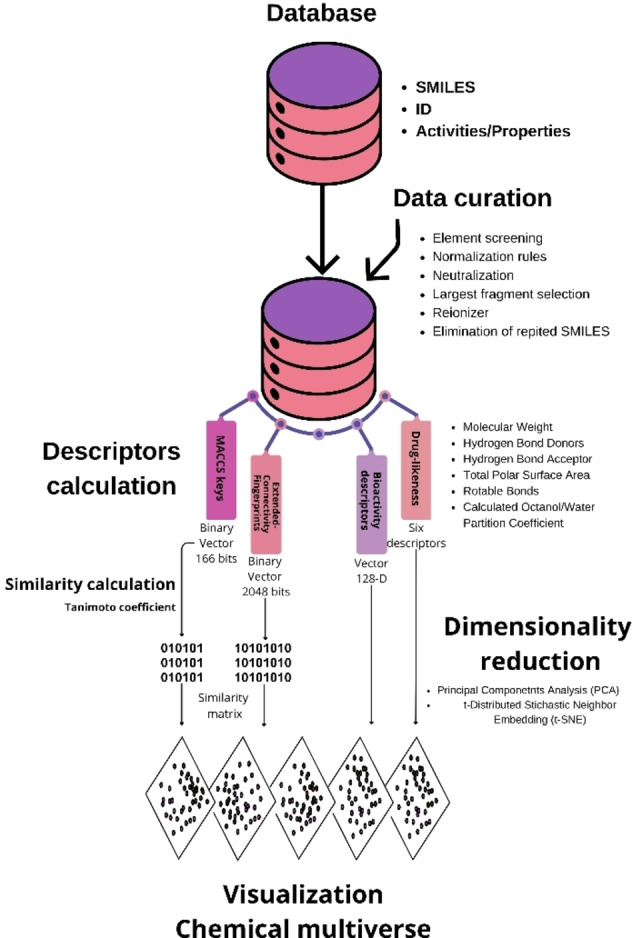
Herein, we introduce MAYA (Multiple Activity Analyzer), a tool designed to automatically construct a chemical multiverse, generating multiple visualizations of chemical spaces of a compound data set described by structural descriptors of different nature such as Molecular ACCess Systems (MACCS) keys, extended connectivity fingerprints with different radius, molecular descriptors with pharmaceutical relevance, and bioactivity descriptors. These representations are integrated with various data visualization techniques for the automated analysis focused on structure - multiple activity/property relationships, enabling analysis for various problems set in user-friendly source software. The source code of MAYA is freely available on GitHub at https://github.com/IsrC11/MAYA.git.
期刊介绍:
Molecular Informatics is a peer-reviewed, international forum for publication of high-quality, interdisciplinary research on all molecular aspects of bio/cheminformatics and computer-assisted molecular design. Molecular Informatics succeeded QSAR & Combinatorial Science in 2010.
Molecular Informatics presents methodological innovations that will lead to a deeper understanding of ligand-receptor interactions, macromolecular complexes, molecular networks, design concepts and processes that demonstrate how ideas and design concepts lead to molecules with a desired structure or function, preferably including experimental validation.
The journal''s scope includes but is not limited to the fields of drug discovery and chemical biology, protein and nucleic acid engineering and design, the design of nanomolecular structures, strategies for modeling of macromolecular assemblies, molecular networks and systems, pharmaco- and chemogenomics, computer-assisted screening strategies, as well as novel technologies for the de novo design of biologically active molecules. As a unique feature Molecular Informatics publishes so-called "Methods Corner" review-type articles which feature important technological concepts and advances within the scope of the journal.




 京公网安备 11010802042870号
京ICP备2023020795号-1
京公网安备 11010802042870号
京ICP备2023020795号-1

 分享
分享
 求助内容:
求助内容: 应助结果提醒方式:
 扫码关注我们
