DNA ploidy combined with tumor stroma as a biomarker for predicting the prognosis of stage II colorectal cancer patients and identifying candidates for chemotherapy.
{"title":"DNA ploidy combined with tumor stroma as a biomarker for predicting the prognosis of stage II colorectal cancer patients and identifying candidates for chemotherapy.","authors":"Yunshan Zhao, Shaoyou Xia, Xudong Zhao, Zhigang Song, Fei Wang, Lijun Mao, Zufeng He, Xiaohui Du","doi":"10.1186/s12957-025-03693-6","DOIUrl":null,"url":null,"abstract":"<p><strong>Purpose: </strong>The efficacy of postoperative adjuvant chemotherapy in patients with stage II colorectal cancer has been a subject of debate. This study aimed to evaluate the prognostic and predictive significance of DNA ploidy and stroma ratio in patients diagnosed with stage II colorectal cancer (CRC).</p><p><strong>Methods: </strong>Clinical data and tumor tissues from 179 patients with stage II CRC were collected retrospectively. DNA ploidy (P) and stroma (S) were assessed using automatic image analysis tools powered by machine learning.</p><p><strong>Results: </strong>Patients were categorized into three risk groups: PS-low (diploid and low stroma, PS-L), PS-intermediate (non-diploid or high stroma, PS-M), and PS-high (non-diploid and high-stroma, PS-H). According to the univariable model, the PS-H group exhibited significantly poorer 5-year overall survival rates at 73.0% compared to 87.8%, with a hazard ratio (HR) of 2.281 (95% CI: 0.946-5.502, P = 0.066), as well as lower 5-year disease-free survival rates at 69.4% versus 86.6%, HR = 2.323 (95% CI: 1.016-5.308, P = 0.046) among stage II colorectal cancer patients. Notably, chemotherapy was associated with improved overall survival [HR = 83.460 (95% CI: 0.179-38925.833), P = 0.003] and disease-free survival [HR = 8.628 (95% CI: 1.059-70.265), P = 0 .044] in individuals within the PS-high group.</p><p><strong>Conclusion: </strong>While ploidy and stroma alone do not possess predictive power regarding survival outcomes for stage II colorectal cancer patients, those receiving chemotherapy within the PS-H group demonstrated enhanced survival rates. Therefore, combining assessments of ploidy and stroma may serve as an adjunctive tool in clinical decision-making processes to guide chemotherapy treatment strategies for patients diagnosed with stage II colorectal cancer.</p>","PeriodicalId":23856,"journal":{"name":"World Journal of Surgical Oncology","volume":"23 1","pages":"49"},"PeriodicalIF":2.5000,"publicationDate":"2025-02-13","publicationTypes":"Journal Article","fieldsOfStudy":null,"isOpenAccess":false,"openAccessPdf":"https://www.ncbi.nlm.nih.gov/pmc/articles/PMC11823223/pdf/","citationCount":"0","resultStr":null,"platform":"Semanticscholar","paperid":null,"PeriodicalName":"World Journal of Surgical Oncology","FirstCategoryId":"3","ListUrlMain":"https://doi.org/10.1186/s12957-025-03693-6","RegionNum":3,"RegionCategory":"医学","ArticlePicture":[],"TitleCN":null,"AbstractTextCN":null,"PMCID":null,"EPubDate":"","PubModel":"","JCR":"Q3","JCRName":"ONCOLOGY","Score":null,"Total":0}
引用次数: 0
Abstract
Purpose: The efficacy of postoperative adjuvant chemotherapy in patients with stage II colorectal cancer has been a subject of debate. This study aimed to evaluate the prognostic and predictive significance of DNA ploidy and stroma ratio in patients diagnosed with stage II colorectal cancer (CRC).
Methods: Clinical data and tumor tissues from 179 patients with stage II CRC were collected retrospectively. DNA ploidy (P) and stroma (S) were assessed using automatic image analysis tools powered by machine learning.
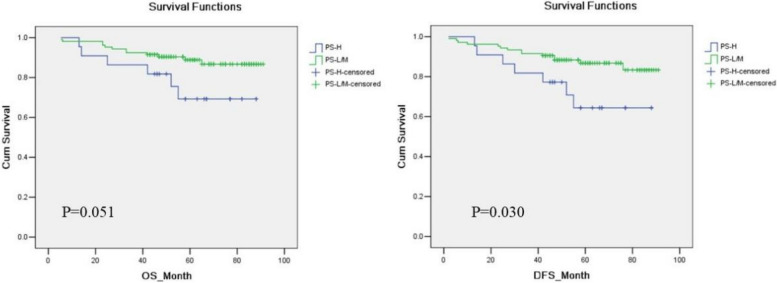
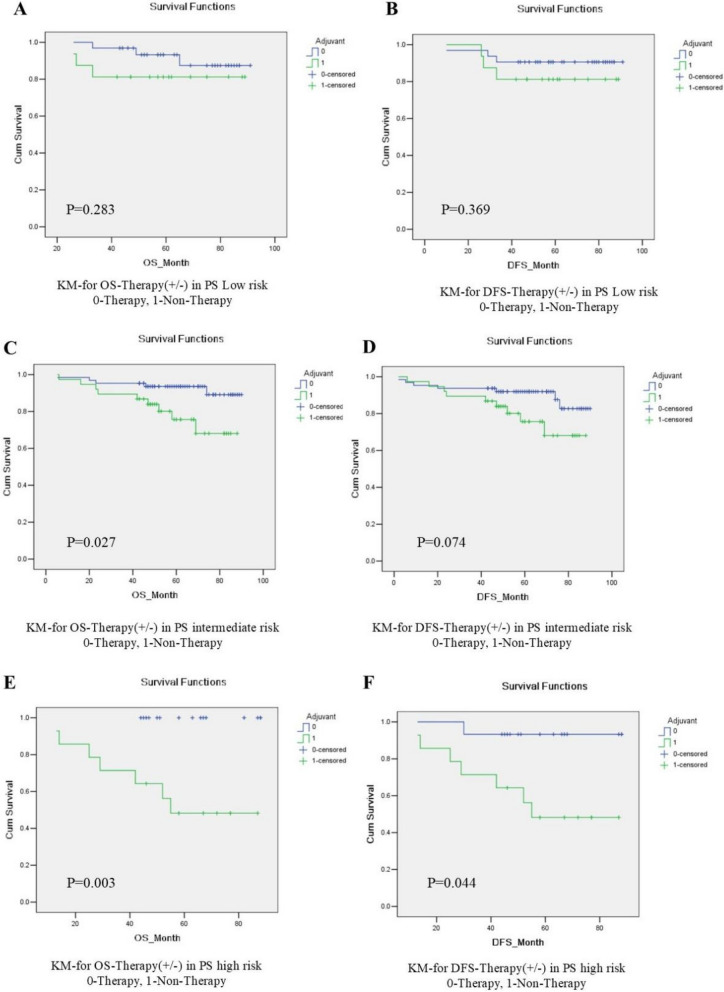
Results: Patients were categorized into three risk groups: PS-low (diploid and low stroma, PS-L), PS-intermediate (non-diploid or high stroma, PS-M), and PS-high (non-diploid and high-stroma, PS-H). According to the univariable model, the PS-H group exhibited significantly poorer 5-year overall survival rates at 73.0% compared to 87.8%, with a hazard ratio (HR) of 2.281 (95% CI: 0.946-5.502, P = 0.066), as well as lower 5-year disease-free survival rates at 69.4% versus 86.6%, HR = 2.323 (95% CI: 1.016-5.308, P = 0.046) among stage II colorectal cancer patients. Notably, chemotherapy was associated with improved overall survival [HR = 83.460 (95% CI: 0.179-38925.833), P = 0.003] and disease-free survival [HR = 8.628 (95% CI: 1.059-70.265), P = 0 .044] in individuals within the PS-high group.
Conclusion: While ploidy and stroma alone do not possess predictive power regarding survival outcomes for stage II colorectal cancer patients, those receiving chemotherapy within the PS-H group demonstrated enhanced survival rates. Therefore, combining assessments of ploidy and stroma may serve as an adjunctive tool in clinical decision-making processes to guide chemotherapy treatment strategies for patients diagnosed with stage II colorectal cancer.
期刊介绍:
World Journal of Surgical Oncology publishes articles related to surgical oncology and its allied subjects, such as epidemiology, cancer research, biomarkers, prevention, pathology, radiology, cancer treatment, clinical trials, multimodality treatment and molecular biology. Emphasis is placed on original research articles. The journal also publishes significant clinical case reports, as well as balanced and timely reviews on selected topics.
Oncology is a multidisciplinary super-speciality of which surgical oncology forms an integral component, especially with solid tumors. Surgical oncologists around the world are involved in research extending from detecting the mechanisms underlying the causation of cancer, to its treatment and prevention. The role of a surgical oncologist extends across the whole continuum of care. With continued developments in diagnosis and treatment, the role of a surgical oncologist is ever-changing. Hence, World Journal of Surgical Oncology aims to keep readers abreast with latest developments that will ultimately influence the work of surgical oncologists.




 京公网安备 11010802042870号
京ICP备2023020795号-1
京公网安备 11010802042870号
京ICP备2023020795号-1

 分享
分享
 求助内容:
求助内容: 应助结果提醒方式:
 扫码关注我们
