{"title":"The impact of integrating medical oxygen indicators into DHIS-2 on the reporting of hypoxaemia diagnosis and management: the case of Cameroon.","authors":"Yauba Saidu, Clarence Mbanga, Ngassa Andinwoh, Andreas Frambo, Ousmane Diaby, Rogers Ajeh, Audrey Battu, Zakary Katz","doi":"10.7189/jogh.15.04088","DOIUrl":null,"url":null,"abstract":"<p><strong>Background: </strong>Between 2021 and 2023, the Cameroon Ministry of Public Health, with support from the Clinton Health Access Initiative (CHAI), made considerable investments in establishing a reliable medical oxygen system in Cameroon. To monitor the impact of said investments, medical oxygen indicators were identified and integrated into the country's health information management system. This integration aimed to enhance the collection, reporting, and analysis of medical oxygen data, ultimately improving decision-making regarding oxygen needs, procurement volumes, and patient referrals based on real-time data on the availability of oxygen supplies. Here we outline the integration approach and assess its impact on medical oxygen reporting one year post-investment.</p><p><strong>Methods: </strong>We adopted an iterative, consultative approach involving multiple meetings and workshops with all key stakeholders to define medical oxygen indicators and their technical specifications, develop the necessary data collection forms and guides, pre-test the defined indicators, review and validate them, and finally integrate them into the District Health Information System 2 (DHIS-2). Following integration, we rolled out the indicators within DHIS-2 nationwide using a two-step process, beginning with cascaded training of regional- and district-level data managers on the reporting of medical oxygen indicators into DHIS-2, and followed by supervision and mentoring. We assessed the impact of this rollout by comparing reporting rates on medical oxygen use before and after the integration and training process.</p><p><strong>Results: </strong>We validated 15 indicators and integrated them into the DHIS-2, and we trained 218 regional- and district-level data managers from eight of the country's ten regions on leveraging the defined indicators to capture data on medical oxygen use and hypoxaemia management at the facility and input it into the system. We observed a 23% absolute increase in the completeness of medical oxygen reports, with rates rising from 3% in December 2022 (pre-intervention) to 26.2% in December 2023 (one year post-intervention). We also noted a considerable increase in the reporting of case management, with, for instance, the number of newborns diagnosed with hypoxaemia rising from zero pre-integration and training to 213 by March 2024.</p><p><strong>Conclusions: </strong>Integration of medical oxygen indicators into DHIS-2, along with staff training, improved reporting rates for medical oxygen use and hypoxaemia management. Continuous support and infrastructure upgrades are needed to sustain investment.</p>","PeriodicalId":48734,"journal":{"name":"Journal of Global Health","volume":"15 ","pages":"04088"},"PeriodicalIF":4.3000,"publicationDate":"2025-02-14","publicationTypes":"Journal Article","fieldsOfStudy":null,"isOpenAccess":false,"openAccessPdf":"https://www.ncbi.nlm.nih.gov/pmc/articles/PMC11825121/pdf/","citationCount":"0","resultStr":null,"platform":"Semanticscholar","paperid":null,"PeriodicalName":"Journal of Global Health","FirstCategoryId":"3","ListUrlMain":"https://doi.org/10.7189/jogh.15.04088","RegionNum":3,"RegionCategory":"医学","ArticlePicture":[],"TitleCN":null,"AbstractTextCN":null,"PMCID":null,"EPubDate":"","PubModel":"","JCR":"Q1","JCRName":"PUBLIC, ENVIRONMENTAL & OCCUPATIONAL HEALTH","Score":null,"Total":0}
引用次数: 0
Abstract
Background: Between 2021 and 2023, the Cameroon Ministry of Public Health, with support from the Clinton Health Access Initiative (CHAI), made considerable investments in establishing a reliable medical oxygen system in Cameroon. To monitor the impact of said investments, medical oxygen indicators were identified and integrated into the country's health information management system. This integration aimed to enhance the collection, reporting, and analysis of medical oxygen data, ultimately improving decision-making regarding oxygen needs, procurement volumes, and patient referrals based on real-time data on the availability of oxygen supplies. Here we outline the integration approach and assess its impact on medical oxygen reporting one year post-investment.
Methods: We adopted an iterative, consultative approach involving multiple meetings and workshops with all key stakeholders to define medical oxygen indicators and their technical specifications, develop the necessary data collection forms and guides, pre-test the defined indicators, review and validate them, and finally integrate them into the District Health Information System 2 (DHIS-2). Following integration, we rolled out the indicators within DHIS-2 nationwide using a two-step process, beginning with cascaded training of regional- and district-level data managers on the reporting of medical oxygen indicators into DHIS-2, and followed by supervision and mentoring. We assessed the impact of this rollout by comparing reporting rates on medical oxygen use before and after the integration and training process.
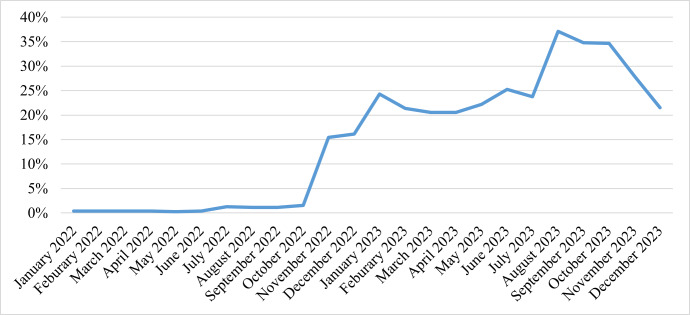
Results: We validated 15 indicators and integrated them into the DHIS-2, and we trained 218 regional- and district-level data managers from eight of the country's ten regions on leveraging the defined indicators to capture data on medical oxygen use and hypoxaemia management at the facility and input it into the system. We observed a 23% absolute increase in the completeness of medical oxygen reports, with rates rising from 3% in December 2022 (pre-intervention) to 26.2% in December 2023 (one year post-intervention). We also noted a considerable increase in the reporting of case management, with, for instance, the number of newborns diagnosed with hypoxaemia rising from zero pre-integration and training to 213 by March 2024.
Conclusions: Integration of medical oxygen indicators into DHIS-2, along with staff training, improved reporting rates for medical oxygen use and hypoxaemia management. Continuous support and infrastructure upgrades are needed to sustain investment.
期刊介绍:
Journal of Global Health is a peer-reviewed journal published by the Edinburgh University Global Health Society, a not-for-profit organization registered in the UK. We publish editorials, news, viewpoints, original research and review articles in two issues per year.





 京公网安备 11010802042870号
京ICP备2023020795号-1
京公网安备 11010802042870号
京ICP备2023020795号-1

 分享
分享
 求助内容:
求助内容: 应助结果提醒方式:
 扫码关注我们
