Mercedes Martinez-Gil, Monica Rodriguez, Jeremy Hughes, Savitha B Kalya, Kevin C J Yuen
{"title":"A Rare Case of Microscopic Polyangitis With Associated Transient Hypophysitis.","authors":"Mercedes Martinez-Gil, Monica Rodriguez, Jeremy Hughes, Savitha B Kalya, Kevin C J Yuen","doi":"10.1210/jcemcr/luaf010","DOIUrl":null,"url":null,"abstract":"<p><p>Granulomatosis with polyangiitis (GPA) and microscopic polyangiitis (MPA) are rare forms of antineutrophil cytoplasmic antibody-associated vasculitides, characterized by systemic inflammation and necrosis of small blood vessels, which can lead to multiorgan damage. GPA is identified by the presence of granulomas and serine proteinase-3 positivity, while MPA is marked by necrotizing vasculitis without granulomas and is associated with myeloperoxidase (MPO) positivity. Central nervous system involvement is more frequent in GPA, affecting 7% to 10% of patients, compared to its occurrence in approximately 1% of MPA cases. In this case report, we present a 41-year-old woman who exhibited symptoms of pituitary mass effect, initially suspected to be a macroadenoma. Further investigation revealed pituitary enlargement due to MPA, confirmed by positive MPO antibodies and lung biopsy findings consistent with MPA. After treatment with prednisone and rituximab, the patient's pituitary gland returned to its normal size, with significant improvement in her symptoms. This case highlights the diagnostic complexities in differentiating MPA from more common causes of pituitary enlargement and underscores the necessity of considering vasculitic origins in similar clinical scenarios. Further research is essential to deepen the understanding of the pathophysiology and to optimize the management of pituitary involvement in MPA.</p>","PeriodicalId":73540,"journal":{"name":"JCEM case reports","volume":"3 3","pages":"luaf010"},"PeriodicalIF":0.0000,"publicationDate":"2025-02-13","publicationTypes":"Journal Article","fieldsOfStudy":null,"isOpenAccess":false,"openAccessPdf":"https://www.ncbi.nlm.nih.gov/pmc/articles/PMC11822851/pdf/","citationCount":"0","resultStr":null,"platform":"Semanticscholar","paperid":null,"PeriodicalName":"JCEM case reports","FirstCategoryId":"1085","ListUrlMain":"https://doi.org/10.1210/jcemcr/luaf010","RegionNum":0,"RegionCategory":null,"ArticlePicture":[],"TitleCN":null,"AbstractTextCN":null,"PMCID":null,"EPubDate":"2025/3/1 0:00:00","PubModel":"eCollection","JCR":"","JCRName":"","Score":null,"Total":0}
引用次数: 0
Abstract
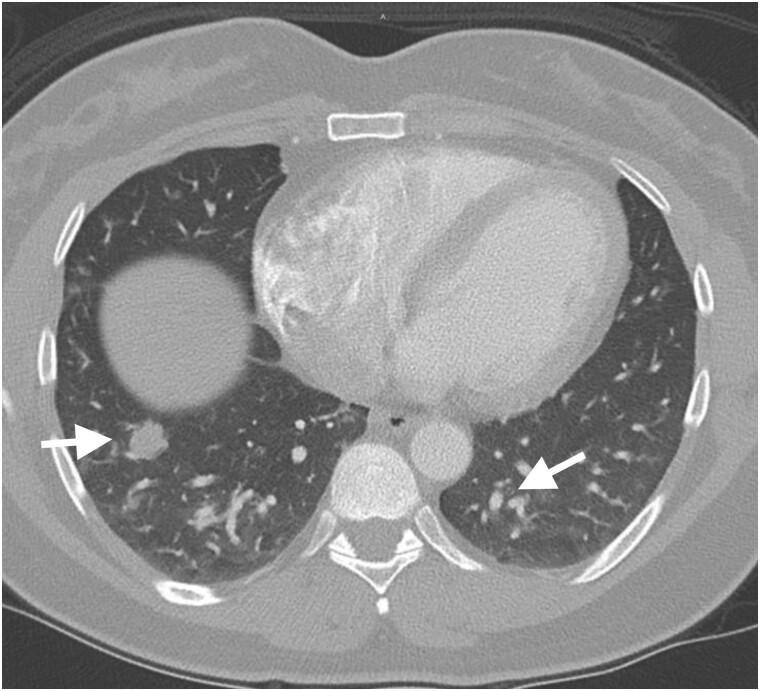
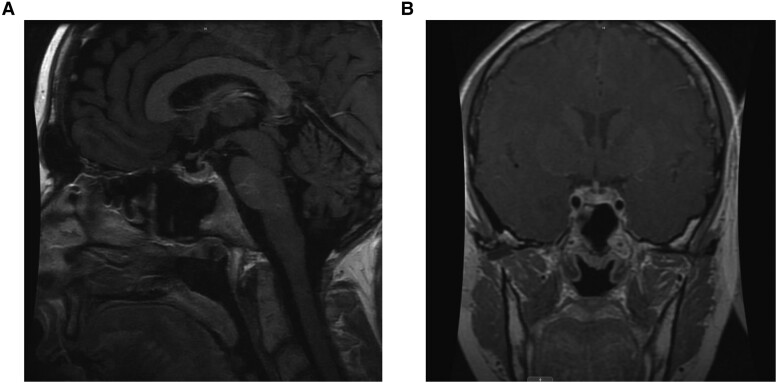
Granulomatosis with polyangiitis (GPA) and microscopic polyangiitis (MPA) are rare forms of antineutrophil cytoplasmic antibody-associated vasculitides, characterized by systemic inflammation and necrosis of small blood vessels, which can lead to multiorgan damage. GPA is identified by the presence of granulomas and serine proteinase-3 positivity, while MPA is marked by necrotizing vasculitis without granulomas and is associated with myeloperoxidase (MPO) positivity. Central nervous system involvement is more frequent in GPA, affecting 7% to 10% of patients, compared to its occurrence in approximately 1% of MPA cases. In this case report, we present a 41-year-old woman who exhibited symptoms of pituitary mass effect, initially suspected to be a macroadenoma. Further investigation revealed pituitary enlargement due to MPA, confirmed by positive MPO antibodies and lung biopsy findings consistent with MPA. After treatment with prednisone and rituximab, the patient's pituitary gland returned to its normal size, with significant improvement in her symptoms. This case highlights the diagnostic complexities in differentiating MPA from more common causes of pituitary enlargement and underscores the necessity of considering vasculitic origins in similar clinical scenarios. Further research is essential to deepen the understanding of the pathophysiology and to optimize the management of pituitary involvement in MPA.




 京公网安备 11010802042870号
京ICP备2023020795号-1
京公网安备 11010802042870号
京ICP备2023020795号-1

 分享
分享

 求助内容:
求助内容: 应助结果提醒方式:
 扫码关注我们
