Donald Irby, Jennifer Hibma, Mohamed Elmeliegy, Diane Wang, Erik Vandendries, Kamrine Poels, Blerta Shtylla, Jason H. Williams
{"title":"A Novel Two-Part Mixture Model for the Incidence and Time Course of Cytokine Release Syndrome After Elranatamab Dosing in Multiple Myeloma Patients","authors":"Donald Irby, Jennifer Hibma, Mohamed Elmeliegy, Diane Wang, Erik Vandendries, Kamrine Poels, Blerta Shtylla, Jason H. Williams","doi":"10.1002/cpt.3533","DOIUrl":null,"url":null,"abstract":"<p>Cytokine release syndrome (CRS) is a common, acute adverse event associated with T-cell redirecting therapies such as bispecific antibodies (BsAbs). The nature of CRS events data makes it challenging to capture an unbiased exposure–response relationship with commonly used models. For example, simple logistic regression models cannot handle traditional time-varying exposure, and static exposure metrics chosen at early time points and with lower priming doses may underestimate the incidence of CRS. Therefore, more advanced modeling techniques are needed to adequately describe the time course of BsAb-induced CRS. Herein, we present a two-part mixture model that describes the population incidence and time course of CRS following various dose-priming regimens of elranatamab, a humanized BsAb that targets the B-cell maturation antigen on myeloma cells and CD3 on T cells, where the conditional time-evolution of CRS was described with a two-state (i.e., CRS-yes or no) Markov model. In the first part, increasing elranatamab exposure (maximum elranatamab concentration at first CRS event time (<i>C</i><sub>max,event</sub>)) was associated with an increased CRS incidence probability. Similarly, in the second part, increased early elranatamab exposure (<i>C</i><sub>max,D1</sub>) increased the predicted probability of CRS over time, whereas premedication including corticosteroids and IL-6 pathway inhibitors use demonstrated the opposite effect. This is the first reported application of a Markov model to describe the probability of CRS following BsAb therapy, and it successfully explained differences between different dose-priming regimens via clinically relevant covariates. This approach may be useful for the future clinical development of BsAbs.</p>","PeriodicalId":153,"journal":{"name":"Clinical Pharmacology & Therapeutics","volume":"117 6","pages":"1687-1695"},"PeriodicalIF":5.5000,"publicationDate":"2025-02-16","publicationTypes":"Journal Article","fieldsOfStudy":null,"isOpenAccess":false,"openAccessPdf":"https://onlinelibrary.wiley.com/doi/epdf/10.1002/cpt.3533","citationCount":"0","resultStr":null,"platform":"Semanticscholar","paperid":null,"PeriodicalName":"Clinical Pharmacology & Therapeutics","FirstCategoryId":"3","ListUrlMain":"https://ascpt.onlinelibrary.wiley.com/doi/10.1002/cpt.3533","RegionNum":2,"RegionCategory":"医学","ArticlePicture":[],"TitleCN":null,"AbstractTextCN":null,"PMCID":null,"EPubDate":"","PubModel":"","JCR":"Q1","JCRName":"PHARMACOLOGY & PHARMACY","Score":null,"Total":0}
引用次数: 0
Abstract
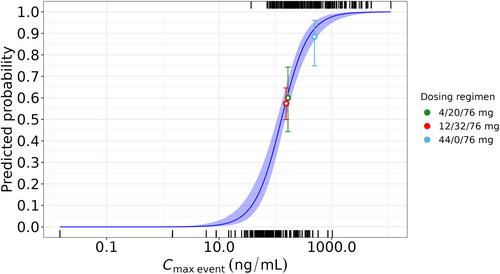
Cytokine release syndrome (CRS) is a common, acute adverse event associated with T-cell redirecting therapies such as bispecific antibodies (BsAbs). The nature of CRS events data makes it challenging to capture an unbiased exposure–response relationship with commonly used models. For example, simple logistic regression models cannot handle traditional time-varying exposure, and static exposure metrics chosen at early time points and with lower priming doses may underestimate the incidence of CRS. Therefore, more advanced modeling techniques are needed to adequately describe the time course of BsAb-induced CRS. Herein, we present a two-part mixture model that describes the population incidence and time course of CRS following various dose-priming regimens of elranatamab, a humanized BsAb that targets the B-cell maturation antigen on myeloma cells and CD3 on T cells, where the conditional time-evolution of CRS was described with a two-state (i.e., CRS-yes or no) Markov model. In the first part, increasing elranatamab exposure (maximum elranatamab concentration at first CRS event time (Cmax,event)) was associated with an increased CRS incidence probability. Similarly, in the second part, increased early elranatamab exposure (Cmax,D1) increased the predicted probability of CRS over time, whereas premedication including corticosteroids and IL-6 pathway inhibitors use demonstrated the opposite effect. This is the first reported application of a Markov model to describe the probability of CRS following BsAb therapy, and it successfully explained differences between different dose-priming regimens via clinically relevant covariates. This approach may be useful for the future clinical development of BsAbs.
期刊介绍:
Clinical Pharmacology & Therapeutics (CPT) is the authoritative cross-disciplinary journal in experimental and clinical medicine devoted to publishing advances in the nature, action, efficacy, and evaluation of therapeutics. CPT welcomes original Articles in the emerging areas of translational, predictive and personalized medicine; new therapeutic modalities including gene and cell therapies; pharmacogenomics, proteomics and metabolomics; bioinformation and applied systems biology complementing areas of pharmacokinetics and pharmacodynamics, human investigation and clinical trials, pharmacovigilence, pharmacoepidemiology, pharmacometrics, and population pharmacology.





 京公网安备 11010802042870号
京ICP备2023020795号-1
京公网安备 11010802042870号
京ICP备2023020795号-1

 分享
分享
 求助内容:
求助内容: 应助结果提醒方式:
 扫码关注我们
