Human lens epithelial cells induce the inflammatory response when placed into the lens capsular bag model of posterior capsular opacification.
IF 1.4 3区 医学Q4 BIOCHEMISTRY & MOLECULAR BIOLOGYMolecular VisionPub Date : 2024-10-08eCollection Date: 2024-01-01
Samuel G Novo, Adam P Faranda, Justin C D'Antin, Yan Wang, Mahbubul Shihan, Rafael I Barraquer, Ralph Michael, Melinda K Duncan
{"title":"Human lens epithelial cells induce the inflammatory response when placed into the lens capsular bag model of posterior capsular opacification.","authors":"Samuel G Novo, Adam P Faranda, Justin C D'Antin, Yan Wang, Mahbubul Shihan, Rafael I Barraquer, Ralph Michael, Melinda K Duncan","doi":"","DOIUrl":null,"url":null,"abstract":"<p><strong>Purpose: </strong>Cataracts are typically treated by phacoemulsification followed by intraocular lens implantation. Studies of mouse models of cataract surgery have revealed that lens epithelial cells rapidly remodel their transcriptome to express proinflammatory cytokines after lens fiber cell removal, but it is currently unknown whether this response is conserved in human lenses. This study seeks to fill this knowledge gap.</p><p><strong>Methods: </strong>Human cadaver eyes from 70 to 89 year old individuals were prepared for the human capsular bag model of cataract surgery. The central epithelium was preserved in RNAlater during culture preparation, then the equatorial epithelium was either immediately preserved in RNAlater after the culture was created, or 24 h later. Gene expression profiles were generated by bulk sequencing of RNA isolated from these tissue samples. The transcriptomic response of human cadaver-derived lens epithelial cells to culture in this \"capsular bag\" model was characterized by bioinformatic analysis. The human response was directly compared to that of 24-month-old mouse lens epithelial cells subjected to fiber cell removal surgery.</p><p><strong>Results: </strong>Human lens epithelial cells remodel approximately a third of their transcriptome by 24 h after surgery, and like mice, this response consists of induction of proinflammatory cytokine genes, upregulation of fibrotic markers and downregulation of genes controlling the lens epithelial phenotype.</p><p><strong>Conclusions: </strong>These observations demonstrate that humans and mice have similar responses to cataract surgery and support the use of mice to study the response of lens epithelial cells to cataract surgery, suggesting that identified injury response mechanisms can be leveraged to elucidate new approaches to improve the outcomes of cataract surgery.</p>","PeriodicalId":18866,"journal":{"name":"Molecular Vision","volume":"30 ","pages":"348-367"},"PeriodicalIF":1.4000,"publicationDate":"2024-10-08","publicationTypes":"Journal Article","fieldsOfStudy":null,"isOpenAccess":false,"openAccessPdf":"https://www.ncbi.nlm.nih.gov/pmc/articles/PMC11829793/pdf/","citationCount":"0","resultStr":null,"platform":"Semanticscholar","paperid":null,"PeriodicalName":"Molecular Vision","FirstCategoryId":"3","ListUrlMain":"","RegionNum":3,"RegionCategory":"医学","ArticlePicture":[],"TitleCN":null,"AbstractTextCN":null,"PMCID":null,"EPubDate":"2024/1/1 0:00:00","PubModel":"eCollection","JCR":"Q4","JCRName":"BIOCHEMISTRY & MOLECULAR BIOLOGY","Score":null,"Total":0}
引用次数: 0
Abstract
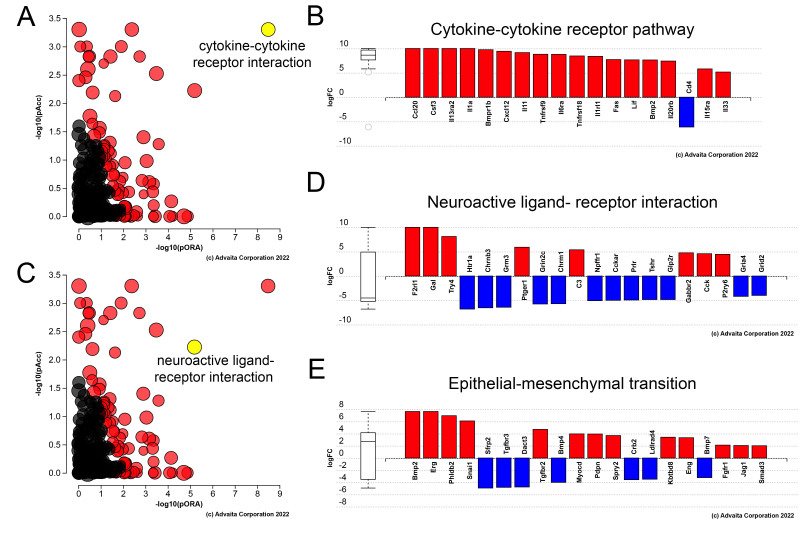
Purpose: Cataracts are typically treated by phacoemulsification followed by intraocular lens implantation. Studies of mouse models of cataract surgery have revealed that lens epithelial cells rapidly remodel their transcriptome to express proinflammatory cytokines after lens fiber cell removal, but it is currently unknown whether this response is conserved in human lenses. This study seeks to fill this knowledge gap.
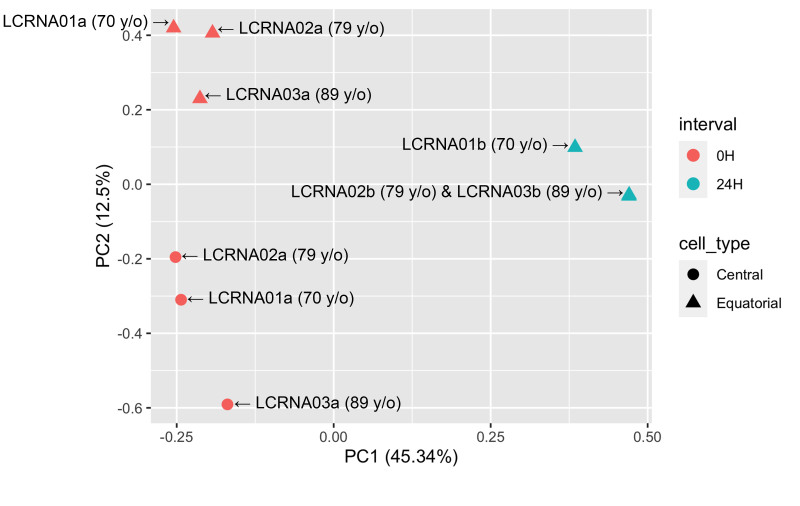
Methods: Human cadaver eyes from 70 to 89 year old individuals were prepared for the human capsular bag model of cataract surgery. The central epithelium was preserved in RNAlater during culture preparation, then the equatorial epithelium was either immediately preserved in RNAlater after the culture was created, or 24 h later. Gene expression profiles were generated by bulk sequencing of RNA isolated from these tissue samples. The transcriptomic response of human cadaver-derived lens epithelial cells to culture in this "capsular bag" model was characterized by bioinformatic analysis. The human response was directly compared to that of 24-month-old mouse lens epithelial cells subjected to fiber cell removal surgery.
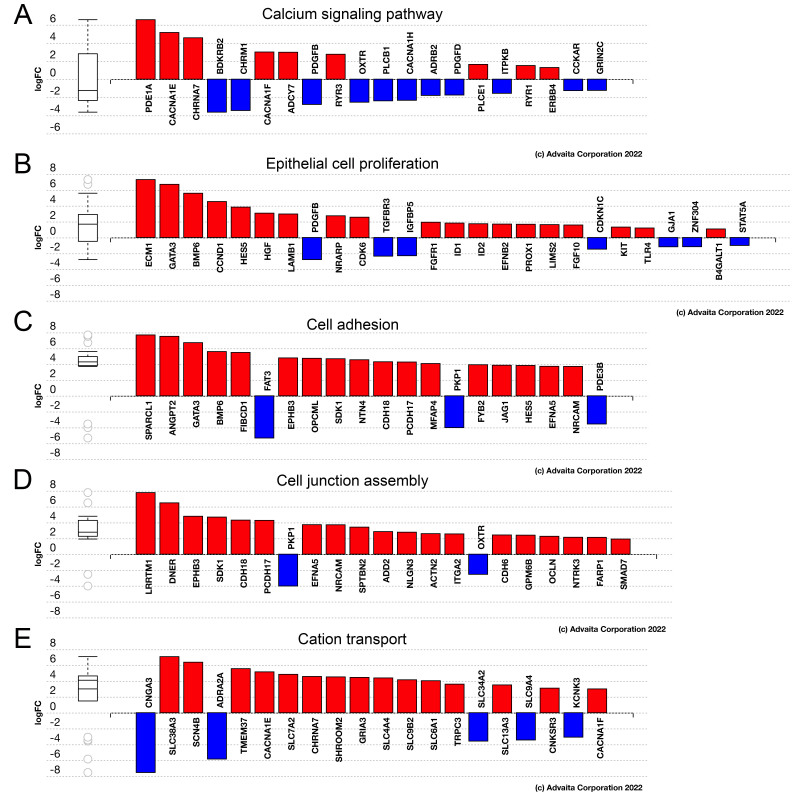
Results: Human lens epithelial cells remodel approximately a third of their transcriptome by 24 h after surgery, and like mice, this response consists of induction of proinflammatory cytokine genes, upregulation of fibrotic markers and downregulation of genes controlling the lens epithelial phenotype.
Conclusions: These observations demonstrate that humans and mice have similar responses to cataract surgery and support the use of mice to study the response of lens epithelial cells to cataract surgery, suggesting that identified injury response mechanisms can be leveraged to elucidate new approaches to improve the outcomes of cataract surgery.
期刊介绍:
Molecular Vision is a peer-reviewed journal dedicated to the dissemination of research results in molecular biology, cell biology, and the genetics of the visual system (ocular and cortical).
Molecular Vision publishes articles presenting original research that has not previously been published and comprehensive articles reviewing the current status of a particular field or topic. Submissions to Molecular Vision are subjected to rigorous peer review. Molecular Vision does NOT publish preprints.
For authors, Molecular Vision provides a rapid means of communicating important results. Access to Molecular Vision is free and unrestricted, allowing the widest possible audience for your article. Digital publishing allows you to use color images freely (and without fees). Additionally, you may publish animations, sounds, or other supplementary information that clarifies or supports your article. Each of the authors of an article may also list an electronic mail address (which will be updated upon request) to give interested readers easy access to authors.

 分享
分享



 京公网安备 11010802042870号
京ICP备2023020795号-1
京公网安备 11010802042870号
京ICP备2023020795号-1

 求助内容:
求助内容: 应助结果提醒方式:
 扫码关注我们
