Ye Li, Thomas van Kralingen, Megan Masi, Brandon Villanueva Sanchez, Beyonca Mitchell, Joshua Johnson, Jorge Miranda-Barrientos, Jason Rehg, Keri Martinowich, Gregory V Carr
{"title":"Time-on-task-related decrements in performance in the rodent continuous performance test are not caused by physical disengagement from the task.","authors":"Ye Li, Thomas van Kralingen, Megan Masi, Brandon Villanueva Sanchez, Beyonca Mitchell, Joshua Johnson, Jorge Miranda-Barrientos, Jason Rehg, Keri Martinowich, Gregory V Carr","doi":"10.1038/s44277-025-00025-0","DOIUrl":null,"url":null,"abstract":"<p><p>Attention deficits, a hallmark of many neuropsychiatric disorders, significantly impair quality of life and functional outcome for patients. Continuous Performance Tests (CPTs) are widely used to assess attentional function in clinical settings and have been adapted for mice as the rodent Continuous Performance Test (rCPT). In this study, we combined traditional analyses of rCPT performance with markerless pose estimation using DeepLabCut and visual field analysis (VFA) to objectively measure the orientation of mice toward stimuli during rCPT sessions. Additionally, we extended the session length to assess performance decrements over time. Our findings show that extending rCPT sessions from 45-90 min results in a significant decline in performance in male mice, which aligns with performance decrements observed in clinical research. Importantly, physical engagement with the task remained relatively stable throughout the session, even as performance deteriorated. This suggests that the performance decline specifically reflects a time-on-task (TOT)-dependent vigilance decrement rather than physical disengagement. We also investigated the effects of amphetamine, an FDA-approved treatment for attention-deficit/hyperactivity disorder (ADHD), on rCPT performance. Amphetamine significantly reduced false alarms without affecting orientation or physical engagement with task stimuli in both male and female mice. This improved rCPT performance in males, but not in females because hit rate also declined following amphetamine administration in females. Collectively, these findings validate a behavioral tracking platform for objectively measuring physical engagement in the rCPT and a task modification that accentuates TOT-dependent performance decrements, enhancing the translational value of the rCPT for studies related to human neuropsychiatric disorders.</p>","PeriodicalId":520008,"journal":{"name":"NPP-digital psychiatry and neuroscience","volume":"3 1","pages":"4"},"PeriodicalIF":0.0000,"publicationDate":"2025-01-01","publicationTypes":"Journal Article","fieldsOfStudy":null,"isOpenAccess":false,"openAccessPdf":"https://www.ncbi.nlm.nih.gov/pmc/articles/PMC11825365/pdf/","citationCount":"0","resultStr":null,"platform":"Semanticscholar","paperid":null,"PeriodicalName":"NPP-digital psychiatry and neuroscience","FirstCategoryId":"1085","ListUrlMain":"https://doi.org/10.1038/s44277-025-00025-0","RegionNum":0,"RegionCategory":null,"ArticlePicture":[],"TitleCN":null,"AbstractTextCN":null,"PMCID":null,"EPubDate":"2025/2/13 0:00:00","PubModel":"Epub","JCR":"","JCRName":"","Score":null,"Total":0}
引用次数: 0
Abstract
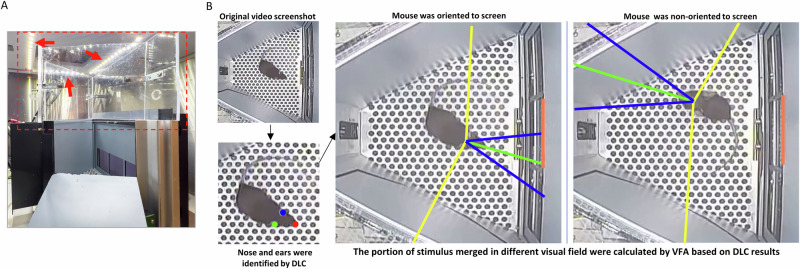
Attention deficits, a hallmark of many neuropsychiatric disorders, significantly impair quality of life and functional outcome for patients. Continuous Performance Tests (CPTs) are widely used to assess attentional function in clinical settings and have been adapted for mice as the rodent Continuous Performance Test (rCPT). In this study, we combined traditional analyses of rCPT performance with markerless pose estimation using DeepLabCut and visual field analysis (VFA) to objectively measure the orientation of mice toward stimuli during rCPT sessions. Additionally, we extended the session length to assess performance decrements over time. Our findings show that extending rCPT sessions from 45-90 min results in a significant decline in performance in male mice, which aligns with performance decrements observed in clinical research. Importantly, physical engagement with the task remained relatively stable throughout the session, even as performance deteriorated. This suggests that the performance decline specifically reflects a time-on-task (TOT)-dependent vigilance decrement rather than physical disengagement. We also investigated the effects of amphetamine, an FDA-approved treatment for attention-deficit/hyperactivity disorder (ADHD), on rCPT performance. Amphetamine significantly reduced false alarms without affecting orientation or physical engagement with task stimuli in both male and female mice. This improved rCPT performance in males, but not in females because hit rate also declined following amphetamine administration in females. Collectively, these findings validate a behavioral tracking platform for objectively measuring physical engagement in the rCPT and a task modification that accentuates TOT-dependent performance decrements, enhancing the translational value of the rCPT for studies related to human neuropsychiatric disorders.





 京公网安备 11010802042870号
京ICP备2023020795号-1
京公网安备 11010802042870号
京ICP备2023020795号-1

 分享
分享

 求助内容:
求助内容: 应助结果提醒方式:
 扫码关注我们
