Gabriel Spandau, Jamie Loizzo, Hannah Jury, James C Bunch, Nicole Stedman, Brian Pearson, Amie J Goodin
{"title":"Patients' Perceptions of Cannabis Contamination in Florida's Medical Program.","authors":"Gabriel Spandau, Jamie Loizzo, Hannah Jury, James C Bunch, Nicole Stedman, Brian Pearson, Amie J Goodin","doi":"10.1159/000542929","DOIUrl":null,"url":null,"abstract":"<p><strong>Introduction: </strong>As medical cannabis becomes more accessible, product quality must be evaluated. Researchers identified a social media community where Florida medical cannabis patients discuss personal experiences. The objective of this study was to analyze posts in this community to understand patient experience with products purchased from Florida medical dispensaries they believed to be contamination, perceptions of product quality, and desired changes to the Florida program.</p><p><strong>Methods: </strong>Social networking theory acted as the underlying framework, and we employed a qualitative case study design to identify mentions of possible contamination and understand patient perceptions of contamination and the Florida medical cannabis program from the Reddit community <i>FLMedicalTrees</i>. The lead researcher conducted a social media analysis of posts identified as containing discussions relevant to product contamination. Constant comparison methods were used to code data, arrive at themes, and maintain validity and reliability of interpretation of coded themes.</p><p><strong>Results: </strong>Of 300 post mentions of contamination, 98 posts were identified as relevant following review. Key results were as follows: (1) multiple mentions of possible contamination of products from medical cannabis dispensaries reported by Florida program patients; (2) patients sought second opinions when concerned about possible contamination and shared personal experiences as well as advice on what concerned patients should do if they believe they have contaminated products; (3) some patients expressed feelings of anxiety and worry about health, safety, and quality control, while others that described possible product contamination did not express concern; and (4) patients wanted changes regarding vertical integration, company accountability, state oversight, and home grow law.</p><p><strong>Conclusions: </strong>Medical cannabis patients and providers could benefit from education on responding to possible contamination within medical cannabis products. Policymakers should consider these findings when setting regulations around contamination testing thresholds, dispensary oversight, and other regulations that directly impact patient safety, like allowing patients to see products before purchase.</p>","PeriodicalId":18415,"journal":{"name":"Medical Cannabis and Cannabinoids","volume":"8 1","pages":"15-30"},"PeriodicalIF":0.0000,"publicationDate":"2024-12-09","publicationTypes":"Journal Article","fieldsOfStudy":null,"isOpenAccess":false,"openAccessPdf":"https://www.ncbi.nlm.nih.gov/pmc/articles/PMC11832188/pdf/","citationCount":"0","resultStr":null,"platform":"Semanticscholar","paperid":null,"PeriodicalName":"Medical Cannabis and Cannabinoids","FirstCategoryId":"1085","ListUrlMain":"https://doi.org/10.1159/000542929","RegionNum":0,"RegionCategory":null,"ArticlePicture":[],"TitleCN":null,"AbstractTextCN":null,"PMCID":null,"EPubDate":"2025/1/1 0:00:00","PubModel":"eCollection","JCR":"Q1","JCRName":"Medicine","Score":null,"Total":0}
引用次数: 0
Abstract
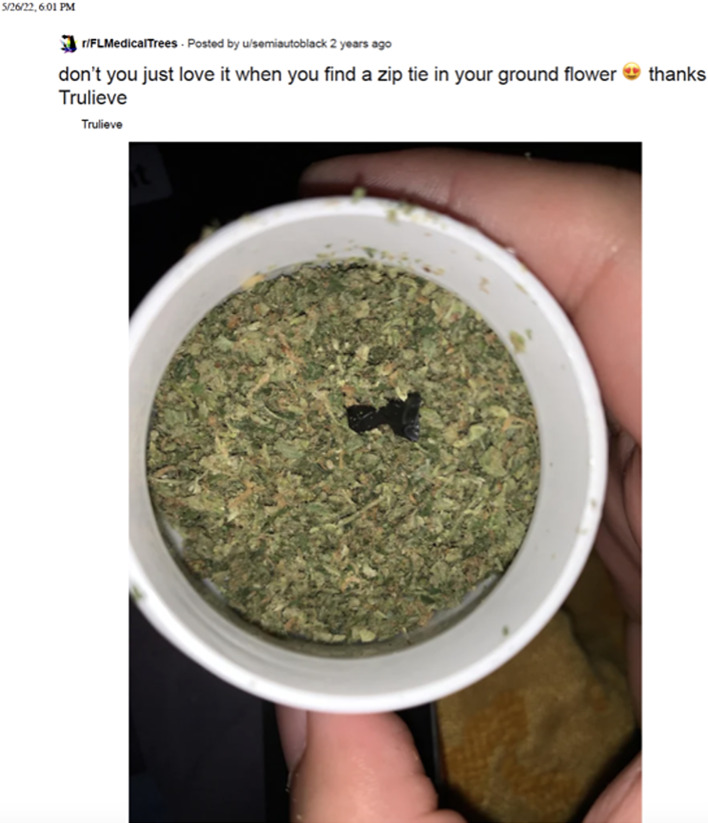
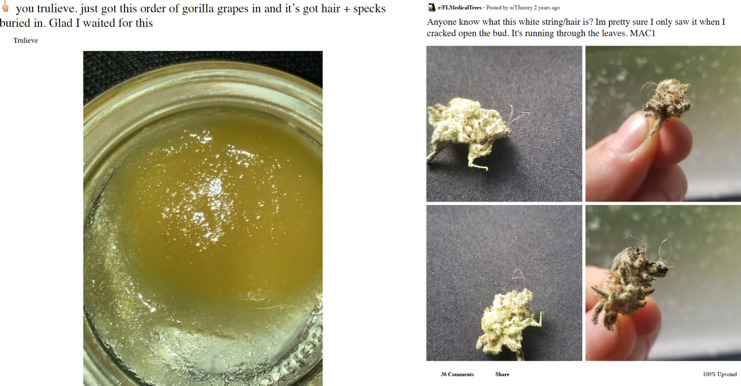
Introduction: As medical cannabis becomes more accessible, product quality must be evaluated. Researchers identified a social media community where Florida medical cannabis patients discuss personal experiences. The objective of this study was to analyze posts in this community to understand patient experience with products purchased from Florida medical dispensaries they believed to be contamination, perceptions of product quality, and desired changes to the Florida program.
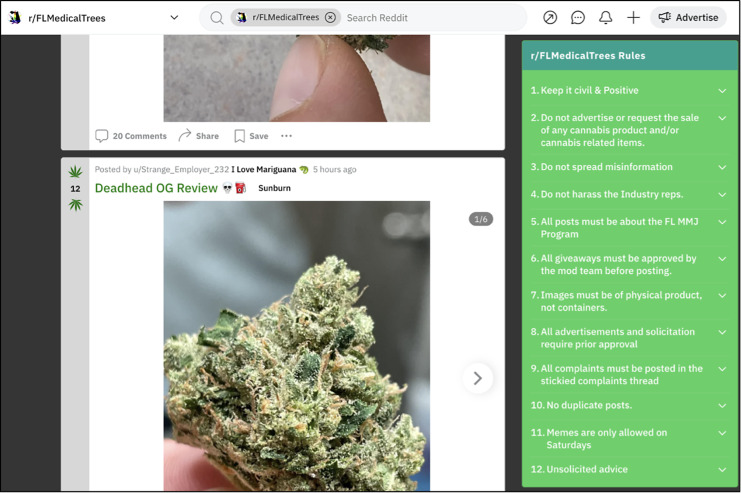
Methods: Social networking theory acted as the underlying framework, and we employed a qualitative case study design to identify mentions of possible contamination and understand patient perceptions of contamination and the Florida medical cannabis program from the Reddit community FLMedicalTrees. The lead researcher conducted a social media analysis of posts identified as containing discussions relevant to product contamination. Constant comparison methods were used to code data, arrive at themes, and maintain validity and reliability of interpretation of coded themes.
Results: Of 300 post mentions of contamination, 98 posts were identified as relevant following review. Key results were as follows: (1) multiple mentions of possible contamination of products from medical cannabis dispensaries reported by Florida program patients; (2) patients sought second opinions when concerned about possible contamination and shared personal experiences as well as advice on what concerned patients should do if they believe they have contaminated products; (3) some patients expressed feelings of anxiety and worry about health, safety, and quality control, while others that described possible product contamination did not express concern; and (4) patients wanted changes regarding vertical integration, company accountability, state oversight, and home grow law.
Conclusions: Medical cannabis patients and providers could benefit from education on responding to possible contamination within medical cannabis products. Policymakers should consider these findings when setting regulations around contamination testing thresholds, dispensary oversight, and other regulations that directly impact patient safety, like allowing patients to see products before purchase.




 京公网安备 11010802042870号
京ICP备2023020795号-1
京公网安备 11010802042870号
京ICP备2023020795号-1

 分享
分享
 求助内容:
求助内容: 应助结果提醒方式:
 扫码关注我们
