{"title":"Overexpression of the R2R3-MYB transcription factor GmMYB3a enhances isoflavone accumulation in soybean.","authors":"Zibo Xu, Jingwen Li, Xue Song, Yongqiang Zhang, Ying Wang, Youcheng Zhu, Tianyi Liu, Yuxuan He, Yajing Liu, Qingyu Wang, Fan Yan","doi":"10.1111/ppl.70120","DOIUrl":null,"url":null,"abstract":"<p><p>Soybean isoflavones, natural phytoestrogens within the flavonoid family, exhibit diverse physiological benefits such as anticancer, antioxidant, and cardioprotective properties. Yet, the underlying biosynthetic pathways remain unclear. Research is required to get better knowledge of soybean isoflavone production and its potential uses. Our work thoroughly examined the R2R3-MYB subclass in soybean and discovered a new MYB transcription factor, GmMYB3a, which shares significant similarities with Arabidopsis MYB genes and regulates isoflavone biosynthesis. Our study reveals that GmMYB3a localizes to the nucleus and membrane, concurs with its potential involvement in the biosynthesis of isoflavones. Our analysis also indicated a synergistic expression pattern between GmMYB3a and seed development, thereby creating the hypothesis that it has a critical role in the regulation of isoflavone synthesis. Transgenic experiments further demonstrated that GmMYB3a positively regulates isoflavone biosynthesis and leads to its overexpression. GmMYB3a has been implicated in abiotic stress responses, affecting soybean stress tolerance. RNA sequencing analysis revealed that GmMYB3a regulates downstream genes involved in isoflavone, flavonoid, and phenylalanine metabolism, especially the key chalcone synthase genes, CHS7 and CHS8. Moreover, GmMYB3a was shown to be tightly associated with GmCHS7 and GmCHS8 expressions, potentially regulating them directly. Yeast two-hybrid screening identified GmMYB3a interacting proteins crucial for the synthesis of physiologically active substances and abiotic stress responses. Our results increase knowledge of the regulatory mechanisms of GmMYB3a and establish a molecular network involving GmMYB3a, GmCHS7, and GmCHS8, thereby offering novel strategies for improving soybean quality and stress-tolerant breeding.</p>","PeriodicalId":20164,"journal":{"name":"Physiologia plantarum","volume":"177 1","pages":"e70120"},"PeriodicalIF":3.6000,"publicationDate":"2025-01-01","publicationTypes":"Journal Article","fieldsOfStudy":null,"isOpenAccess":false,"openAccessPdf":"","citationCount":"0","resultStr":null,"platform":"Semanticscholar","paperid":null,"PeriodicalName":"Physiologia plantarum","FirstCategoryId":"99","ListUrlMain":"https://doi.org/10.1111/ppl.70120","RegionNum":2,"RegionCategory":"生物学","ArticlePicture":[],"TitleCN":null,"AbstractTextCN":null,"PMCID":null,"EPubDate":"","PubModel":"","JCR":"Q1","JCRName":"PLANT SCIENCES","Score":null,"Total":0}
引用次数: 0
Abstract
Soybean isoflavones, natural phytoestrogens within the flavonoid family, exhibit diverse physiological benefits such as anticancer, antioxidant, and cardioprotective properties. Yet, the underlying biosynthetic pathways remain unclear. Research is required to get better knowledge of soybean isoflavone production and its potential uses. Our work thoroughly examined the R2R3-MYB subclass in soybean and discovered a new MYB transcription factor, GmMYB3a, which shares significant similarities with Arabidopsis MYB genes and regulates isoflavone biosynthesis. Our study reveals that GmMYB3a localizes to the nucleus and membrane, concurs with its potential involvement in the biosynthesis of isoflavones. Our analysis also indicated a synergistic expression pattern between GmMYB3a and seed development, thereby creating the hypothesis that it has a critical role in the regulation of isoflavone synthesis. Transgenic experiments further demonstrated that GmMYB3a positively regulates isoflavone biosynthesis and leads to its overexpression. GmMYB3a has been implicated in abiotic stress responses, affecting soybean stress tolerance. RNA sequencing analysis revealed that GmMYB3a regulates downstream genes involved in isoflavone, flavonoid, and phenylalanine metabolism, especially the key chalcone synthase genes, CHS7 and CHS8. Moreover, GmMYB3a was shown to be tightly associated with GmCHS7 and GmCHS8 expressions, potentially regulating them directly. Yeast two-hybrid screening identified GmMYB3a interacting proteins crucial for the synthesis of physiologically active substances and abiotic stress responses. Our results increase knowledge of the regulatory mechanisms of GmMYB3a and establish a molecular network involving GmMYB3a, GmCHS7, and GmCHS8, thereby offering novel strategies for improving soybean quality and stress-tolerant breeding.
期刊介绍:
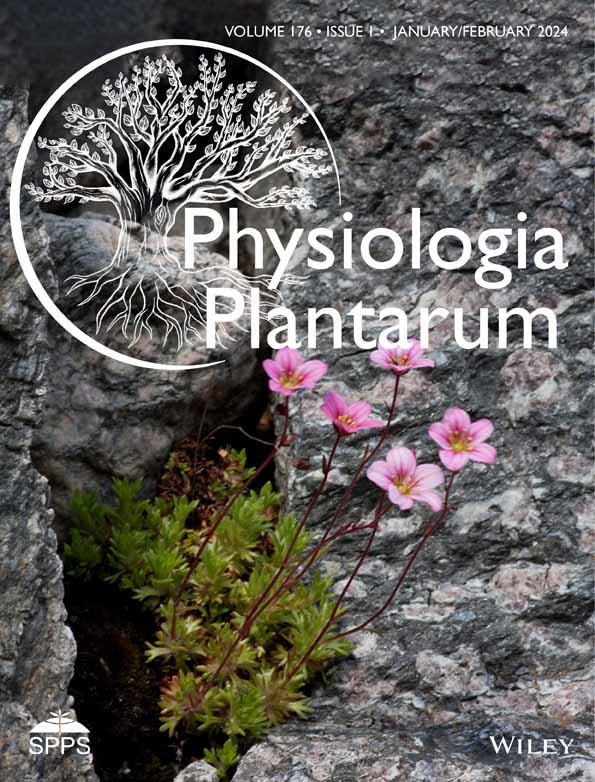
Physiologia Plantarum is an international journal committed to publishing the best full-length original research papers that advance our understanding of primary mechanisms of plant development, growth and productivity as well as plant interactions with the biotic and abiotic environment. All organisational levels of experimental plant biology – from molecular and cell biology, biochemistry and biophysics to ecophysiology and global change biology – fall within the scope of the journal. The content is distributed between 5 main subject areas supervised by Subject Editors specialised in the respective domain: (1) biochemistry and metabolism, (2) ecophysiology, stress and adaptation, (3) uptake, transport and assimilation, (4) development, growth and differentiation, (5) photobiology and photosynthesis.



 京公网安备 11010802042870号
京ICP备2023020795号-1
京公网安备 11010802042870号
京ICP备2023020795号-1

 分享
分享
 求助内容:
求助内容: 应助结果提醒方式:
 扫码关注我们
