Claudia Tito, Silvia Masciarelli, Gianni Colotti, Francesco Fazi
{"title":"EGF receptor in organ development, tissue homeostasis and regeneration.","authors":"Claudia Tito, Silvia Masciarelli, Gianni Colotti, Francesco Fazi","doi":"10.1186/s12929-025-01119-9","DOIUrl":null,"url":null,"abstract":"<p><p>The epidermal growth factor receptor (EGFR) is a protein embedded in the outer membrane of epithelial and mesenchymal cells, bone cells, blood and immune cells, heart cells, glia and stem neural cells. It belongs to the ErbB family, which includes three other related proteins: HER2/ErbB2/c-neu, HER3/ErbB3, and HER4/ErbB4. EGFR binds to seven known signaling molecules, including epidermal growth factor (EGF) and transforming growth factor-alpha (TGF-α). This binding triggers the formation of receptor pairs (dimers), self-phosphorylation of EGFR, and the activation of several signaling pathways within the cell. These pathways influence various cellular processes like proliferation, differentiation, migration, and survival. EGFR plays a critical role in both development and tissue homeostasis, including tissue repair and adult organ regeneration. Altered expression of EGFR is linked to disruption of tissue homeostasis and various diseases, among which cancer. This review focuses on how EGFR contributes to the development of different organs like the placenta, gut, liver, bone, skin, brain, T cell regulation, pancreas, kidneys, mammary glands and lungs along with their associated pathologies. The involvement of EGFR in organ-specific branching morphogenesis process is also discussed. The level of EGFR activity and its impact vary across different organs. Factors as the affinity of its ligands, recycling or degradation processes, and transactivation by other proteins or environmental factors (such as heat stress and smoking) play a role in regulating EGFR activity. Understanding EGFR's role and regulatory mechanisms holds promise for developing targeted therapeutic strategies.</p>","PeriodicalId":15365,"journal":{"name":"Journal of Biomedical Science","volume":"32 1","pages":"24"},"PeriodicalIF":12.1000,"publicationDate":"2025-02-19","publicationTypes":"Journal Article","fieldsOfStudy":null,"isOpenAccess":false,"openAccessPdf":"https://www.ncbi.nlm.nih.gov/pmc/articles/PMC11837477/pdf/","citationCount":"0","resultStr":null,"platform":"Semanticscholar","paperid":null,"PeriodicalName":"Journal of Biomedical Science","FirstCategoryId":"3","ListUrlMain":"https://doi.org/10.1186/s12929-025-01119-9","RegionNum":2,"RegionCategory":"医学","ArticlePicture":[],"TitleCN":null,"AbstractTextCN":null,"PMCID":null,"EPubDate":"","PubModel":"","JCR":"Q1","JCRName":"CELL BIOLOGY","Score":null,"Total":0}
引用次数: 0
Abstract
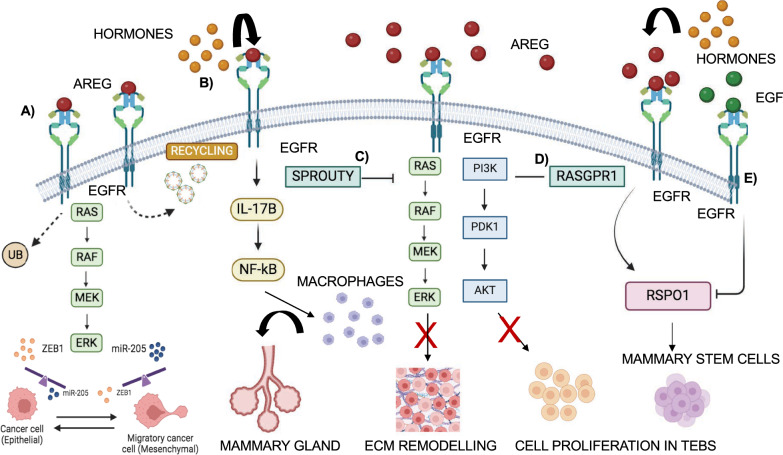
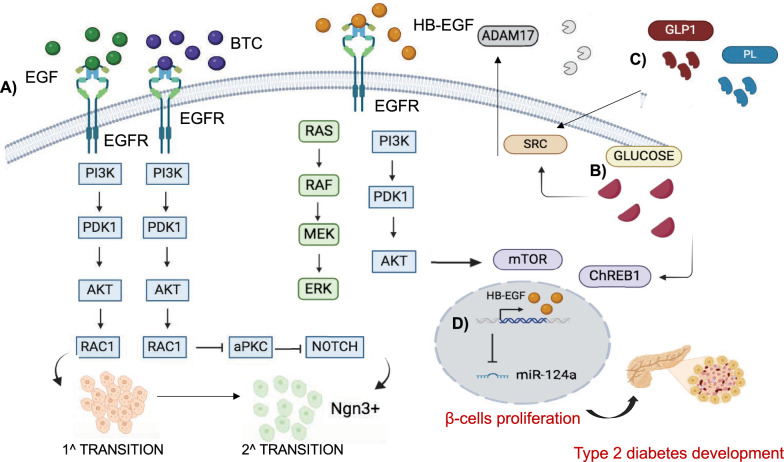
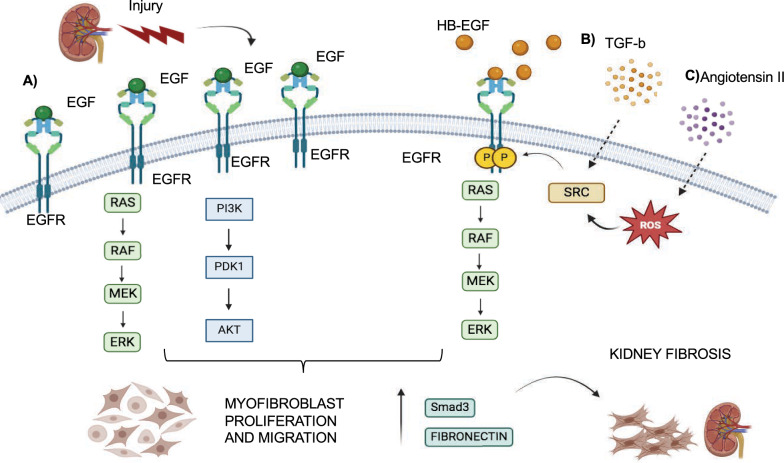
The epidermal growth factor receptor (EGFR) is a protein embedded in the outer membrane of epithelial and mesenchymal cells, bone cells, blood and immune cells, heart cells, glia and stem neural cells. It belongs to the ErbB family, which includes three other related proteins: HER2/ErbB2/c-neu, HER3/ErbB3, and HER4/ErbB4. EGFR binds to seven known signaling molecules, including epidermal growth factor (EGF) and transforming growth factor-alpha (TGF-α). This binding triggers the formation of receptor pairs (dimers), self-phosphorylation of EGFR, and the activation of several signaling pathways within the cell. These pathways influence various cellular processes like proliferation, differentiation, migration, and survival. EGFR plays a critical role in both development and tissue homeostasis, including tissue repair and adult organ regeneration. Altered expression of EGFR is linked to disruption of tissue homeostasis and various diseases, among which cancer. This review focuses on how EGFR contributes to the development of different organs like the placenta, gut, liver, bone, skin, brain, T cell regulation, pancreas, kidneys, mammary glands and lungs along with their associated pathologies. The involvement of EGFR in organ-specific branching morphogenesis process is also discussed. The level of EGFR activity and its impact vary across different organs. Factors as the affinity of its ligands, recycling or degradation processes, and transactivation by other proteins or environmental factors (such as heat stress and smoking) play a role in regulating EGFR activity. Understanding EGFR's role and regulatory mechanisms holds promise for developing targeted therapeutic strategies.
期刊介绍:
The Journal of Biomedical Science is an open access, peer-reviewed journal that focuses on fundamental and molecular aspects of basic medical sciences. It emphasizes molecular studies of biomedical problems and mechanisms. The National Science and Technology Council (NSTC), Taiwan supports the journal and covers the publication costs for accepted articles. The journal aims to provide an international platform for interdisciplinary discussions and contribute to the advancement of medicine. It benefits both readers and authors by accelerating the dissemination of research information and providing maximum access to scholarly communication. All articles published in the Journal of Biomedical Science are included in various databases such as Biological Abstracts, BIOSIS, CABI, CAS, Citebase, Current contents, DOAJ, Embase, EmBiology, and Global Health, among others.



 京公网安备 11010802042870号
京ICP备2023020795号-1
京公网安备 11010802042870号
京ICP备2023020795号-1

 分享
分享
 求助内容:
求助内容: 应助结果提醒方式:
 扫码关注我们
