{"title":"Patient and Family Caregiver Perspectives on Therapy De-Escalation in Cancer: A Scoping Review.","authors":"Rachel Hamilton, Elham Hashemi, Annothayan Uthayakumar, Megan Liang, Samantha Mayo, Kellee Parker, Lindsay Jibb","doi":"10.1002/pon.70104","DOIUrl":null,"url":null,"abstract":"<p><strong>Background: </strong>Cancer therapy de-escalation aims to reduce treatment intensity, minimizing the burden of short- and long-term toxicities on patients and family caregivers while maintaining current survival rates. While this approach holds potential benefits, it comes at a risk of worse patient health outcomes or treatment failure. An understanding of patient and family caregiver perspectives regarding cancer therapy de-escalation is required to design successful patient-and-caregiver-informed clinical trials, and optimally provide related patient-centered care.</p><p><strong>Aim: </strong>To identify and synthesize the literature about patient and family caregiver perspectives of cancer therapy de-escalation to guide clinical care, research, decision-support resources, and education.</p><p><strong>Methods: </strong>Following the Joanna Briggs Institute methodology, a systematic literature search was conducted in MEDLINE, EMBASE, PsycINFO, and CINAHL. We included quantitative, qualitative, and mixed-methods studies involving patients of all ages and cancer diagnoses and their family caregivers that focused on perceptions of cancer therapy de-escalation. Extracted data were organized according to the Framework for De-implementation in Cancer Care Delivery. Study quality was appraised.</p><p><strong>Results: </strong>Twenty studies were included. De-escalation perspectives varied between patients and family caregivers, with factors including clinician trust and desire to improve quality of life noted as influential in de-escalation decisions. The decision-making process could be better supported through the provision of timely patient and family caregiver information and clinician communication training.</p><p><strong>Conclusion: </strong>Cancer therapy de-escalation decisions are complex and multifactorial. Future research exploring which factors influence patient and family decision-making may offer insight into the design of optimal informational and supportive interventions.</p>","PeriodicalId":20779,"journal":{"name":"Psycho‐Oncology","volume":"34 2","pages":"e70104"},"PeriodicalIF":3.5000,"publicationDate":"2025-02-01","publicationTypes":"Journal Article","fieldsOfStudy":null,"isOpenAccess":false,"openAccessPdf":"https://www.ncbi.nlm.nih.gov/pmc/articles/PMC11839414/pdf/","citationCount":"0","resultStr":null,"platform":"Semanticscholar","paperid":null,"PeriodicalName":"Psycho‐Oncology","FirstCategoryId":"3","ListUrlMain":"https://doi.org/10.1002/pon.70104","RegionNum":2,"RegionCategory":"医学","ArticlePicture":[],"TitleCN":null,"AbstractTextCN":null,"PMCID":null,"EPubDate":"","PubModel":"","JCR":"Q2","JCRName":"ONCOLOGY","Score":null,"Total":0}
引用次数: 0
Abstract
Background: Cancer therapy de-escalation aims to reduce treatment intensity, minimizing the burden of short- and long-term toxicities on patients and family caregivers while maintaining current survival rates. While this approach holds potential benefits, it comes at a risk of worse patient health outcomes or treatment failure. An understanding of patient and family caregiver perspectives regarding cancer therapy de-escalation is required to design successful patient-and-caregiver-informed clinical trials, and optimally provide related patient-centered care.
Aim: To identify and synthesize the literature about patient and family caregiver perspectives of cancer therapy de-escalation to guide clinical care, research, decision-support resources, and education.
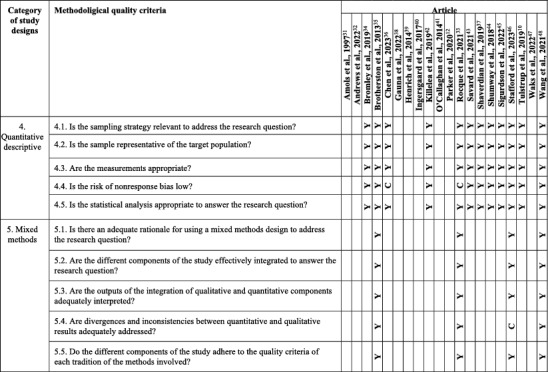
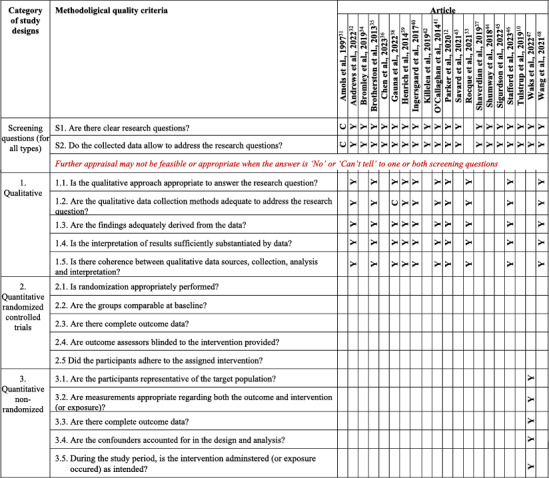
Methods: Following the Joanna Briggs Institute methodology, a systematic literature search was conducted in MEDLINE, EMBASE, PsycINFO, and CINAHL. We included quantitative, qualitative, and mixed-methods studies involving patients of all ages and cancer diagnoses and their family caregivers that focused on perceptions of cancer therapy de-escalation. Extracted data were organized according to the Framework for De-implementation in Cancer Care Delivery. Study quality was appraised.
Results: Twenty studies were included. De-escalation perspectives varied between patients and family caregivers, with factors including clinician trust and desire to improve quality of life noted as influential in de-escalation decisions. The decision-making process could be better supported through the provision of timely patient and family caregiver information and clinician communication training.
Conclusion: Cancer therapy de-escalation decisions are complex and multifactorial. Future research exploring which factors influence patient and family decision-making may offer insight into the design of optimal informational and supportive interventions.
期刊介绍:
Psycho-Oncology is concerned with the psychological, social, behavioral, and ethical aspects of cancer. This subspeciality addresses the two major psychological dimensions of cancer: the psychological responses of patients to cancer at all stages of the disease, and that of their families and caretakers; and the psychological, behavioral and social factors that may influence the disease process. Psycho-oncology is an area of multi-disciplinary interest and has boundaries with the major specialities in oncology: the clinical disciplines (surgery, medicine, pediatrics, radiotherapy), epidemiology, immunology, endocrinology, biology, pathology, bioethics, palliative care, rehabilitation medicine, clinical trials research and decision making, as well as psychiatry and psychology.
This international journal is published twelve times a year and will consider contributions to research of clinical and theoretical interest. Topics covered are wide-ranging and relate to the psychosocial aspects of cancer and AIDS-related tumors, including: epidemiology, quality of life, palliative and supportive care, psychiatry, psychology, sociology, social work, nursing and educational issues.
Special reviews are offered from time to time. There is a section reviewing recently published books. A society news section is available for the dissemination of information relating to meetings, conferences and other society-related topics. Summary proceedings of important national and international symposia falling within the aims of the journal are presented.





 京公网安备 11010802042870号
京ICP备2023020795号-1
京公网安备 11010802042870号
京ICP备2023020795号-1

 分享
分享
 求助内容:
求助内容: 应助结果提醒方式:
 扫码关注我们
