Abd Moain Abu Dabrh, Wigdan H Farah, Heidi M McLeod, Parisa Biazar, Arya B Mohabbat, Bala Munipalli, Rachel Garofalo, Robert J Stroebel, Nilay Shah, Kurt B Angstman, Richard J Presutti, Bryan Farford, Jennifer L Horn, Summer V Allen, Adam I Perlman, Ana Lucia Chong Lau, Larry J Prokop, M Hassan Murad
{"title":"Determining Patient Panel Size in Primary Care: A Meta-Narrative Review.","authors":"Abd Moain Abu Dabrh, Wigdan H Farah, Heidi M McLeod, Parisa Biazar, Arya B Mohabbat, Bala Munipalli, Rachel Garofalo, Robert J Stroebel, Nilay Shah, Kurt B Angstman, Richard J Presutti, Bryan Farford, Jennifer L Horn, Summer V Allen, Adam I Perlman, Ana Lucia Chong Lau, Larry J Prokop, M Hassan Murad","doi":"10.1177/21501319251321294","DOIUrl":null,"url":null,"abstract":"<p><p>The optimal patient panel size (PPS) in primary care and the factors determining it remain unclear. We conducted a meta-narrative review of the literature to evaluate factors influencing PPS and assess its association with patient outcomes. A comprehensive search of electronic databases was performed from inception through December 2023, focusing on original studies reporting factors used to determine PPS and related outcomes (eg, clinical outcomes, process measures, and resource utilization). A total of 48 studies were included, identifying 7 key factors influencing PPS. Smaller panels were associated with improved patient satisfaction, continuity of care, and health promotion, while clinical outcomes, utilization, and costs showed minimal impact by PPS. Panel size was primarily associated with patient age, sex, comorbidities, and practice type and structure. Community-based centers typically managed smaller panels, often staffed by female clinicians and serving socioeconomically disadvantaged populations with greater health needs than hospital-based practices. Female clinicians were also independently associated with managing smaller panels, higher quality care indicators, fewer emergency department visits, and improved patient satisfaction. Determining the ideal PPS is a multifaceted process influenced by practice setting, patient demographics, and clinician characteristics. While practice-related factors showed limited association with PPS, patient-reported outcomes were more closely linked to it. Primary care practices should tailor panel sizes to their patient populations, emphasizing a patient-centered approach and ensuring adequate infrastructure support to optimize care delivery.</p>","PeriodicalId":46723,"journal":{"name":"Journal of Primary Care and Community Health","volume":"16 ","pages":"21501319251321294"},"PeriodicalIF":2.5000,"publicationDate":"2025-01-01","publicationTypes":"Journal Article","fieldsOfStudy":null,"isOpenAccess":false,"openAccessPdf":"https://www.ncbi.nlm.nih.gov/pmc/articles/PMC11843711/pdf/","citationCount":"0","resultStr":null,"platform":"Semanticscholar","paperid":null,"PeriodicalName":"Journal of Primary Care and Community Health","FirstCategoryId":"1085","ListUrlMain":"https://doi.org/10.1177/21501319251321294","RegionNum":0,"RegionCategory":null,"ArticlePicture":[],"TitleCN":null,"AbstractTextCN":null,"PMCID":null,"EPubDate":"","PubModel":"","JCR":"Q1","JCRName":"PRIMARY HEALTH CARE","Score":null,"Total":0}
引用次数: 0
Abstract
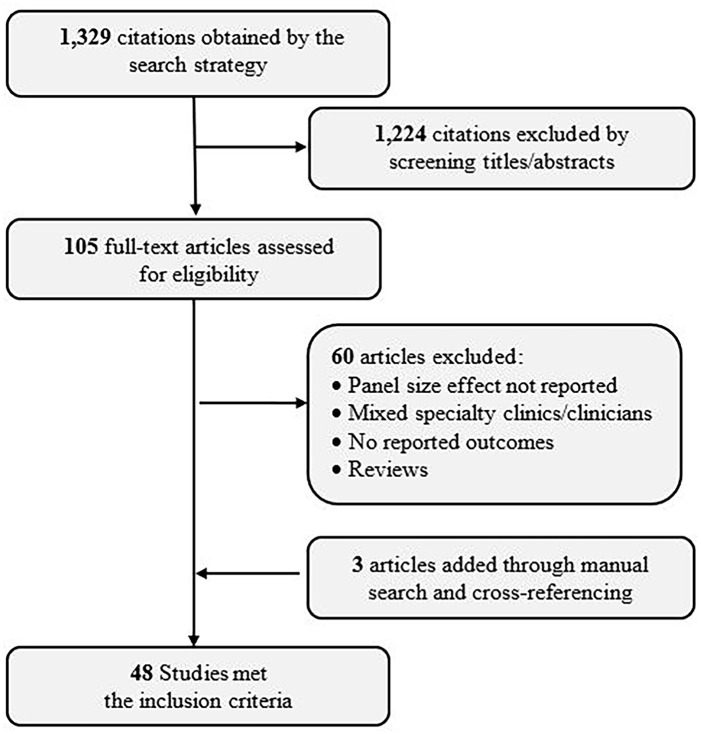
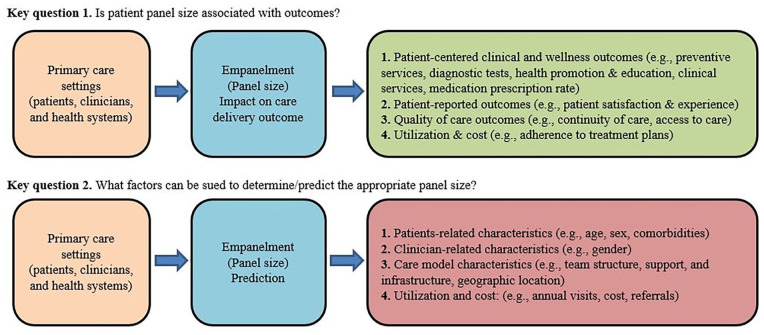
The optimal patient panel size (PPS) in primary care and the factors determining it remain unclear. We conducted a meta-narrative review of the literature to evaluate factors influencing PPS and assess its association with patient outcomes. A comprehensive search of electronic databases was performed from inception through December 2023, focusing on original studies reporting factors used to determine PPS and related outcomes (eg, clinical outcomes, process measures, and resource utilization). A total of 48 studies were included, identifying 7 key factors influencing PPS. Smaller panels were associated with improved patient satisfaction, continuity of care, and health promotion, while clinical outcomes, utilization, and costs showed minimal impact by PPS. Panel size was primarily associated with patient age, sex, comorbidities, and practice type and structure. Community-based centers typically managed smaller panels, often staffed by female clinicians and serving socioeconomically disadvantaged populations with greater health needs than hospital-based practices. Female clinicians were also independently associated with managing smaller panels, higher quality care indicators, fewer emergency department visits, and improved patient satisfaction. Determining the ideal PPS is a multifaceted process influenced by practice setting, patient demographics, and clinician characteristics. While practice-related factors showed limited association with PPS, patient-reported outcomes were more closely linked to it. Primary care practices should tailor panel sizes to their patient populations, emphasizing a patient-centered approach and ensuring adequate infrastructure support to optimize care delivery.





 京公网安备 11010802042870号
京ICP备2023020795号-1
京公网安备 11010802042870号
京ICP备2023020795号-1

 分享
分享
 求助内容:
求助内容: 应助结果提醒方式:
 扫码关注我们
