{"title":"Understanding Older Adults' Intention to Use Telehealth: A Qualitative Study Using the UTAUT Framework.","authors":"Anne Fleischer, Joneen Lowman, Kristen Strader","doi":"10.1177/21501319251320180","DOIUrl":null,"url":null,"abstract":"<p><strong>Introduction/objectives: </strong>As healthcare embraces telehealth, a need exists to understand factors that promote older adults' telehealth usage, including the influence of age-related sensory impairments. The objective of this study was to describe older adults' perceptions of telehealth and factors they considered before using telehealth within the framework of The Unified Theory of Acceptance and Use of Technology (UTAUT).</p><p><strong>Methods: </strong>This descriptive qualitative study collected data through semi-structured interviews. Twenty-four older adults were randomly selected from a pool of 103 participants who completed the initial UTAUT survey study. Individual interviews were conducted by telephone. Reflective thematic analysis was used to identify themes within the UTAUT construct that influence older adults' use of telehealth.</p><p><strong>Results: </strong>Older adults identified preparedness, receptiveness, and willingness to use telehealth as important overarching factors to consider when using telehealth. These are connected to the UTAUT constructs: facilitating conditions, social influence, effort expectancy, and performance expectancy.</p><p><strong>Conclusions: </strong>This study supports UTAUT as an appropriate framework for assessing telehealth readiness and predicting behavioral intention to use telehealth. Our findings provide limited evidence that sensory impairments do not impact telehealth readiness unless the individual lacks appropriate adaptations.</p>","PeriodicalId":46723,"journal":{"name":"Journal of Primary Care and Community Health","volume":"16 ","pages":"21501319251320180"},"PeriodicalIF":2.5000,"publicationDate":"2025-01-01","publicationTypes":"Journal Article","fieldsOfStudy":null,"isOpenAccess":false,"openAccessPdf":"https://www.ncbi.nlm.nih.gov/pmc/articles/PMC11843705/pdf/","citationCount":"0","resultStr":null,"platform":"Semanticscholar","paperid":null,"PeriodicalName":"Journal of Primary Care and Community Health","FirstCategoryId":"1085","ListUrlMain":"https://doi.org/10.1177/21501319251320180","RegionNum":0,"RegionCategory":null,"ArticlePicture":[],"TitleCN":null,"AbstractTextCN":null,"PMCID":null,"EPubDate":"","PubModel":"","JCR":"Q1","JCRName":"PRIMARY HEALTH CARE","Score":null,"Total":0}
引用次数: 0
Abstract
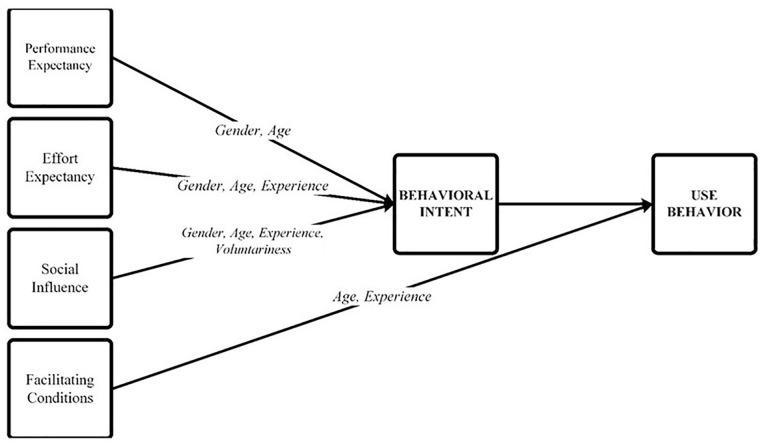
Introduction/objectives: As healthcare embraces telehealth, a need exists to understand factors that promote older adults' telehealth usage, including the influence of age-related sensory impairments. The objective of this study was to describe older adults' perceptions of telehealth and factors they considered before using telehealth within the framework of The Unified Theory of Acceptance and Use of Technology (UTAUT).
Methods: This descriptive qualitative study collected data through semi-structured interviews. Twenty-four older adults were randomly selected from a pool of 103 participants who completed the initial UTAUT survey study. Individual interviews were conducted by telephone. Reflective thematic analysis was used to identify themes within the UTAUT construct that influence older adults' use of telehealth.
Results: Older adults identified preparedness, receptiveness, and willingness to use telehealth as important overarching factors to consider when using telehealth. These are connected to the UTAUT constructs: facilitating conditions, social influence, effort expectancy, and performance expectancy.
Conclusions: This study supports UTAUT as an appropriate framework for assessing telehealth readiness and predicting behavioral intention to use telehealth. Our findings provide limited evidence that sensory impairments do not impact telehealth readiness unless the individual lacks appropriate adaptations.






 京公网安备 11010802042870号
京ICP备2023020795号-1
京公网安备 11010802042870号
京ICP备2023020795号-1

 分享
分享
 求助内容:
求助内容: 应助结果提醒方式:
 扫码关注我们
