Arman Valadkhani, Anil Gupta, Giordano Cauli, Johan L Nordström, Ayda Rohi, Panos Tufexis, Caroline Hällsjö Sander, Martin Jacobsson, Max Bell
{"title":"Diastolic Versus Systolic or Mean Intraoperative Hypotension as Predictive of Perioperative Myocardial Injury in a White-Box Machine-Learning Model.","authors":"Arman Valadkhani, Anil Gupta, Giordano Cauli, Johan L Nordström, Ayda Rohi, Panos Tufexis, Caroline Hällsjö Sander, Martin Jacobsson, Max Bell","doi":"10.1213/ANE.0000000000007379","DOIUrl":null,"url":null,"abstract":"<p><strong>Background: </strong>Intraoperative hypotension (IOH) and tachycardia are associated with perioperative myocardial injury (PMI), and thereby increased postoperative mortality. Patients undergoing vascular surgery are specifically at risk of developing cardiac complications. This study aimed to explore the association between different thresholds for IOH and tachycardia, and PMI. It also aimed to explore which threshold for IOH and tachycardia best predicts PMI.</p><p><strong>Methods: </strong>In this single-center prospective observational study, high-sensitivity cardiac troponin T was measured preoperatively and at 4, 24, and 48 hours after vascular surgery. Absolute and relative thresholds were used to define intraoperative systolic, mean, and diastolic arterial hypotension, measured every 15 seconds by invasive arterial pressure monitoring and heart rate using the Philips IntelliVue X3 monitor. Decision tree machine-learning (ML) models were used to explore which thresholds for IOH and tachycardia best predict PMI. Clinical utility and transparency were prioritized over maximizing the performance of the ML model and therefore a white-box model was used.</p><p><strong>Results: </strong>In all, 498 patients were included in the study. Ninety-nine patients (20%) had PMI. Significant associations were found between IOH and PMI using both absolute and relative thresholds for systolic, mean, and diastolic arterial pressure. Absolute thresholds based on diastolic arterial pressure had the strongest correlation with PMI and yielded greater statistical significance. The threshold that was most predictive of PMI was an absolute diastolic arterial pressure <44 mm Hg. The prediction model with the absolute threshold of diastolic arterial pressure <44 mm Hg had a macro average F1 score of 0.67 and a weighted average F1 score of 0.76. No association was found between tachycardia and PMI.</p><p><strong>Conclusions: </strong>We found that an absolute, not relative, IOH threshold based on diastolic arterial pressure, and not systolic or mean arterial pressure, or tachycardia, was most predictive of PMI.</p>","PeriodicalId":7784,"journal":{"name":"Anesthesia and analgesia","volume":" ","pages":"5-15"},"PeriodicalIF":3.8000,"publicationDate":"2025-07-01","publicationTypes":"Journal Article","fieldsOfStudy":null,"isOpenAccess":false,"openAccessPdf":"https://www.ncbi.nlm.nih.gov/pmc/articles/PMC12140561/pdf/","citationCount":"0","resultStr":null,"platform":"Semanticscholar","paperid":null,"PeriodicalName":"Anesthesia and analgesia","FirstCategoryId":"3","ListUrlMain":"https://doi.org/10.1213/ANE.0000000000007379","RegionNum":2,"RegionCategory":"医学","ArticlePicture":[],"TitleCN":null,"AbstractTextCN":null,"PMCID":null,"EPubDate":"2025/2/20 0:00:00","PubModel":"Epub","JCR":"Q1","JCRName":"ANESTHESIOLOGY","Score":null,"Total":0}
引用次数: 0
Abstract
Background: Intraoperative hypotension (IOH) and tachycardia are associated with perioperative myocardial injury (PMI), and thereby increased postoperative mortality. Patients undergoing vascular surgery are specifically at risk of developing cardiac complications. This study aimed to explore the association between different thresholds for IOH and tachycardia, and PMI. It also aimed to explore which threshold for IOH and tachycardia best predicts PMI.
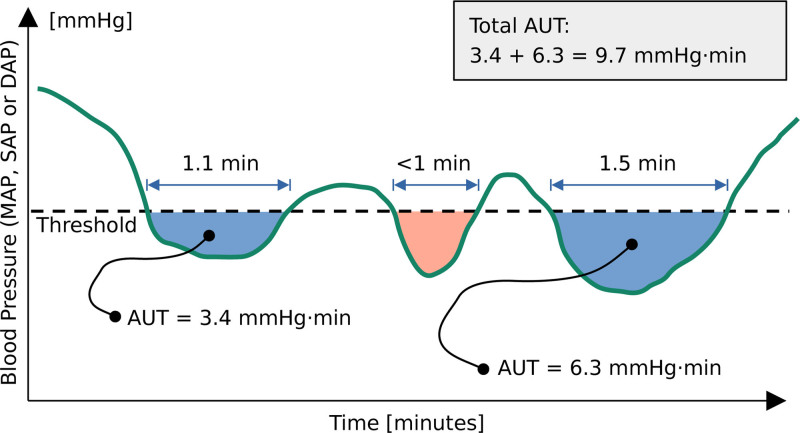
Methods: In this single-center prospective observational study, high-sensitivity cardiac troponin T was measured preoperatively and at 4, 24, and 48 hours after vascular surgery. Absolute and relative thresholds were used to define intraoperative systolic, mean, and diastolic arterial hypotension, measured every 15 seconds by invasive arterial pressure monitoring and heart rate using the Philips IntelliVue X3 monitor. Decision tree machine-learning (ML) models were used to explore which thresholds for IOH and tachycardia best predict PMI. Clinical utility and transparency were prioritized over maximizing the performance of the ML model and therefore a white-box model was used.
Results: In all, 498 patients were included in the study. Ninety-nine patients (20%) had PMI. Significant associations were found between IOH and PMI using both absolute and relative thresholds for systolic, mean, and diastolic arterial pressure. Absolute thresholds based on diastolic arterial pressure had the strongest correlation with PMI and yielded greater statistical significance. The threshold that was most predictive of PMI was an absolute diastolic arterial pressure <44 mm Hg. The prediction model with the absolute threshold of diastolic arterial pressure <44 mm Hg had a macro average F1 score of 0.67 and a weighted average F1 score of 0.76. No association was found between tachycardia and PMI.
Conclusions: We found that an absolute, not relative, IOH threshold based on diastolic arterial pressure, and not systolic or mean arterial pressure, or tachycardia, was most predictive of PMI.
期刊介绍:
Anesthesia & Analgesia exists for the benefit of patients under the care of health care professionals engaged in the disciplines broadly related to anesthesiology, perioperative medicine, critical care medicine, and pain medicine. The Journal furthers the care of these patients by reporting the fundamental advances in the science of these clinical disciplines and by documenting the clinical, laboratory, and administrative advances that guide therapy. Anesthesia & Analgesia seeks a balance between definitive clinical and management investigations and outstanding basic scientific reports. The Journal welcomes original manuscripts containing rigorous design and analysis, even if unusual in their approach.





 京公网安备 11010802042870号
京ICP备2023020795号-1
京公网安备 11010802042870号
京ICP备2023020795号-1

 分享
分享
 求助内容:
求助内容: 应助结果提醒方式:
 扫码关注我们
