Ganli Liao, Jianfeng Liu, Yi Li, Hongyi Ye, Jiayi Liang
{"title":"Effect of healthcare professionals' perceived occupational stigma on organizational citizenship behavior: a moral cleansing perspective.","authors":"Ganli Liao, Jianfeng Liu, Yi Li, Hongyi Ye, Jiayi Liang","doi":"10.1186/s12910-025-01185-6","DOIUrl":null,"url":null,"abstract":"<p><strong>Background: </strong>Occupational stigmatization in Chinese healthcare institutions has intensified due to negative public events (e.g., kickbacks, bribes, and patient conflicts). While previous studies have mainly focused on the negative effects of stigma on practitioners' physiological and psychological states of practitioners with low prestige, little attention has been given to the moral psychological mechanisms involved or the potential positive outcomes. This study aims to explore the moral mechanisms of healthcare professionals' perceived occupational stigma on organizational citizenship behavior (OCB), with a specific focus on the potential effects of moral credibility loss, moral sensitivity, and occupational prestige.</p><p><strong>Methods: </strong>This study employed a hierarchical regression method to test the theoretical model, using data from 554 healthcare professionals (including 311 physicians and 243 nurses) from 7 hospitals in China. Confirmatory factor analysis, hierarchical regression, bootstrapping analysis (= 5000 times) and simple slope test using SPSS and AMOS were employed.</p><p><strong>Results: </strong>The empirical results demonstrate that healthcare professionals' occupational stigma enhances OCB by increasing moral credibility loss, with moral sensitivity playing a moderating role. Additionally, this study categorizes healthcare professionals into two groups based on occupational prestige: physicians (high occupational prestige) and nurses (relatively lower occupational prestige). The findings indicate that occupational prestige not only moderates the positive relationship between occupational stigma and moral credibility loss but also moderates the relationship between moral credibility loss and OCB.</p><p><strong>Conclusions: </strong>This study comprehensively explores healthcare professionals' occupational stigma and reveals its positive moral effects, specifically in enhancing OCB through the moral cleansing perspective. These findings offer a novel understanding of occupational stigma, providing practical guidance for improving professional ethics and OCB.</p>","PeriodicalId":55348,"journal":{"name":"BMC Medical Ethics","volume":"26 1","pages":"28"},"PeriodicalIF":3.1000,"publicationDate":"2025-02-21","publicationTypes":"Journal Article","fieldsOfStudy":null,"isOpenAccess":false,"openAccessPdf":"https://www.ncbi.nlm.nih.gov/pmc/articles/PMC11844104/pdf/","citationCount":"0","resultStr":null,"platform":"Semanticscholar","paperid":null,"PeriodicalName":"BMC Medical Ethics","FirstCategoryId":"98","ListUrlMain":"https://doi.org/10.1186/s12910-025-01185-6","RegionNum":1,"RegionCategory":"哲学","ArticlePicture":[],"TitleCN":null,"AbstractTextCN":null,"PMCID":null,"EPubDate":"","PubModel":"","JCR":"Q1","JCRName":"ETHICS","Score":null,"Total":0}
引用次数: 0
Abstract
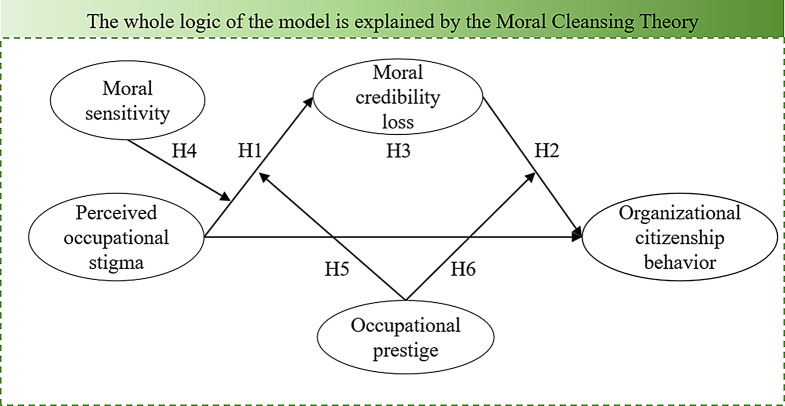
Background: Occupational stigmatization in Chinese healthcare institutions has intensified due to negative public events (e.g., kickbacks, bribes, and patient conflicts). While previous studies have mainly focused on the negative effects of stigma on practitioners' physiological and psychological states of practitioners with low prestige, little attention has been given to the moral psychological mechanisms involved or the potential positive outcomes. This study aims to explore the moral mechanisms of healthcare professionals' perceived occupational stigma on organizational citizenship behavior (OCB), with a specific focus on the potential effects of moral credibility loss, moral sensitivity, and occupational prestige.
Methods: This study employed a hierarchical regression method to test the theoretical model, using data from 554 healthcare professionals (including 311 physicians and 243 nurses) from 7 hospitals in China. Confirmatory factor analysis, hierarchical regression, bootstrapping analysis (= 5000 times) and simple slope test using SPSS and AMOS were employed.
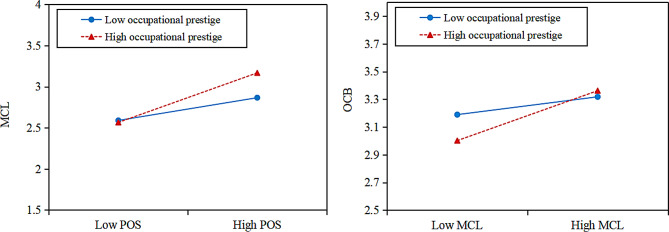
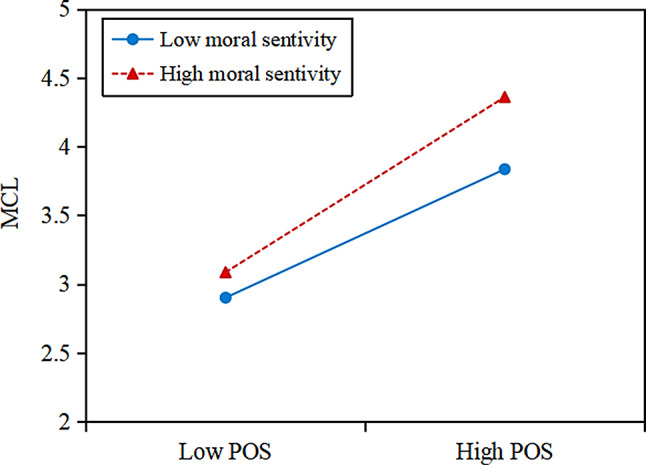
Results: The empirical results demonstrate that healthcare professionals' occupational stigma enhances OCB by increasing moral credibility loss, with moral sensitivity playing a moderating role. Additionally, this study categorizes healthcare professionals into two groups based on occupational prestige: physicians (high occupational prestige) and nurses (relatively lower occupational prestige). The findings indicate that occupational prestige not only moderates the positive relationship between occupational stigma and moral credibility loss but also moderates the relationship between moral credibility loss and OCB.
Conclusions: This study comprehensively explores healthcare professionals' occupational stigma and reveals its positive moral effects, specifically in enhancing OCB through the moral cleansing perspective. These findings offer a novel understanding of occupational stigma, providing practical guidance for improving professional ethics and OCB.
期刊介绍:
BMC Medical Ethics is an open access journal publishing original peer-reviewed research articles in relation to the ethical aspects of biomedical research and clinical practice, including professional choices and conduct, medical technologies, healthcare systems and health policies.



 京公网安备 11010802042870号
京ICP备2023020795号-1
京公网安备 11010802042870号
京ICP备2023020795号-1

 分享
分享
 求助内容:
求助内容: 应助结果提醒方式:
 扫码关注我们
