Carolin Schönherr, Julian Ziegler, Ton Zentek, Asarnush Rashid, Sebastian Strauss, Alexander Tallner, Matthias Grothe
{"title":"Smartphone-based gait analysis in the assessment of fatigue and fatigability in people with multiple sclerosis: a supervised cohort study.","authors":"Carolin Schönherr, Julian Ziegler, Ton Zentek, Asarnush Rashid, Sebastian Strauss, Alexander Tallner, Matthias Grothe","doi":"10.1007/s00415-025-12906-7","DOIUrl":null,"url":null,"abstract":"<p><strong>Background: </strong>Gait impairments and fatigue are the most common and disabling symptoms in people with multiple sclerosis (PwMS). Objective 6-min walk test (6MWT) gait testing can be improved through body-worn accelerometers, but its association to subjective fatigue and objective fatigability is contradictory. This study aims to validate an algorithm using smartphone sensor data for spatial-temporal gait parameters in PwMS and healthy controls, and evaluate its accuracy in detecting fatigability, and quantify its association with fatigue in PwMS.</p><p><strong>Methods: </strong>We recruited PwMS with mild to moderate disability (EDSS 0.0-6.5) and healthy controls in a supervised, lab-based cohort study. All participants performed the 6MWT while wearing a smartphone at the hip, which collected acceleration data of step count, cadence and walking speed. Algorithm validation included the mean absolute percentage error (MAPE) and Bland-Altman analysis. Fatigability and fatigue were measured in PwMS, with fatigability defined as a 10% decline in gait performance, and fatigue using the fatigue scale for motor and cognitive functions (FSMC). Further, correlations between gait parameters and FSMC were assessed.</p><p><strong>Results: </strong>A total of 38 PwMS and 24 healthy controls were included. The algorithm demonstrated high validity for step count (MAPE < 3%) and cadence (MAPE < 10%). Gait analyses revealed fatigability in between 2.6 and 15.8% of PwMS, with large differences between the gait parameter assessed. Significant correlations were found especially between FSMC motor fatigue scores and step count (r = - 0.50), cadence (r = 0.51) and walking speed (r = 0.50).</p><p><strong>Conclusion: </strong>Smartphone-based gait analysis provides an accessible and valid method for detecting steps and cadence. There are major differences in the assessment of fatigability, but an allover association to subjective motor fatigue.</p>","PeriodicalId":16558,"journal":{"name":"Journal of Neurology","volume":"272 3","pages":"217"},"PeriodicalIF":4.6000,"publicationDate":"2025-02-22","publicationTypes":"Journal Article","fieldsOfStudy":null,"isOpenAccess":false,"openAccessPdf":"https://www.ncbi.nlm.nih.gov/pmc/articles/PMC11846754/pdf/","citationCount":"0","resultStr":null,"platform":"Semanticscholar","paperid":null,"PeriodicalName":"Journal of Neurology","FirstCategoryId":"3","ListUrlMain":"https://doi.org/10.1007/s00415-025-12906-7","RegionNum":2,"RegionCategory":"医学","ArticlePicture":[],"TitleCN":null,"AbstractTextCN":null,"PMCID":null,"EPubDate":"","PubModel":"","JCR":"Q1","JCRName":"CLINICAL NEUROLOGY","Score":null,"Total":0}
引用次数: 0
Abstract
Background: Gait impairments and fatigue are the most common and disabling symptoms in people with multiple sclerosis (PwMS). Objective 6-min walk test (6MWT) gait testing can be improved through body-worn accelerometers, but its association to subjective fatigue and objective fatigability is contradictory. This study aims to validate an algorithm using smartphone sensor data for spatial-temporal gait parameters in PwMS and healthy controls, and evaluate its accuracy in detecting fatigability, and quantify its association with fatigue in PwMS.
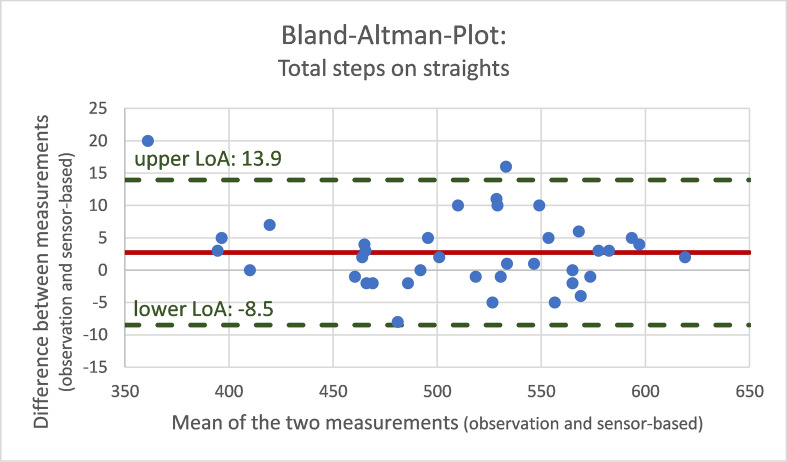
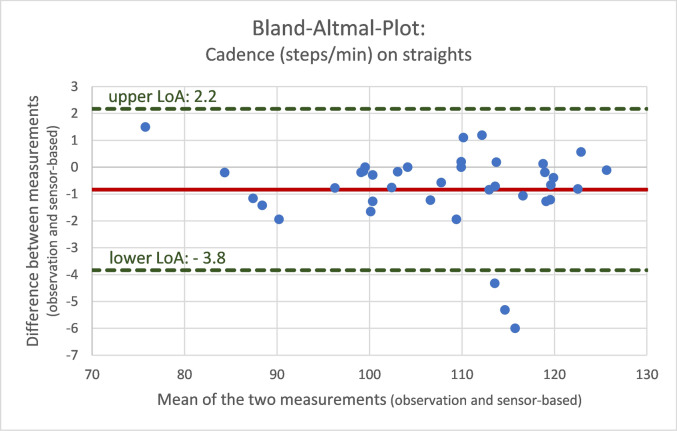
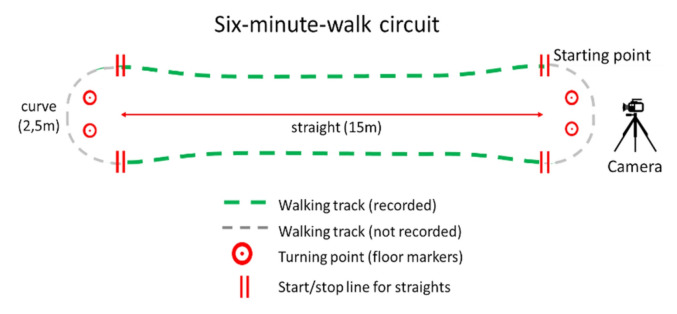
Methods: We recruited PwMS with mild to moderate disability (EDSS 0.0-6.5) and healthy controls in a supervised, lab-based cohort study. All participants performed the 6MWT while wearing a smartphone at the hip, which collected acceleration data of step count, cadence and walking speed. Algorithm validation included the mean absolute percentage error (MAPE) and Bland-Altman analysis. Fatigability and fatigue were measured in PwMS, with fatigability defined as a 10% decline in gait performance, and fatigue using the fatigue scale for motor and cognitive functions (FSMC). Further, correlations between gait parameters and FSMC were assessed.
Results: A total of 38 PwMS and 24 healthy controls were included. The algorithm demonstrated high validity for step count (MAPE < 3%) and cadence (MAPE < 10%). Gait analyses revealed fatigability in between 2.6 and 15.8% of PwMS, with large differences between the gait parameter assessed. Significant correlations were found especially between FSMC motor fatigue scores and step count (r = - 0.50), cadence (r = 0.51) and walking speed (r = 0.50).
Conclusion: Smartphone-based gait analysis provides an accessible and valid method for detecting steps and cadence. There are major differences in the assessment of fatigability, but an allover association to subjective motor fatigue.
期刊介绍:
The Journal of Neurology is an international peer-reviewed journal which provides a source for publishing original communications and reviews on clinical neurology covering the whole field.
In addition, Letters to the Editors serve as a forum for clinical cases and the exchange of ideas which highlight important new findings. A section on Neurological progress serves to summarise the major findings in certain fields of neurology. Commentaries on new developments in clinical neuroscience, which may be commissioned or submitted, are published as editorials.
Every neurologist interested in the current diagnosis and treatment of neurological disorders needs access to the information contained in this valuable journal.



 京公网安备 11010802042870号
京ICP备2023020795号-1
京公网安备 11010802042870号
京ICP备2023020795号-1

 分享
分享
 求助内容:
求助内容: 应助结果提醒方式:
 扫码关注我们
