{"title":"Improving Estimates of Maximum Voluntary Isometric Contractions: Exploring the Utility of Feedback Manipulations","authors":"J. Logan Gibson, Manish Vaidya","doi":"10.1007/s10484-025-09698-x","DOIUrl":null,"url":null,"abstract":"<div><p>Pelvic floor dysfunction (PFD), often resulting from weakened pelvic floor muscles (PFM), significantly impacts quality of life and increases health risks, particularly among the elderly. Strengthening PFMs through exercise is effective, yet invasive treatment protocols deter adherence. Non-invasive surface electromyography (sEMG) provides a promising alternative for assessing PFM strength. This study evaluates a reinforcement-based strategy (R-MVIC) against standard verbal encouragement (SVE) for estimating the maximal voluntary isometric contraction strength (MVIC) of PFMs. Using a single-case reversal design (ABAB), we compared peak amplitudes across experimental and control conditions. All experimental sessions occurred in a small examination room at a major University. Using an (AB)<sup>k</sup> single-case research design power analysis to determine our N, we recruited ten participants who performed isolated PFM contractions. The R-MVIC condition involved pre-training, task-specific instructions, criterion-based feedback, and an extinction burst manipulation. To determine the strength of muscle contraction, we used sEMG, placed over the transverse abdominis/internal oblique (TrA/IO) site, to measure muscle activity in microvolts (mV). Results indicated R-MVIC produced significantly higher peak amplitudes compared to SVE, with a mean difference of 746 mV, representing a 52% increase. The R-MVIC condition consistently evoked stronger contractions, demonstrating the efficacy of feedback and extinction bursts in enhancing MVIC estimates. These findings suggest that R-MVIC is a valuable strategy for improving estimates of PFM strength. Overall, the results suggest that sEMG-based biofeedback provides a non-invasive technology for improving treatment protocols.</p></div>","PeriodicalId":47506,"journal":{"name":"Applied Psychophysiology and Biofeedback","volume":"50 3","pages":"481 - 490"},"PeriodicalIF":2.4000,"publicationDate":"2025-02-24","publicationTypes":"Journal Article","fieldsOfStudy":null,"isOpenAccess":false,"openAccessPdf":"","citationCount":"0","resultStr":null,"platform":"Semanticscholar","paperid":null,"PeriodicalName":"Applied Psychophysiology and Biofeedback","FirstCategoryId":"102","ListUrlMain":"https://link.springer.com/article/10.1007/s10484-025-09698-x","RegionNum":3,"RegionCategory":"心理学","ArticlePicture":[],"TitleCN":null,"AbstractTextCN":null,"PMCID":null,"EPubDate":"","PubModel":"","JCR":"Q2","JCRName":"PSYCHOLOGY, CLINICAL","Score":null,"Total":0}
引用次数: 0
Abstract
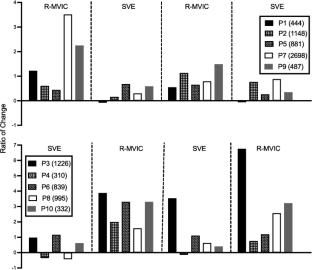
Pelvic floor dysfunction (PFD), often resulting from weakened pelvic floor muscles (PFM), significantly impacts quality of life and increases health risks, particularly among the elderly. Strengthening PFMs through exercise is effective, yet invasive treatment protocols deter adherence. Non-invasive surface electromyography (sEMG) provides a promising alternative for assessing PFM strength. This study evaluates a reinforcement-based strategy (R-MVIC) against standard verbal encouragement (SVE) for estimating the maximal voluntary isometric contraction strength (MVIC) of PFMs. Using a single-case reversal design (ABAB), we compared peak amplitudes across experimental and control conditions. All experimental sessions occurred in a small examination room at a major University. Using an (AB)k single-case research design power analysis to determine our N, we recruited ten participants who performed isolated PFM contractions. The R-MVIC condition involved pre-training, task-specific instructions, criterion-based feedback, and an extinction burst manipulation. To determine the strength of muscle contraction, we used sEMG, placed over the transverse abdominis/internal oblique (TrA/IO) site, to measure muscle activity in microvolts (mV). Results indicated R-MVIC produced significantly higher peak amplitudes compared to SVE, with a mean difference of 746 mV, representing a 52% increase. The R-MVIC condition consistently evoked stronger contractions, demonstrating the efficacy of feedback and extinction bursts in enhancing MVIC estimates. These findings suggest that R-MVIC is a valuable strategy for improving estimates of PFM strength. Overall, the results suggest that sEMG-based biofeedback provides a non-invasive technology for improving treatment protocols.
期刊介绍:
Applied Psychophysiology and Biofeedback is an international, interdisciplinary journal devoted to study of the interrelationship of physiological systems, cognition, social and environmental parameters, and health. Priority is given to original research, basic and applied, which contributes to the theory, practice, and evaluation of applied psychophysiology and biofeedback. Submissions are also welcomed for consideration in several additional sections that appear in the journal. They consist of conceptual and theoretical articles; evaluative reviews; the Clinical Forum, which includes separate categories for innovative case studies, clinical replication series, extended treatment protocols, and clinical notes and observations; the Discussion Forum, which includes a series of papers centered around a topic of importance to the field; Innovations in Instrumentation; Letters to the Editor, commenting on issues raised in articles previously published in the journal; and select book reviews. Applied Psychophysiology and Biofeedback is the official publication of the Association for Applied Psychophysiology and Biofeedback.




 京公网安备 11010802042870号
京ICP备2023020795号-1
京公网安备 11010802042870号
京ICP备2023020795号-1

 分享
分享
 求助内容:
求助内容: 应助结果提醒方式:
 扫码关注我们
