Ebrahim Mousali, Abolhassan Noori, Mohammad S Rahmanifar, Masumeh Moloudi, Zewen Sun, Yuping Wu, Maher F El-Kady, Richard B Kaner, Mir F Mousavi
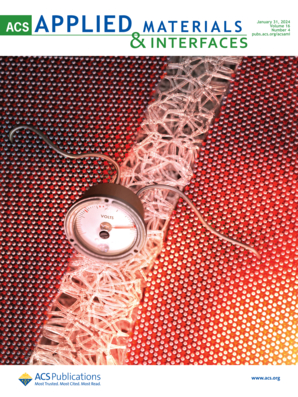
{"title":"Ultra-Wide Voltage Aqueous Superbatteries Enabled by Iron and Zinc Zeolitic Frameworks.","authors":"Ebrahim Mousali, Abolhassan Noori, Mohammad S Rahmanifar, Masumeh Moloudi, Zewen Sun, Yuping Wu, Maher F El-Kady, Richard B Kaner, Mir F Mousavi","doi":"10.1021/acsami.4c20184","DOIUrl":null,"url":null,"abstract":"<p><p>Extensive research on supercapacitor-battery hybrid devices has bridged the gap between conventional batteries and supercapacitors. However, several challenges persist, including limited capacitance in the negative potential range, restricted rate capability, and a narrow potential window (<1.23 V) in aqueous electrolytes. Drawing inspiration from the notable benefits of bottom-up synthesis, which allows tailoring of structure and functionality through the selection of molecular components, we successfully synthesized an Fe-incorporated zeolitic imidazolate framework-8 (composed of Zn nodes and 2-methylimidazole linkers). Subsequently, the metal-organic framework was hydrothermally composited with graphene oxide in the presence of urea to prepare a dual metal oxide/N-doped reduced graphene oxide (DMO-NrGO) nanocomposite. Benefiting from the high hydrogen evolution overpotential of zinc-based compounds and the promising negative potential range activity of iron-based species, the lower potential limit of the X-ray confirmed crystalline-amorphous heterophase DMO-NrGO nanocomposite extends up to -1.45 V. It exhibits a specific capacity (capacitance) of 119 mA h g<sup>-1</sup> (378 F g<sup>-1</sup>) at 1.0 A g<sup>-1</sup> in 3.0 M KOH. Interestingly, the symmetric DMO-NrGO based superbattery device demonstrates an ultrawide voltage window of 1.95 V, with a superior specific energy of 28 W h kg<sup>-1</sup> and an outstanding specific power of 29 kW kg<sup>-1</sup> at 3.0 A g<sup>-1</sup>. The outstanding electrochemical performance can be attributed to the heterophase structure of the nanocomposite, which accommodates more active sites, provides additional ion transport channels, reduces phase-transformation resistance, and facilitates smooth electron transfer between metal oxides and graphene. This innovative synthetic strategy opens opportunities for developing high-performance aqueous energy storage devices.</p>","PeriodicalId":5,"journal":{"name":"ACS Applied Materials & Interfaces","volume":" ","pages":"13881-13895"},"PeriodicalIF":8.2000,"publicationDate":"2025-03-05","publicationTypes":"Journal Article","fieldsOfStudy":null,"isOpenAccess":false,"openAccessPdf":"","citationCount":"0","resultStr":null,"platform":"Semanticscholar","paperid":null,"PeriodicalName":"ACS Applied Materials & Interfaces","FirstCategoryId":"88","ListUrlMain":"https://doi.org/10.1021/acsami.4c20184","RegionNum":2,"RegionCategory":"材料科学","ArticlePicture":[],"TitleCN":null,"AbstractTextCN":null,"PMCID":null,"EPubDate":"2025/2/24 0:00:00","PubModel":"Epub","JCR":"Q1","JCRName":"MATERIALS SCIENCE, MULTIDISCIPLINARY","Score":null,"Total":0}
引用次数: 0
Abstract
Extensive research on supercapacitor-battery hybrid devices has bridged the gap between conventional batteries and supercapacitors. However, several challenges persist, including limited capacitance in the negative potential range, restricted rate capability, and a narrow potential window (<1.23 V) in aqueous electrolytes. Drawing inspiration from the notable benefits of bottom-up synthesis, which allows tailoring of structure and functionality through the selection of molecular components, we successfully synthesized an Fe-incorporated zeolitic imidazolate framework-8 (composed of Zn nodes and 2-methylimidazole linkers). Subsequently, the metal-organic framework was hydrothermally composited with graphene oxide in the presence of urea to prepare a dual metal oxide/N-doped reduced graphene oxide (DMO-NrGO) nanocomposite. Benefiting from the high hydrogen evolution overpotential of zinc-based compounds and the promising negative potential range activity of iron-based species, the lower potential limit of the X-ray confirmed crystalline-amorphous heterophase DMO-NrGO nanocomposite extends up to -1.45 V. It exhibits a specific capacity (capacitance) of 119 mA h g-1 (378 F g-1) at 1.0 A g-1 in 3.0 M KOH. Interestingly, the symmetric DMO-NrGO based superbattery device demonstrates an ultrawide voltage window of 1.95 V, with a superior specific energy of 28 W h kg-1 and an outstanding specific power of 29 kW kg-1 at 3.0 A g-1. The outstanding electrochemical performance can be attributed to the heterophase structure of the nanocomposite, which accommodates more active sites, provides additional ion transport channels, reduces phase-transformation resistance, and facilitates smooth electron transfer between metal oxides and graphene. This innovative synthetic strategy opens opportunities for developing high-performance aqueous energy storage devices.
对超级电容器-电池混合装置的广泛研究已经弥合了传统电池和超级电容器之间的差距。然而,仍然存在一些挑战,包括负电位范围内的有限电容,受限的速率能力以及3.0 M KOH下1.0 a g-1时的窄电位窗口(-1 (378 F g-1))。有趣的是,基于DMO-NrGO的对称超级电池器件具有1.95 V的超宽电压窗,具有28 W h kg-1的优越比能量,以及3.0 a g-1时的29 kW kg-1的突出比功率。优异的电化学性能可归因于纳米复合材料的异相结构,它容纳了更多的活性位点,提供了额外的离子传输通道,降低了相变阻力,并促进了金属氧化物和石墨烯之间的平稳电子转移。这种创新的合成策略为开发高性能的水储能装置提供了机会。
期刊介绍:
ACS Applied Materials & Interfaces is a leading interdisciplinary journal that brings together chemists, engineers, physicists, and biologists to explore the development and utilization of newly-discovered materials and interfacial processes for specific applications. Our journal has experienced remarkable growth since its establishment in 2009, both in terms of the number of articles published and the impact of the research showcased. We are proud to foster a truly global community, with the majority of published articles originating from outside the United States, reflecting the rapid growth of applied research worldwide.



 京公网安备 11010802042870号
京ICP备2023020795号-1
京公网安备 11010802042870号
京ICP备2023020795号-1

 分享
分享
 求助内容:
求助内容: 应助结果提醒方式:
 扫码关注我们
