{"title":"Immobilization of Cadmium by Fulvic Acid-Modified Palygorskite and Plant and Soil Metabolism Responses.","authors":"Jianrui Li, Yingming Xu","doi":"10.3390/toxics13020068","DOIUrl":null,"url":null,"abstract":"<p><p>This experiment was designed to investigate the immobilization effect of fulvic acid-modified palygorskite on cadmium (Cd) and evaluate metabolism responses in plants in terms of chlorophyll, proline, and soluble protein and in soils in terms of microorganism number and enzymatic activity. The characteristics of the specific surface area and X-ray diffraction (XRD) spectra of modified palygorskite were analyzed to obtain information on the clay structure. The infrared (IR) spectrum characteristics of modified palygorskite and Cd adsorption products were analyzed to study the Cd immobilization mechanism. The modified palygorskite was hydrated magnesia aluminum silicate clay with a surface area of 50.923 m<sup>2</sup>/g and dominant mesopore distribution. The silanol group (Si-OH) and carboxyl (-COOH) present in modified palygorskite can form a complex with Cd to induce a 12.8-60.3% reduction in available Cd in soil and a 17.9-76.8% reduction in plant Cd. A 7.0-22.9% rise in chlorophyll, a 19.2-64.1% increase in proline, and a 20.1% maximum increase in soluble protein in plants were observed. A 1.45-fold maximal increase in number of bacteria, a 56.7% maximal rise in number of fungi, a 64.8-206.2% rise in dehydrogenase activity, and a 22.9-fold maximal increase in cellulase activity in the soil were obtained. Fulvic acid-modified palygorskite is a recommended Cd inactivator based on the fact that clay application reduces the ecological risk of Cd entering the food chain and stimulates plant physiological metabolism and soil biochemical activity.</p>","PeriodicalId":23195,"journal":{"name":"Toxics","volume":"13 2","pages":""},"PeriodicalIF":4.1000,"publicationDate":"2025-01-21","publicationTypes":"Journal Article","fieldsOfStudy":null,"isOpenAccess":false,"openAccessPdf":"https://www.ncbi.nlm.nih.gov/pmc/articles/PMC11860813/pdf/","citationCount":"0","resultStr":null,"platform":"Semanticscholar","paperid":null,"PeriodicalName":"Toxics","FirstCategoryId":"93","ListUrlMain":"https://doi.org/10.3390/toxics13020068","RegionNum":3,"RegionCategory":"环境科学与生态学","ArticlePicture":[],"TitleCN":null,"AbstractTextCN":null,"PMCID":null,"EPubDate":"","PubModel":"","JCR":"Q2","JCRName":"ENVIRONMENTAL SCIENCES","Score":null,"Total":0}
引用次数: 0
Abstract
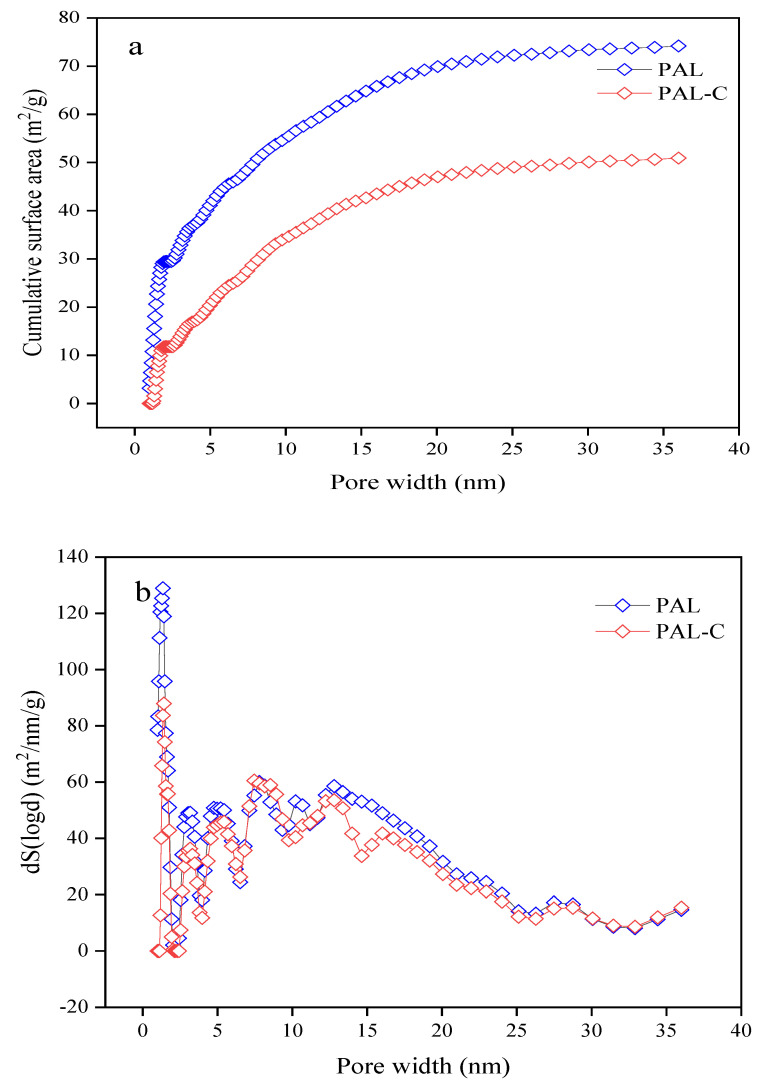
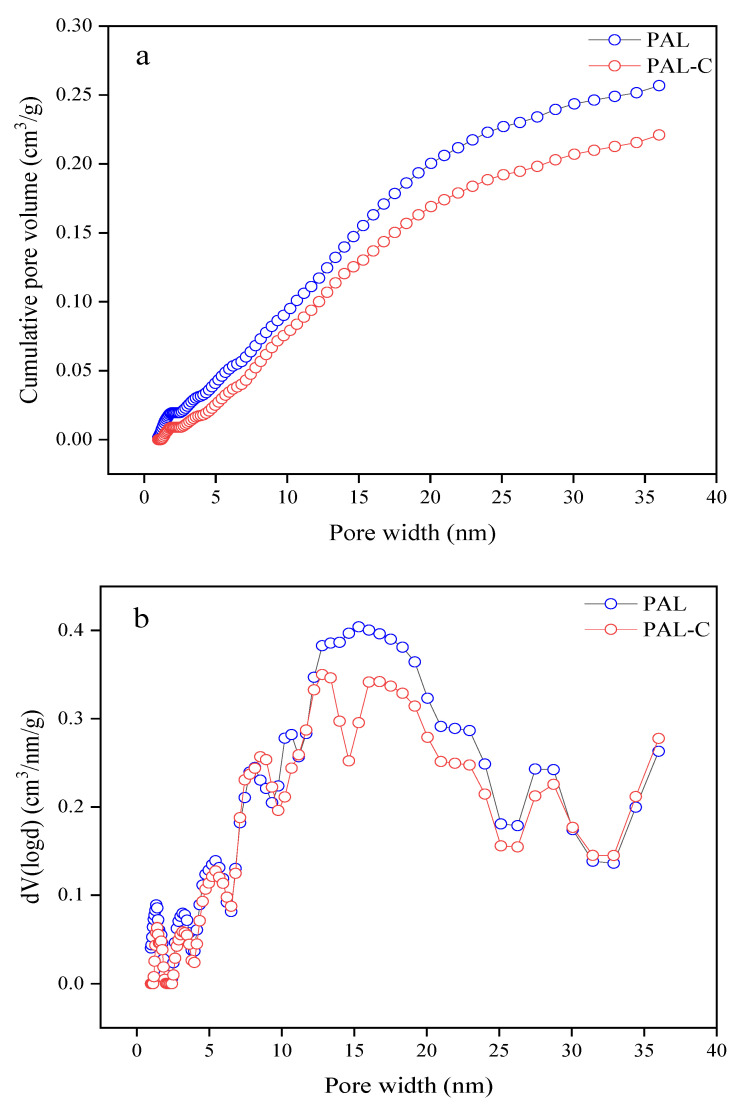
This experiment was designed to investigate the immobilization effect of fulvic acid-modified palygorskite on cadmium (Cd) and evaluate metabolism responses in plants in terms of chlorophyll, proline, and soluble protein and in soils in terms of microorganism number and enzymatic activity. The characteristics of the specific surface area and X-ray diffraction (XRD) spectra of modified palygorskite were analyzed to obtain information on the clay structure. The infrared (IR) spectrum characteristics of modified palygorskite and Cd adsorption products were analyzed to study the Cd immobilization mechanism. The modified palygorskite was hydrated magnesia aluminum silicate clay with a surface area of 50.923 m2/g and dominant mesopore distribution. The silanol group (Si-OH) and carboxyl (-COOH) present in modified palygorskite can form a complex with Cd to induce a 12.8-60.3% reduction in available Cd in soil and a 17.9-76.8% reduction in plant Cd. A 7.0-22.9% rise in chlorophyll, a 19.2-64.1% increase in proline, and a 20.1% maximum increase in soluble protein in plants were observed. A 1.45-fold maximal increase in number of bacteria, a 56.7% maximal rise in number of fungi, a 64.8-206.2% rise in dehydrogenase activity, and a 22.9-fold maximal increase in cellulase activity in the soil were obtained. Fulvic acid-modified palygorskite is a recommended Cd inactivator based on the fact that clay application reduces the ecological risk of Cd entering the food chain and stimulates plant physiological metabolism and soil biochemical activity.
ToxicsChemical Engineering-Chemical Health and Safety
CiteScore
4.50
自引率
10.90%
发文量
681
审稿时长
6 weeks
期刊介绍:
Toxics (ISSN 2305-6304) is an international, peer-reviewed, open access journal which provides an advanced forum for studies related to all aspects of toxic chemicals and materials. It publishes reviews, regular research papers, and short communications. Our aim is to encourage scientists to publish their experimental and theoretical results in detail. There is, therefore, no restriction on the maximum length of the papers, although authors should write their papers in a clear and concise way. The full experimental details must be provided so that the results can be reproduced. Electronic files or software regarding the full details of calculations and experimental procedure can be deposited as supplementary material, if it is not possible to publish them along with the text.





 京公网安备 11010802042870号
京ICP备2023020795号-1
京公网安备 11010802042870号
京ICP备2023020795号-1

 分享
分享
 求助内容:
求助内容: 应助结果提醒方式:
 扫码关注我们
