{"title":"Intracranial Aneurysm Segmentation with a Dual-Path Fusion Network.","authors":"Ke Wang, Yong Zhang, Bin Fang","doi":"10.3390/bioengineering12020185","DOIUrl":null,"url":null,"abstract":"<p><p>Intracranial aneurysms (IAs), a significant medical concern due to their prevalence and life-threatening nature, pose challenges regarding diagnosis owing to their diminutive and variable morphology. There are currently challenges surrounding automating the segmentation of IAs, which is essential for diagnostic precision. Existing deep learning methods in IAs segmentation tend to emphasize semantic features at the expense of detailed information, potentially compromising segmentation quality. Our research introduces the innovative Dual-Path Fusion Network (DPF-Net), an advanced deep learning architecture crafted to refine IAs segmentation by adeptly incorporating detailed information. DPF-Net, with its unique resolution-preserving detail branch, ensures minimal loss of detail during feature extraction, while its cross-fusion module effectively promotes the connection of semantic information and finer detail features, enhancing segmentation precision. The network also integrates a detail aggregation module for effective fusion of multi-scale detail features. A view fusion strategy is employed to address spatial disruptions in patch generation, thereby improving feature extraction efficiency. Evaluated on the CADA dataset, DPF-Net achieves a remarkable mean Dice similarity coefficient (DSC) of 0.8967, highlighting its potential in automated IAs diagnosis in clinical settings. Furthermore, DPF-Net's outstanding performance on the BraTS 2020 MRI dataset for brain tumor segmentation with a mean DSC of 0.8535 further confirms its robustness and generalizability.</p>","PeriodicalId":8874,"journal":{"name":"Bioengineering","volume":"12 2","pages":""},"PeriodicalIF":3.7000,"publicationDate":"2025-02-15","publicationTypes":"Journal Article","fieldsOfStudy":null,"isOpenAccess":false,"openAccessPdf":"https://www.ncbi.nlm.nih.gov/pmc/articles/PMC11852351/pdf/","citationCount":"0","resultStr":null,"platform":"Semanticscholar","paperid":null,"PeriodicalName":"Bioengineering","FirstCategoryId":"5","ListUrlMain":"https://doi.org/10.3390/bioengineering12020185","RegionNum":3,"RegionCategory":"医学","ArticlePicture":[],"TitleCN":null,"AbstractTextCN":null,"PMCID":null,"EPubDate":"","PubModel":"","JCR":"Q2","JCRName":"ENGINEERING, BIOMEDICAL","Score":null,"Total":0}
引用次数: 0
Abstract
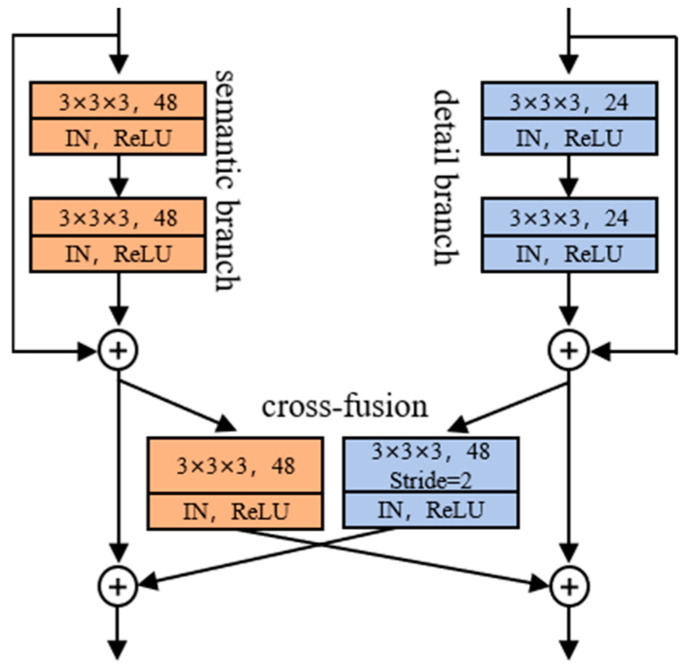
Intracranial aneurysms (IAs), a significant medical concern due to their prevalence and life-threatening nature, pose challenges regarding diagnosis owing to their diminutive and variable morphology. There are currently challenges surrounding automating the segmentation of IAs, which is essential for diagnostic precision. Existing deep learning methods in IAs segmentation tend to emphasize semantic features at the expense of detailed information, potentially compromising segmentation quality. Our research introduces the innovative Dual-Path Fusion Network (DPF-Net), an advanced deep learning architecture crafted to refine IAs segmentation by adeptly incorporating detailed information. DPF-Net, with its unique resolution-preserving detail branch, ensures minimal loss of detail during feature extraction, while its cross-fusion module effectively promotes the connection of semantic information and finer detail features, enhancing segmentation precision. The network also integrates a detail aggregation module for effective fusion of multi-scale detail features. A view fusion strategy is employed to address spatial disruptions in patch generation, thereby improving feature extraction efficiency. Evaluated on the CADA dataset, DPF-Net achieves a remarkable mean Dice similarity coefficient (DSC) of 0.8967, highlighting its potential in automated IAs diagnosis in clinical settings. Furthermore, DPF-Net's outstanding performance on the BraTS 2020 MRI dataset for brain tumor segmentation with a mean DSC of 0.8535 further confirms its robustness and generalizability.
期刊介绍:
Aims
Bioengineering (ISSN 2306-5354) provides an advanced forum for the science and technology of bioengineering. It publishes original research papers, comprehensive reviews, communications and case reports. Our aim is to encourage scientists to publish their experimental and theoretical results in as much detail as possible. All aspects of bioengineering are welcomed from theoretical concepts to education and applications. There is no restriction on the length of the papers. The full experimental details must be provided so that the results can be reproduced. There are, in addition, four key features of this Journal:
● We are introducing a new concept in scientific and technical publications “The Translational Case Report in Bioengineering”. It is a descriptive explanatory analysis of a transformative or translational event. Understanding that the goal of bioengineering scholarship is to advance towards a transformative or clinical solution to an identified transformative/clinical need, the translational case report is used to explore causation in order to find underlying principles that may guide other similar transformative/translational undertakings.
● Manuscripts regarding research proposals and research ideas will be particularly welcomed.
● Electronic files and software regarding the full details of the calculation and experimental procedure, if unable to be published in a normal way, can be deposited as supplementary material.
● We also accept manuscripts communicating to a broader audience with regard to research projects financed with public funds.
Scope
● Bionics and biological cybernetics: implantology; bio–abio interfaces
● Bioelectronics: wearable electronics; implantable electronics; “more than Moore” electronics; bioelectronics devices
● Bioprocess and biosystems engineering and applications: bioprocess design; biocatalysis; bioseparation and bioreactors; bioinformatics; bioenergy; etc.
● Biomolecular, cellular and tissue engineering and applications: tissue engineering; chromosome engineering; embryo engineering; cellular, molecular and synthetic biology; metabolic engineering; bio-nanotechnology; micro/nano technologies; genetic engineering; transgenic technology
● Biomedical engineering and applications: biomechatronics; biomedical electronics; biomechanics; biomaterials; biomimetics; biomedical diagnostics; biomedical therapy; biomedical devices; sensors and circuits; biomedical imaging and medical information systems; implants and regenerative medicine; neurotechnology; clinical engineering; rehabilitation engineering
● Biochemical engineering and applications: metabolic pathway engineering; modeling and simulation
● Translational bioengineering






 京公网安备 11010802042870号
京ICP备2023020795号-1
京公网安备 11010802042870号
京ICP备2023020795号-1

 分享
分享
 求助内容:
求助内容: 应助结果提醒方式:
 扫码关注我们
