{"title":"Artificial Intelligence in Biomedical Engineering and Its Influence on Healthcare Structure: Current and Future Prospects.","authors":"Divya Tripathi, Kasturee Hajra, Aditya Mulukutla, Romi Shreshtha, Dipak Maity","doi":"10.3390/bioengineering12020163","DOIUrl":null,"url":null,"abstract":"<p><p>Artificial intelligence (AI) is a growing area of computer science that combines technologies with data science to develop intelligent, highly computation-able systems. Its ability to automatically analyze and query huge sets of data has rendered it essential to many fields such as healthcare. This article introduces you to artificial intelligence, how it works, and what its central role in biomedical engineering is. It brings to light new developments in medical science, why it is being applied in biomedicine, key problems in computer vision and AI, medical applications, diagnostics, and live health monitoring. This paper starts with an introduction to artificial intelligence and its major subfields before moving into how AI is revolutionizing healthcare technology. There is a lot of emphasis on how it will transform biomedical engineering through the use of AI-based devices like biosensors. Not only can these machines detect abnormalities in a patient's physiology, but they also allow for chronic health tracking. Further, this review also provides an overview of the trends of AI-enabled healthcare technologies and concludes that the adoption of artificial intelligence in healthcare will be very high. The most promising are in diagnostics, with highly accurate, non-invasive diagnostics such as advanced imaging and vocal biomarker analyzers leading medicine into the future.</p>","PeriodicalId":8874,"journal":{"name":"Bioengineering","volume":"12 2","pages":""},"PeriodicalIF":3.7000,"publicationDate":"2025-02-08","publicationTypes":"Journal Article","fieldsOfStudy":null,"isOpenAccess":false,"openAccessPdf":"https://www.ncbi.nlm.nih.gov/pmc/articles/PMC11851410/pdf/","citationCount":"0","resultStr":null,"platform":"Semanticscholar","paperid":null,"PeriodicalName":"Bioengineering","FirstCategoryId":"5","ListUrlMain":"https://doi.org/10.3390/bioengineering12020163","RegionNum":3,"RegionCategory":"医学","ArticlePicture":[],"TitleCN":null,"AbstractTextCN":null,"PMCID":null,"EPubDate":"","PubModel":"","JCR":"Q2","JCRName":"ENGINEERING, BIOMEDICAL","Score":null,"Total":0}
引用次数: 0
Abstract
Artificial intelligence (AI) is a growing area of computer science that combines technologies with data science to develop intelligent, highly computation-able systems. Its ability to automatically analyze and query huge sets of data has rendered it essential to many fields such as healthcare. This article introduces you to artificial intelligence, how it works, and what its central role in biomedical engineering is. It brings to light new developments in medical science, why it is being applied in biomedicine, key problems in computer vision and AI, medical applications, diagnostics, and live health monitoring. This paper starts with an introduction to artificial intelligence and its major subfields before moving into how AI is revolutionizing healthcare technology. There is a lot of emphasis on how it will transform biomedical engineering through the use of AI-based devices like biosensors. Not only can these machines detect abnormalities in a patient's physiology, but they also allow for chronic health tracking. Further, this review also provides an overview of the trends of AI-enabled healthcare technologies and concludes that the adoption of artificial intelligence in healthcare will be very high. The most promising are in diagnostics, with highly accurate, non-invasive diagnostics such as advanced imaging and vocal biomarker analyzers leading medicine into the future.
期刊介绍:
Aims
Bioengineering (ISSN 2306-5354) provides an advanced forum for the science and technology of bioengineering. It publishes original research papers, comprehensive reviews, communications and case reports. Our aim is to encourage scientists to publish their experimental and theoretical results in as much detail as possible. All aspects of bioengineering are welcomed from theoretical concepts to education and applications. There is no restriction on the length of the papers. The full experimental details must be provided so that the results can be reproduced. There are, in addition, four key features of this Journal:
● We are introducing a new concept in scientific and technical publications “The Translational Case Report in Bioengineering”. It is a descriptive explanatory analysis of a transformative or translational event. Understanding that the goal of bioengineering scholarship is to advance towards a transformative or clinical solution to an identified transformative/clinical need, the translational case report is used to explore causation in order to find underlying principles that may guide other similar transformative/translational undertakings.
● Manuscripts regarding research proposals and research ideas will be particularly welcomed.
● Electronic files and software regarding the full details of the calculation and experimental procedure, if unable to be published in a normal way, can be deposited as supplementary material.
● We also accept manuscripts communicating to a broader audience with regard to research projects financed with public funds.
Scope
● Bionics and biological cybernetics: implantology; bio–abio interfaces
● Bioelectronics: wearable electronics; implantable electronics; “more than Moore” electronics; bioelectronics devices
● Bioprocess and biosystems engineering and applications: bioprocess design; biocatalysis; bioseparation and bioreactors; bioinformatics; bioenergy; etc.
● Biomolecular, cellular and tissue engineering and applications: tissue engineering; chromosome engineering; embryo engineering; cellular, molecular and synthetic biology; metabolic engineering; bio-nanotechnology; micro/nano technologies; genetic engineering; transgenic technology
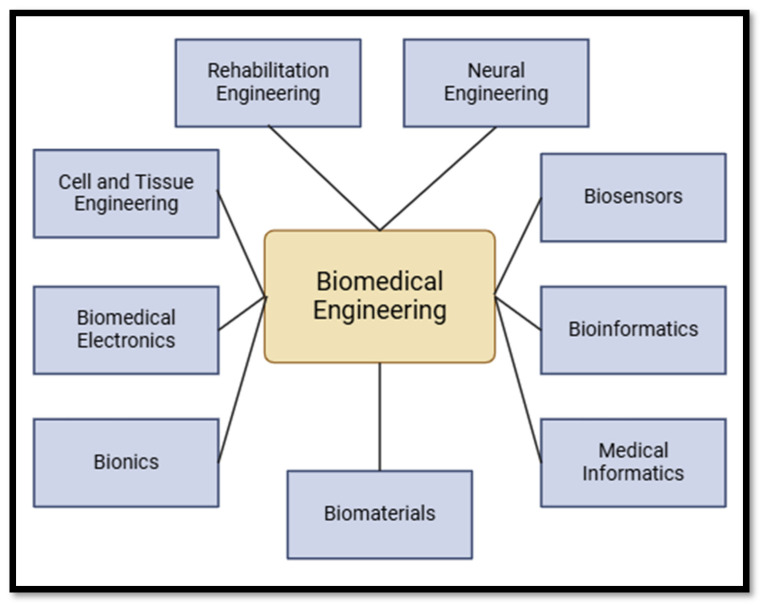
● Biomedical engineering and applications: biomechatronics; biomedical electronics; biomechanics; biomaterials; biomimetics; biomedical diagnostics; biomedical therapy; biomedical devices; sensors and circuits; biomedical imaging and medical information systems; implants and regenerative medicine; neurotechnology; clinical engineering; rehabilitation engineering
● Biochemical engineering and applications: metabolic pathway engineering; modeling and simulation
● Translational bioengineering




 京公网安备 11010802042870号
京ICP备2023020795号-1
京公网安备 11010802042870号
京ICP备2023020795号-1

 分享
分享
 求助内容:
求助内容: 应助结果提醒方式:
 扫码关注我们
