Understanding and targeting repetitive behaviors and restricted interests in autism spectrum disorder via high-definition transcranial direct current stimulation: a study-protocol.
Giulia Lazzaro, Sara Passarini, Andrea Battisti, Floriana Costanzo, Giacomo Garone, Mattia Mercier, Barbara D'Aiello, Pietro De Rossi, Giovanni Valeri, Silvia Guerrera, Laura Casula, Deny Menghini, Stefano Vicari, Elisa Fucà
{"title":"Understanding and targeting repetitive behaviors and restricted interests in autism spectrum disorder via high-definition transcranial direct current stimulation: a study-protocol.","authors":"Giulia Lazzaro, Sara Passarini, Andrea Battisti, Floriana Costanzo, Giacomo Garone, Mattia Mercier, Barbara D'Aiello, Pietro De Rossi, Giovanni Valeri, Silvia Guerrera, Laura Casula, Deny Menghini, Stefano Vicari, Elisa Fucà","doi":"10.1186/s12888-025-06506-y","DOIUrl":null,"url":null,"abstract":"<p><strong>Background: </strong>Autism spectrum disorder (ASD) is a neurodevelopmental disorder characterized by persistent deficits in social interaction and repetitive behaviors (RBs). Therapies specifically targeting RBs have been underexplored despite advances in understanding their neurobiological basis. This study aims to evaluate whether high-definition transcranial direct current stimulation (HD-tDCS) can reduce dysfunctional RBs in autistic children and investigate whether improvements differ between lower-order and higher-order RBs based on the brain regions stimulated.</p><p><strong>Methods: </strong>The study entails a multi-session, sham-controlled, site-controlled, double-blind, and between-subjects design. The study will include participants with an ASD diagnosis (aged 8-13 years; IQ ≥ 70), who will undergo the HD-tDCS intervention for 10 sessions. Participants will be randomly assigned to three conditions: (1) Pre-Motor Active Group (active HD-tDCS over pre-SMA cortex); (2) Frontal Active Group (active HD-tDCS over dlPFC); (3) Placebo Control Group. In the active HD-tDCS conditions, the current will be delivered through a 4 × 1 montage; small circular electrodes will be used with the cathode placed centrally with a current intensity of 0.5 mA for a total of 20 min (30 s ramp up/down) per session. Participants during the sham condition will undergo the same procedures as those in the both active conditions actual placement of electrodes, and turning on the HD-tDCS equipment (30 s). The assessment will be completed at baseline (T0), immediately after the end of the intervention (T1) and 3 months after the end of the intervention (T2). The primary outcome measure will be the Total Score of the Repetitive Behavior Scale-Revised. The secondary outcomes measures will comprise ASD symptoms, sensory processing pattern, emotional/behavioral problems, sleep functioning, parental stress, neuropsychological features and High-Density EEG connectivity. We hypothesize that active HD-tDCS will lead to significant reduction in the total score of the primary outcome compared to Sham Group, with site-specific effects on lower-order and higher-order RBs.</p><p><strong>Discussion: </strong>HD-tDCS is an easy-to-deliver, time-efficient, neurobiologically-driven intervention that could be performed as add-on to reduce the time of conventional therapy for ASD. Given the inherent limitations of specific interventions for RBs, tDCS represents an important \"third\" treatment arm to address the burden of interventions for ASD.</p><p><strong>Trial registration details: </strong>The trial has been registered at ClinicalTrials.gov (ID: NCT06645587). Registered 17 October 2024.</p>","PeriodicalId":9029,"journal":{"name":"BMC Psychiatry","volume":"25 1","pages":"170"},"PeriodicalIF":3.4000,"publicationDate":"2025-02-25","publicationTypes":"Journal Article","fieldsOfStudy":null,"isOpenAccess":false,"openAccessPdf":"https://www.ncbi.nlm.nih.gov/pmc/articles/PMC11863796/pdf/","citationCount":"0","resultStr":null,"platform":"Semanticscholar","paperid":null,"PeriodicalName":"BMC Psychiatry","FirstCategoryId":"3","ListUrlMain":"https://doi.org/10.1186/s12888-025-06506-y","RegionNum":2,"RegionCategory":"医学","ArticlePicture":[],"TitleCN":null,"AbstractTextCN":null,"PMCID":null,"EPubDate":"","PubModel":"","JCR":"Q2","JCRName":"PSYCHIATRY","Score":null,"Total":0}
引用次数: 0
Abstract
Background: Autism spectrum disorder (ASD) is a neurodevelopmental disorder characterized by persistent deficits in social interaction and repetitive behaviors (RBs). Therapies specifically targeting RBs have been underexplored despite advances in understanding their neurobiological basis. This study aims to evaluate whether high-definition transcranial direct current stimulation (HD-tDCS) can reduce dysfunctional RBs in autistic children and investigate whether improvements differ between lower-order and higher-order RBs based on the brain regions stimulated.
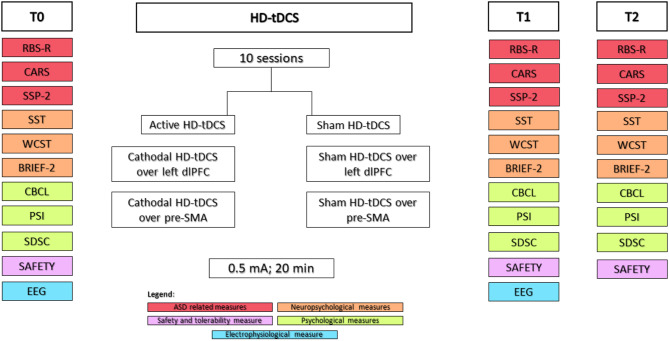
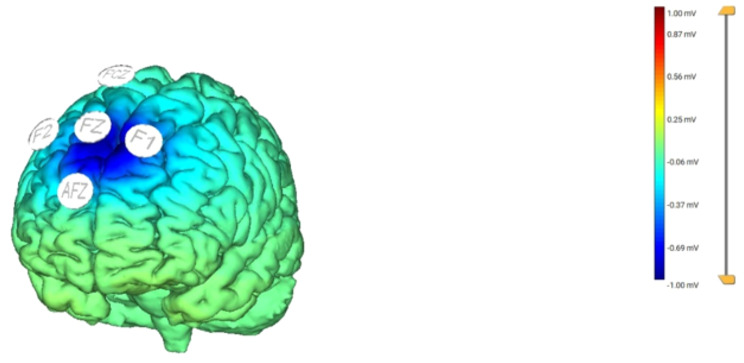
Methods: The study entails a multi-session, sham-controlled, site-controlled, double-blind, and between-subjects design. The study will include participants with an ASD diagnosis (aged 8-13 years; IQ ≥ 70), who will undergo the HD-tDCS intervention for 10 sessions. Participants will be randomly assigned to three conditions: (1) Pre-Motor Active Group (active HD-tDCS over pre-SMA cortex); (2) Frontal Active Group (active HD-tDCS over dlPFC); (3) Placebo Control Group. In the active HD-tDCS conditions, the current will be delivered through a 4 × 1 montage; small circular electrodes will be used with the cathode placed centrally with a current intensity of 0.5 mA for a total of 20 min (30 s ramp up/down) per session. Participants during the sham condition will undergo the same procedures as those in the both active conditions actual placement of electrodes, and turning on the HD-tDCS equipment (30 s). The assessment will be completed at baseline (T0), immediately after the end of the intervention (T1) and 3 months after the end of the intervention (T2). The primary outcome measure will be the Total Score of the Repetitive Behavior Scale-Revised. The secondary outcomes measures will comprise ASD symptoms, sensory processing pattern, emotional/behavioral problems, sleep functioning, parental stress, neuropsychological features and High-Density EEG connectivity. We hypothesize that active HD-tDCS will lead to significant reduction in the total score of the primary outcome compared to Sham Group, with site-specific effects on lower-order and higher-order RBs.
Discussion: HD-tDCS is an easy-to-deliver, time-efficient, neurobiologically-driven intervention that could be performed as add-on to reduce the time of conventional therapy for ASD. Given the inherent limitations of specific interventions for RBs, tDCS represents an important "third" treatment arm to address the burden of interventions for ASD.
Trial registration details: The trial has been registered at ClinicalTrials.gov (ID: NCT06645587). Registered 17 October 2024.
期刊介绍:
BMC Psychiatry is an open access, peer-reviewed journal that considers articles on all aspects of the prevention, diagnosis and management of psychiatric disorders, as well as related molecular genetics, pathophysiology, and epidemiology.




 京公网安备 11010802042870号
京ICP备2023020795号-1
京公网安备 11010802042870号
京ICP备2023020795号-1

 分享
分享
 求助内容:
求助内容: 应助结果提醒方式:
 扫码关注我们
