{"title":"Quality and reliability evaluation of YouTube® exercises content for temporomandibular disorders.","authors":"Halime Arikan, Erkan Erol","doi":"10.1186/s12903-025-05669-0","DOIUrl":null,"url":null,"abstract":"<p><strong>Objectives: </strong>YouTube is a popular source for health-related content, including exercises for temporomandibular disorders (TMD). This study aimed to evaluate the content and quality of YouTube videos on TMD exercises.</p><p><strong>Methods: </strong>A systematic search on YouTube using keywords related to TMD exercises and rehabilitation identified relevant videos. Two researchers independently assessed these videos. Content was evaluated using the Video Information and Quality Index (VIQI), reliability with modified DISCERN, and quality with the Global Quality Scale (GQS).</p><p><strong>Results: </strong>One hundred twenty one exercise videos were included in the study. Of these, 47 (38.3%) were helpful, and 89 (73.6%) were uploaded by healthcare professionals. Useful and misleading videos had similar metrics for views, likes, comments, and interaction (p > 0.05), but useful videos had longer durations and older upload dates (p < 0.05). Cohen's Kappa scores showed substantial agreement between raters (mDISCERN = 0.709, GQS = 0.753). The Intraclass Correlation Coefficient for VIQI was 0.907. Significant differences were found in mDISCERN, GQS, and VIQI scores based on the source and usefulness of videos (p < 0.05), with high correlations among the instruments (r = 0.740 to 0.909). The area under the curve for the instruments ranged from 0.785 to 0.876.</p><p><strong>Conclusions: </strong>The majority of YouTube videos on TMD exercises were deemed useful, primarily uploaded by healthcare professionals, and contained reasonably safe, accurate, and quality information. Although this may seem like a positive outcome, unfortunately there was no explanation of TMD diagnoses in the videos. Therefore, it was unclear which types of TMD pathologies the videos were addressing.</p>","PeriodicalId":9072,"journal":{"name":"BMC Oral Health","volume":"25 1","pages":"301"},"PeriodicalIF":3.1000,"publicationDate":"2025-02-25","publicationTypes":"Journal Article","fieldsOfStudy":null,"isOpenAccess":false,"openAccessPdf":"https://www.ncbi.nlm.nih.gov/pmc/articles/PMC11853538/pdf/","citationCount":"0","resultStr":null,"platform":"Semanticscholar","paperid":null,"PeriodicalName":"BMC Oral Health","FirstCategoryId":"3","ListUrlMain":"https://doi.org/10.1186/s12903-025-05669-0","RegionNum":2,"RegionCategory":"医学","ArticlePicture":[],"TitleCN":null,"AbstractTextCN":null,"PMCID":null,"EPubDate":"","PubModel":"","JCR":"Q1","JCRName":"DENTISTRY, ORAL SURGERY & MEDICINE","Score":null,"Total":0}
引用次数: 0
Abstract
Objectives: YouTube is a popular source for health-related content, including exercises for temporomandibular disorders (TMD). This study aimed to evaluate the content and quality of YouTube videos on TMD exercises.
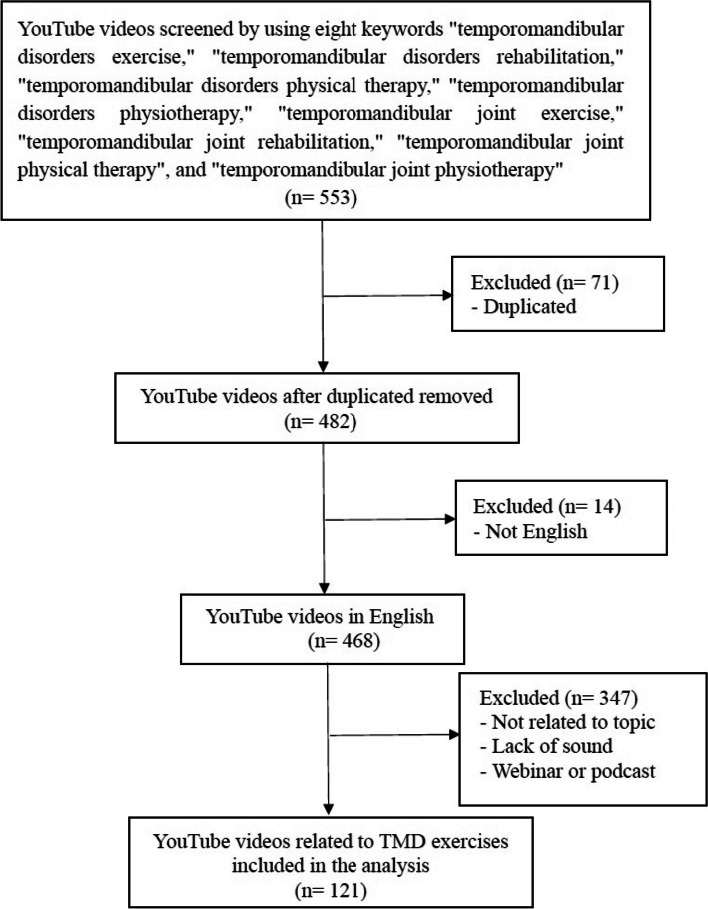
Methods: A systematic search on YouTube using keywords related to TMD exercises and rehabilitation identified relevant videos. Two researchers independently assessed these videos. Content was evaluated using the Video Information and Quality Index (VIQI), reliability with modified DISCERN, and quality with the Global Quality Scale (GQS).
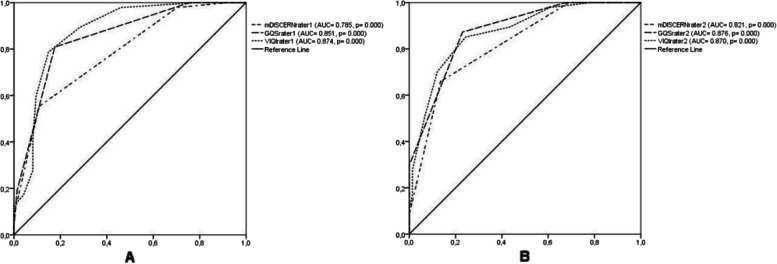
Results: One hundred twenty one exercise videos were included in the study. Of these, 47 (38.3%) were helpful, and 89 (73.6%) were uploaded by healthcare professionals. Useful and misleading videos had similar metrics for views, likes, comments, and interaction (p > 0.05), but useful videos had longer durations and older upload dates (p < 0.05). Cohen's Kappa scores showed substantial agreement between raters (mDISCERN = 0.709, GQS = 0.753). The Intraclass Correlation Coefficient for VIQI was 0.907. Significant differences were found in mDISCERN, GQS, and VIQI scores based on the source and usefulness of videos (p < 0.05), with high correlations among the instruments (r = 0.740 to 0.909). The area under the curve for the instruments ranged from 0.785 to 0.876.
Conclusions: The majority of YouTube videos on TMD exercises were deemed useful, primarily uploaded by healthcare professionals, and contained reasonably safe, accurate, and quality information. Although this may seem like a positive outcome, unfortunately there was no explanation of TMD diagnoses in the videos. Therefore, it was unclear which types of TMD pathologies the videos were addressing.
期刊介绍:
BMC Oral Health is an open access, peer-reviewed journal that considers articles on all aspects of the prevention, diagnosis and management of disorders of the mouth, teeth and gums, as well as related molecular genetics, pathophysiology, and epidemiology.



 京公网安备 11010802042870号
京ICP备2023020795号-1
京公网安备 11010802042870号
京ICP备2023020795号-1

 分享
分享
 求助内容:
求助内容: 应助结果提醒方式:
 扫码关注我们
