Junjie Kuang, Jun Li, Siwei Zhou, Yi Li, Jinbo Lin, Weizhen Huang, Xia Yuan
{"title":"Genomic and micro-environmental insights into drug resistance in colorectal cancer liver metastases.","authors":"Junjie Kuang, Jun Li, Siwei Zhou, Yi Li, Jinbo Lin, Weizhen Huang, Xia Yuan","doi":"10.1007/s12672-025-01976-8","DOIUrl":null,"url":null,"abstract":"<p><strong>Background: </strong>Colorectal cancer (CRC) is known for its high heterogeneity, with liver metastases significantly impairing survival outcomes. Understanding the tumor microenvironment (TME) and genomic alterations in metastatic sites is crucial for developing personalized therapies that overcome drug resistance and improve prognosis.</p><p><strong>Methods: </strong>We profiled 54 CRC liver metastases, comparing them with 198 other metastatic lesions and normal liver tissues. By analyzing immune cell infiltration, stromal interactions, and key genomic alterations, we constructed an 11-gene prognostic model to predict survival and immunotherapy outcomes.</p><p><strong>Results: </strong>CRC liver metastases with high-risk profiles demonstrated enriched follicular helper T cells, activated dendritic cells, and M2 macrophages in the TME. Frequent mutations in APC, TP53, KRAS, and PIK3CA were identified, alongside altered EGFR signaling. The 11-gene model effectively stratified patients by prognosis and predicted immunotherapy responses, emphasizing the therapeutic potential of targeting resistance mechanisms.</p><p><strong>Conclusions: </strong>This study reveals how genomic and TME-driven factors contribute to drug resistance in CRC liver metastases. Integrating these insights with clinical data could advance precision therapies, addressing the evolving challenge of tumor drug resistance in CRC.</p>","PeriodicalId":11148,"journal":{"name":"Discover. Oncology","volume":"16 1","pages":"241"},"PeriodicalIF":2.9000,"publicationDate":"2025-02-26","publicationTypes":"Journal Article","fieldsOfStudy":null,"isOpenAccess":false,"openAccessPdf":"https://www.ncbi.nlm.nih.gov/pmc/articles/PMC11865409/pdf/","citationCount":"0","resultStr":null,"platform":"Semanticscholar","paperid":null,"PeriodicalName":"Discover. Oncology","FirstCategoryId":"3","ListUrlMain":"https://doi.org/10.1007/s12672-025-01976-8","RegionNum":4,"RegionCategory":"医学","ArticlePicture":[],"TitleCN":null,"AbstractTextCN":null,"PMCID":null,"EPubDate":"","PubModel":"","JCR":"Q3","JCRName":"ENDOCRINOLOGY & METABOLISM","Score":null,"Total":0}
引用次数: 0
Abstract
Background: Colorectal cancer (CRC) is known for its high heterogeneity, with liver metastases significantly impairing survival outcomes. Understanding the tumor microenvironment (TME) and genomic alterations in metastatic sites is crucial for developing personalized therapies that overcome drug resistance and improve prognosis.
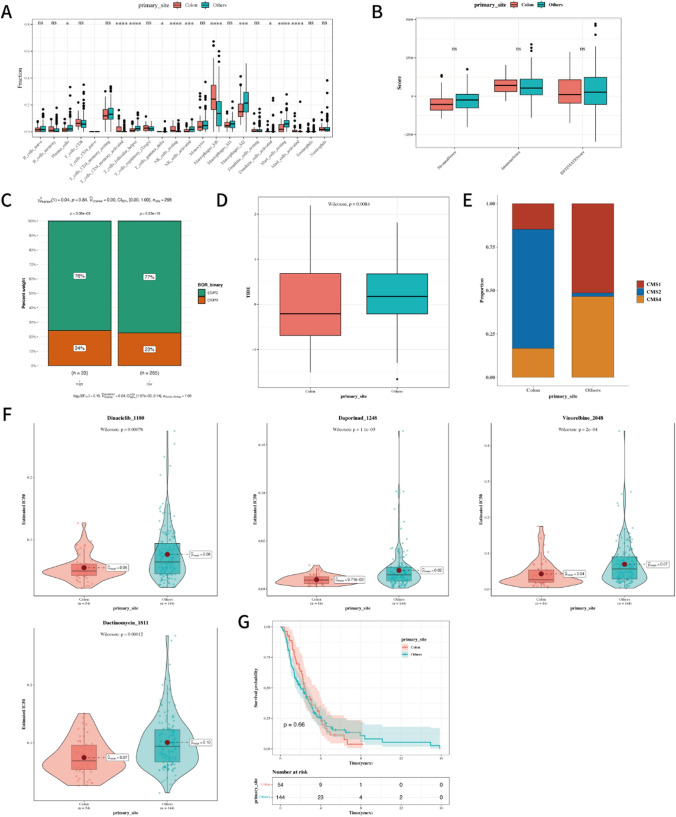
Methods: We profiled 54 CRC liver metastases, comparing them with 198 other metastatic lesions and normal liver tissues. By analyzing immune cell infiltration, stromal interactions, and key genomic alterations, we constructed an 11-gene prognostic model to predict survival and immunotherapy outcomes.
Results: CRC liver metastases with high-risk profiles demonstrated enriched follicular helper T cells, activated dendritic cells, and M2 macrophages in the TME. Frequent mutations in APC, TP53, KRAS, and PIK3CA were identified, alongside altered EGFR signaling. The 11-gene model effectively stratified patients by prognosis and predicted immunotherapy responses, emphasizing the therapeutic potential of targeting resistance mechanisms.
Conclusions: This study reveals how genomic and TME-driven factors contribute to drug resistance in CRC liver metastases. Integrating these insights with clinical data could advance precision therapies, addressing the evolving challenge of tumor drug resistance in CRC.







 京公网安备 11010802042870号
京ICP备2023020795号-1
京公网安备 11010802042870号
京ICP备2023020795号-1

 分享
分享
 求助内容:
求助内容: 应助结果提醒方式:
 扫码关注我们
