Alice M Martino, Areg Grigorian, Catherine M Kuza, Sigrid Burruss, Lourdes Swentek, Yigit Guner, Laura F Goodman, Jeffry Nahmias
{"title":"Comparison of cervical versus thoracic spinal cord injury outcomes in pediatric trauma patients.","authors":"Alice M Martino, Areg Grigorian, Catherine M Kuza, Sigrid Burruss, Lourdes Swentek, Yigit Guner, Laura F Goodman, Jeffry Nahmias","doi":"10.1007/s00383-024-05933-4","DOIUrl":null,"url":null,"abstract":"<p><strong>Purpose: </strong>To explore differences based on level of pediatric spinal cord injury (SCI), we compared cervical and thoracic SCI in pediatric trauma patients (PTPs), hypothesizing higher mortality and length of stay (LOS) for cervical SCI.</p><p><strong>Methods: </strong>The 2017-2021 Trauma Quality Improvement Program was queried for all PTPs ≤ 17 years-old with cervical or thoracic SCI. Bivariate analyses compared the two groups. The primary outcome was mortality and secondary outcomes included hospital LOS and injury severity scores (ISS). Logistic regression models were used to determine independent risk factors for death and prolonged ventilation.</p><p><strong>Results: </strong>Of 5280 PTPs, 2538 (65.9%) had cervical SCI and 1316 (34.1%) had thoracic SCI. Motor vehicle collisions were the most common cause of both cervical and thoracic SCI (37.8 and 41.9%). PTPs with thoracic SCI had higher rates of positive drug screen as compared to cervical SCI (39.2 vs 29.8%, p = 0.001). PTPs with thoracic SCI had higher median ISS (25 vs 16, p < 0.001), while cervical SCI had higher mortality (13 vs 6.1%, p < 0.001) but decreased hospital LOS (median 9 vs 5 days, p < 0.001. Cervical SCI were associated with a nearly fourfold increase in the risk of death (95% CI 2.750-5.799, p < 0.001) and a 1.6-fold increase in the risk of prolonged ventilator requirement (95% CI 1.228-2.068, p < 0.001).</p><p><strong>Conclusions: </strong>PTPs with cervical SCI have higher mortality while those with thoracic SCI have higher ISS and hospital LOS. Cervical SCI were associated with a fourfold higher risk of death. MVC was the most common cause of injury, and both groups had high rates of positive drug screens. Understanding differing outcomes may assist providers with prognostication and injury prevention.</p>","PeriodicalId":19832,"journal":{"name":"Pediatric Surgery International","volume":"41 1","pages":"86"},"PeriodicalIF":1.6000,"publicationDate":"2025-02-26","publicationTypes":"Journal Article","fieldsOfStudy":null,"isOpenAccess":false,"openAccessPdf":"https://www.ncbi.nlm.nih.gov/pmc/articles/PMC11865126/pdf/","citationCount":"0","resultStr":null,"platform":"Semanticscholar","paperid":null,"PeriodicalName":"Pediatric Surgery International","FirstCategoryId":"3","ListUrlMain":"https://doi.org/10.1007/s00383-024-05933-4","RegionNum":3,"RegionCategory":"医学","ArticlePicture":[],"TitleCN":null,"AbstractTextCN":null,"PMCID":null,"EPubDate":"","PubModel":"","JCR":"Q2","JCRName":"PEDIATRICS","Score":null,"Total":0}
引用次数: 0
Abstract
Purpose: To explore differences based on level of pediatric spinal cord injury (SCI), we compared cervical and thoracic SCI in pediatric trauma patients (PTPs), hypothesizing higher mortality and length of stay (LOS) for cervical SCI.
Methods: The 2017-2021 Trauma Quality Improvement Program was queried for all PTPs ≤ 17 years-old with cervical or thoracic SCI. Bivariate analyses compared the two groups. The primary outcome was mortality and secondary outcomes included hospital LOS and injury severity scores (ISS). Logistic regression models were used to determine independent risk factors for death and prolonged ventilation.
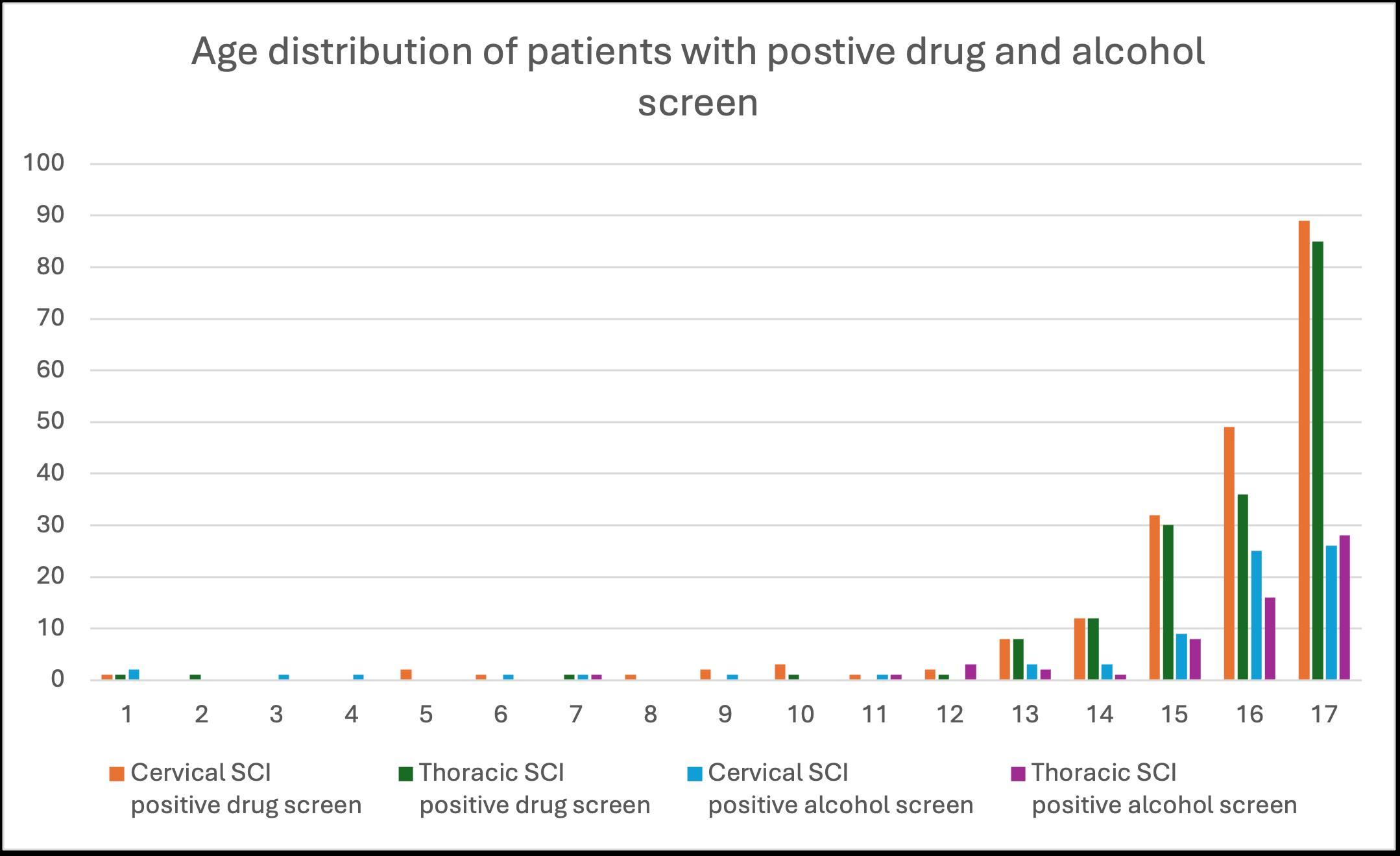
Results: Of 5280 PTPs, 2538 (65.9%) had cervical SCI and 1316 (34.1%) had thoracic SCI. Motor vehicle collisions were the most common cause of both cervical and thoracic SCI (37.8 and 41.9%). PTPs with thoracic SCI had higher rates of positive drug screen as compared to cervical SCI (39.2 vs 29.8%, p = 0.001). PTPs with thoracic SCI had higher median ISS (25 vs 16, p < 0.001), while cervical SCI had higher mortality (13 vs 6.1%, p < 0.001) but decreased hospital LOS (median 9 vs 5 days, p < 0.001. Cervical SCI were associated with a nearly fourfold increase in the risk of death (95% CI 2.750-5.799, p < 0.001) and a 1.6-fold increase in the risk of prolonged ventilator requirement (95% CI 1.228-2.068, p < 0.001).
Conclusions: PTPs with cervical SCI have higher mortality while those with thoracic SCI have higher ISS and hospital LOS. Cervical SCI were associated with a fourfold higher risk of death. MVC was the most common cause of injury, and both groups had high rates of positive drug screens. Understanding differing outcomes may assist providers with prognostication and injury prevention.
目的:为了探讨儿童脊髓损伤(SCI)程度的差异,我们比较了儿童创伤患者(PTPs)的颈椎和胸椎脊髓损伤,并假设颈椎脊髓损伤的死亡率和住院时间(LOS)更高。方法:查询2017-2021年创伤质量改善计划中所有≤17岁的ptp颈椎或胸椎脊髓损伤患者。双变量分析比较了两组。主要结局是死亡率,次要结局包括医院LOS和损伤严重程度评分(ISS)。Logistic回归模型用于确定死亡和延长通气的独立危险因素。结果:5280例ptp患者中,2538例(65.9%)有颈椎损伤,1316例(34.1%)有胸椎损伤。机动车碰撞是颈椎和胸椎脊髓损伤最常见的原因(分别为37.8%和41.9%)。胸椎脊髓损伤患者的药物筛查阳性率高于颈椎脊髓损伤患者(39.2% vs 29.8%, p = 0.001)。胸椎脊髓损伤的ptp患者有更高的中位ISS (25 vs 16, p)。结论:胸椎脊髓损伤的ptp患者有更高的死亡率,而胸椎脊髓损伤的ptp患者有更高的ISS和医院LOS。颈椎损伤与死亡风险增加4倍相关。MVC是最常见的损伤原因,两组的药物筛选阳性率都很高。了解不同的结果可以帮助医生预测和预防伤害。
期刊介绍:
Pediatric Surgery International is a journal devoted to the publication of new and important information from the entire spectrum of pediatric surgery. The major purpose of the journal is to promote postgraduate training and further education in the surgery of infants and children.
The contents will include articles in clinical and experimental surgery, as well as related fields. One section of each issue is devoted to a special topic, with invited contributions from recognized authorities. Other sections will include:
-Review articles-
Original articles-
Technical innovations-
Letters to the editor



 京公网安备 11010802042870号
京ICP备2023020795号-1
京公网安备 11010802042870号
京ICP备2023020795号-1

 分享
分享

 求助内容:
求助内容: 应助结果提醒方式:
 扫码关注我们
