{"title":"Study insights in the role of PGC-1α in neurological diseases: mechanisms and therapeutic potential.","authors":"Mi-Bo Tang, Yi-Xuan Liu, Zheng-Wei Hu, Hai-Yang Luo, Shuo Zhang, Chang-He Shi, Yu-Ming Xu","doi":"10.3389/fnagi.2024.1454735","DOIUrl":null,"url":null,"abstract":"<p><p>Peroxisome proliferator-activated receptor-<i>γ</i> coactivator-1α (PGC-1α), which is highly expressed in the central nervous system, is known to be involved in the regulation of mitochondrial biosynthesis, metabolic regulation, neuroinflammation, autophagy, and oxidative stress. This knowledge indicates a potential role of PGC-1α in a wide range of functions associated with neurological diseases. There is emerging evidence indicating a protective role of PGC-1α in the pathogenesis of several neurological diseases. As such, a deeper and broader understanding of PGC-1α and its role in neurological diseases is urgently needed. The present review provides a relatively complete overview of the current knowledge on PGC-1α, including its functions in different types of neurons, basic structural characteristics, and its interacting transcription factors. Furthermore, we present the role of PGC-1α in the pathogenesis of various neurological diseases, such as intracerebral hemorrhage, ischemic stroke, Alzheimer's disease, Parkinson's disease, Amyotrophic lateral sclerosis, Huntington's disease, and other PolyQ diseases. Importantly, we discuss some compounds or drug-targeting strategies that have been studied to ameliorate the pathology of these neurological diseases and introduce the possible mechanistic pathways. Based on the available studies, we propose that targeting PGC-1α could serve as a promising novel therapeutic strategy for one or more neurological diseases.</p>","PeriodicalId":12450,"journal":{"name":"Frontiers in Aging Neuroscience","volume":"16 ","pages":"1454735"},"PeriodicalIF":4.5000,"publicationDate":"2025-02-12","publicationTypes":"Journal Article","fieldsOfStudy":null,"isOpenAccess":false,"openAccessPdf":"https://www.ncbi.nlm.nih.gov/pmc/articles/PMC11861300/pdf/","citationCount":"0","resultStr":null,"platform":"Semanticscholar","paperid":null,"PeriodicalName":"Frontiers in Aging Neuroscience","FirstCategoryId":"3","ListUrlMain":"https://doi.org/10.3389/fnagi.2024.1454735","RegionNum":2,"RegionCategory":"医学","ArticlePicture":[],"TitleCN":null,"AbstractTextCN":null,"PMCID":null,"EPubDate":"2024/1/1 0:00:00","PubModel":"eCollection","JCR":"Q2","JCRName":"GERIATRICS & GERONTOLOGY","Score":null,"Total":0}
引用次数: 0
Abstract
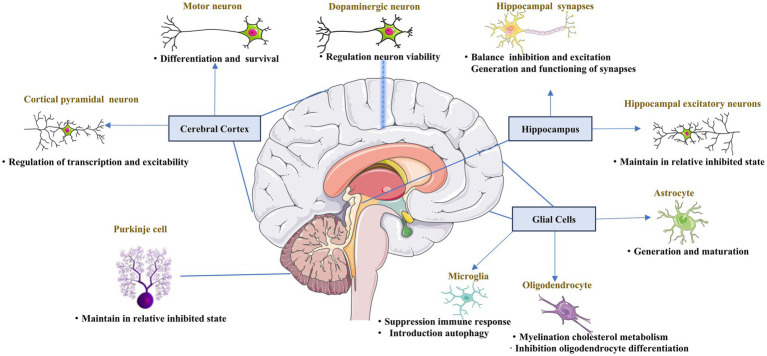
Peroxisome proliferator-activated receptor-γ coactivator-1α (PGC-1α), which is highly expressed in the central nervous system, is known to be involved in the regulation of mitochondrial biosynthesis, metabolic regulation, neuroinflammation, autophagy, and oxidative stress. This knowledge indicates a potential role of PGC-1α in a wide range of functions associated with neurological diseases. There is emerging evidence indicating a protective role of PGC-1α in the pathogenesis of several neurological diseases. As such, a deeper and broader understanding of PGC-1α and its role in neurological diseases is urgently needed. The present review provides a relatively complete overview of the current knowledge on PGC-1α, including its functions in different types of neurons, basic structural characteristics, and its interacting transcription factors. Furthermore, we present the role of PGC-1α in the pathogenesis of various neurological diseases, such as intracerebral hemorrhage, ischemic stroke, Alzheimer's disease, Parkinson's disease, Amyotrophic lateral sclerosis, Huntington's disease, and other PolyQ diseases. Importantly, we discuss some compounds or drug-targeting strategies that have been studied to ameliorate the pathology of these neurological diseases and introduce the possible mechanistic pathways. Based on the available studies, we propose that targeting PGC-1α could serve as a promising novel therapeutic strategy for one or more neurological diseases.
期刊介绍:
Frontiers in Aging Neuroscience is a leading journal in its field, publishing rigorously peer-reviewed research that advances our understanding of the mechanisms of Central Nervous System aging and age-related neural diseases. Specialty Chief Editor Thomas Wisniewski at the New York University School of Medicine is supported by an outstanding Editorial Board of international researchers. This multidisciplinary open-access journal is at the forefront of disseminating and communicating scientific knowledge and impactful discoveries to researchers, academics, clinicians and the public worldwide.





 京公网安备 11010802042870号
京ICP备2023020795号-1
京公网安备 11010802042870号
京ICP备2023020795号-1

 分享
分享
 求助内容:
求助内容: 应助结果提醒方式:
 扫码关注我们
