Henry Douglas Robb, Aksaan Arif, Rithvik Mahadev Narendranath, Bibek Das, Khaled Alyaqout, William Lynn, Yasser Abul Aal, Hutan Ashrafian, Matyas Fehervari
{"title":"How is 3D modeling in metabolic surgery utilized and what is its clinical benefit: a systematic review and meta-analysis.","authors":"Henry Douglas Robb, Aksaan Arif, Rithvik Mahadev Narendranath, Bibek Das, Khaled Alyaqout, William Lynn, Yasser Abul Aal, Hutan Ashrafian, Matyas Fehervari","doi":"10.1097/JS9.0000000000002301","DOIUrl":null,"url":null,"abstract":"<p><strong>Background: </strong>Three-dimensional (3D) modeling is an emerging technology in surgery, with applications in operative planning, surgical education, and patient engagement. Metabolic surgery, the most effective treatment for obesity, is increasingly prevalent leading to new complex clinical challenges. This systematic review aims to understand the use of 3D modeling in metabolic surgery and its impact on clinical outcomes.</p><p><strong>Methods: </strong>Following a registered protocol (PROSPERO: CRD42024545311), a comprehensive search using MEDLINE, Embase, and CENTRAL Cochrane Library was conducted. Eligible papers underwent screening and full-text review. A qualitative thematic analysis was performed alongside meta-analyses on available volumetric data. Results were reported as directed by the PRISMA guidelines.</p><p><strong>Results: </strong>Twenty-nine studies were included, with most at Level II evidence ( n = 19, 66%). Studies focused on operative planning and surgical practice (90%, n = 26) and were subdivided into preoperative planning (14%, n = 4), postoperative diagnosis (31%, n = 9), and postoperative assessment and prediction (45%, n = 13). Only three papers addressed surgical education (10%). 3D modeling for patient education was unexplored. To assess 3D modeling's cross-study consistency, pooled meta-analyses on preoperative and postoperative 3D gastric volumetry and abdominal circumference were performed. Average preoperative stomach volume was 794.93 mL (95% confidence interval [CI]: 518.61-1071.26 mL). Postoperative LSG and RYGB/OAGB gastric volumes were 171.71 mL (95% CI: 113.37-288.58 mL) and 35.73 mL (95% CI: 29.32-42.14 mL) respectively. Average abdominal circumference was 120.04 cm (95% CI: 100.72-139.35 cm). All volumes were consistent with published data.</p><p><strong>Conclusions: </strong>This systematic review highlighted the accuracy of 3D modeling for volumetric assessments and its developing role in surgical planning and training. However, its potential benefits in AR or 3DP models, in patient education or for answering bariatric surgical debates using 3D volumetric studies remain underutilized.</p>","PeriodicalId":14401,"journal":{"name":"International journal of surgery","volume":" ","pages":"3159-3168"},"PeriodicalIF":10.1000,"publicationDate":"2025-05-01","publicationTypes":"Journal Article","fieldsOfStudy":null,"isOpenAccess":false,"openAccessPdf":"https://www.ncbi.nlm.nih.gov/pmc/articles/PMC12165527/pdf/","citationCount":"0","resultStr":null,"platform":"Semanticscholar","paperid":null,"PeriodicalName":"International journal of surgery","FirstCategoryId":"3","ListUrlMain":"https://doi.org/10.1097/JS9.0000000000002301","RegionNum":2,"RegionCategory":"医学","ArticlePicture":[],"TitleCN":null,"AbstractTextCN":null,"PMCID":null,"EPubDate":"","PubModel":"","JCR":"Q1","JCRName":"SURGERY","Score":null,"Total":0}
引用次数: 0
Abstract
Background: Three-dimensional (3D) modeling is an emerging technology in surgery, with applications in operative planning, surgical education, and patient engagement. Metabolic surgery, the most effective treatment for obesity, is increasingly prevalent leading to new complex clinical challenges. This systematic review aims to understand the use of 3D modeling in metabolic surgery and its impact on clinical outcomes.
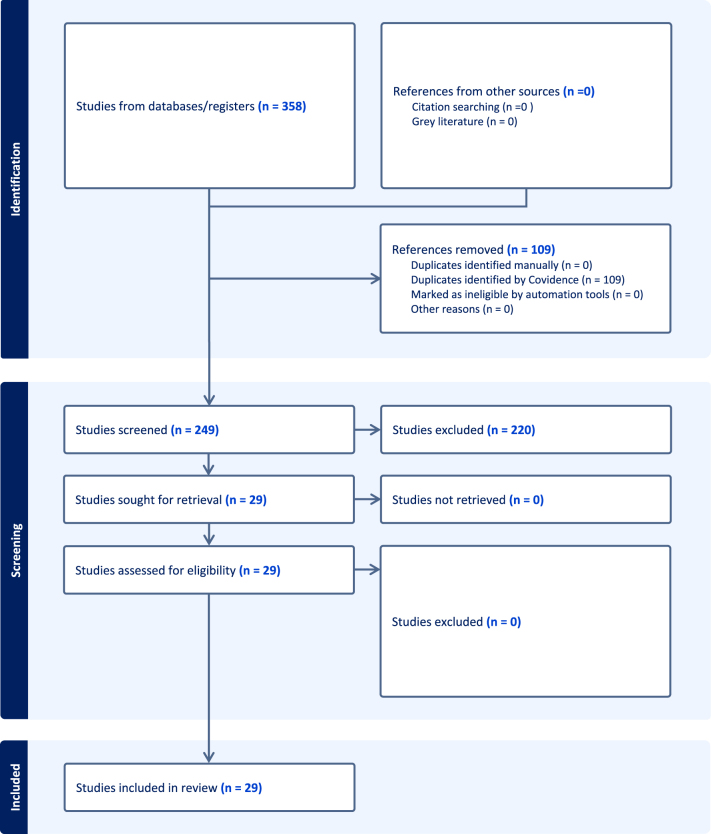
Methods: Following a registered protocol (PROSPERO: CRD42024545311), a comprehensive search using MEDLINE, Embase, and CENTRAL Cochrane Library was conducted. Eligible papers underwent screening and full-text review. A qualitative thematic analysis was performed alongside meta-analyses on available volumetric data. Results were reported as directed by the PRISMA guidelines.
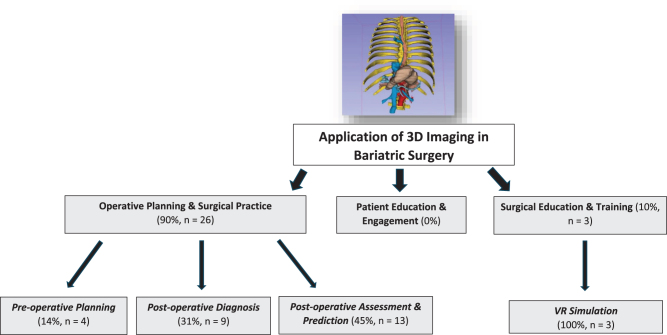
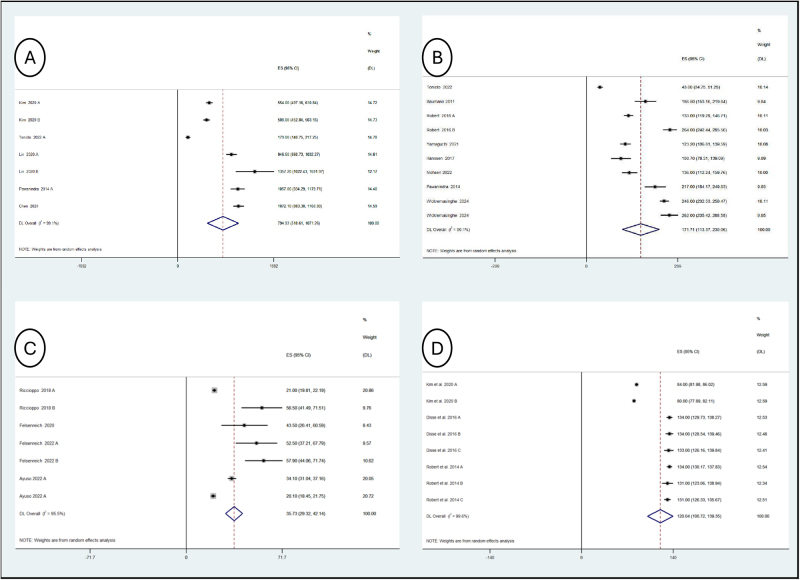
Results: Twenty-nine studies were included, with most at Level II evidence ( n = 19, 66%). Studies focused on operative planning and surgical practice (90%, n = 26) and were subdivided into preoperative planning (14%, n = 4), postoperative diagnosis (31%, n = 9), and postoperative assessment and prediction (45%, n = 13). Only three papers addressed surgical education (10%). 3D modeling for patient education was unexplored. To assess 3D modeling's cross-study consistency, pooled meta-analyses on preoperative and postoperative 3D gastric volumetry and abdominal circumference were performed. Average preoperative stomach volume was 794.93 mL (95% confidence interval [CI]: 518.61-1071.26 mL). Postoperative LSG and RYGB/OAGB gastric volumes were 171.71 mL (95% CI: 113.37-288.58 mL) and 35.73 mL (95% CI: 29.32-42.14 mL) respectively. Average abdominal circumference was 120.04 cm (95% CI: 100.72-139.35 cm). All volumes were consistent with published data.
Conclusions: This systematic review highlighted the accuracy of 3D modeling for volumetric assessments and its developing role in surgical planning and training. However, its potential benefits in AR or 3DP models, in patient education or for answering bariatric surgical debates using 3D volumetric studies remain underutilized.
期刊介绍:
The International Journal of Surgery (IJS) has a broad scope, encompassing all surgical specialties. Its primary objective is to facilitate the exchange of crucial ideas and lines of thought between and across these specialties.By doing so, the journal aims to counter the growing trend of increasing sub-specialization, which can result in "tunnel-vision" and the isolation of significant surgical advancements within specific specialties.



 京公网安备 11010802042870号
京ICP备2023020795号-1
京公网安备 11010802042870号
京ICP备2023020795号-1

 分享
分享
 求助内容:
求助内容: 应助结果提醒方式:
 扫码关注我们
