{"title":"Biased GPCR Signaling: Possible Mechanisms and Therapeutic Applications.","authors":"Luyu Fan, Sheng Wang","doi":"10.1021/acs.biochem.4c00827","DOIUrl":null,"url":null,"abstract":"<p><p>Biased signaling refers to the phenomenon where a ligand selectively activates specific downstream pathways of G protein-coupled receptors (GPCRs), such as the G protein-mediated pathway or the β-arrestin-mediated pathway. This mechanism can be influenced by receptor bias, ligand bias, system bias and spatial bias, all of which are shaped by the receptor's conformational distinctions and kinetics. Since GPCRs are the largest class of drug targets, signaling bias garnered significant attention for its potential to enhance therapeutic efficacy while minimizing side effects. Despite intensive investigation, a major challenge lies in translating <i>in vitro</i> ligand efficacy into <i>in vivo</i> biological responses due to the dynamic and multifaceted nature of the <i>in vivo</i> environment. This review delves into the current understanding of GPCR-biased signaling, examining the role of structural bias at the molecular level, the impact of kinetic context on system and observational bias, and the challenges of applying these insights in drug development. It further explores future directions for advancing biased signaling applications, offering valuable perspectives on how to bridge the gap between <i>in vitro</i> studies and <i>in vivo</i> therapeutic design, ultimately accelerating the development of viable, biased therapeutics.</p>","PeriodicalId":28,"journal":{"name":"Biochemistry Biochemistry","volume":" ","pages":"1180-1192"},"PeriodicalIF":3.0000,"publicationDate":"2025-03-18","publicationTypes":"Journal Article","fieldsOfStudy":null,"isOpenAccess":false,"openAccessPdf":"","citationCount":"0","resultStr":null,"platform":"Semanticscholar","paperid":null,"PeriodicalName":"Biochemistry Biochemistry","FirstCategoryId":"1","ListUrlMain":"https://doi.org/10.1021/acs.biochem.4c00827","RegionNum":3,"RegionCategory":"生物学","ArticlePicture":[],"TitleCN":null,"AbstractTextCN":null,"PMCID":null,"EPubDate":"2025/2/27 0:00:00","PubModel":"Epub","JCR":"Q3","JCRName":"BIOCHEMISTRY & MOLECULAR BIOLOGY","Score":null,"Total":0}
引用次数: 0
Abstract
Biased signaling refers to the phenomenon where a ligand selectively activates specific downstream pathways of G protein-coupled receptors (GPCRs), such as the G protein-mediated pathway or the β-arrestin-mediated pathway. This mechanism can be influenced by receptor bias, ligand bias, system bias and spatial bias, all of which are shaped by the receptor's conformational distinctions and kinetics. Since GPCRs are the largest class of drug targets, signaling bias garnered significant attention for its potential to enhance therapeutic efficacy while minimizing side effects. Despite intensive investigation, a major challenge lies in translating in vitro ligand efficacy into in vivo biological responses due to the dynamic and multifaceted nature of the in vivo environment. This review delves into the current understanding of GPCR-biased signaling, examining the role of structural bias at the molecular level, the impact of kinetic context on system and observational bias, and the challenges of applying these insights in drug development. It further explores future directions for advancing biased signaling applications, offering valuable perspectives on how to bridge the gap between in vitro studies and in vivo therapeutic design, ultimately accelerating the development of viable, biased therapeutics.
期刊介绍:
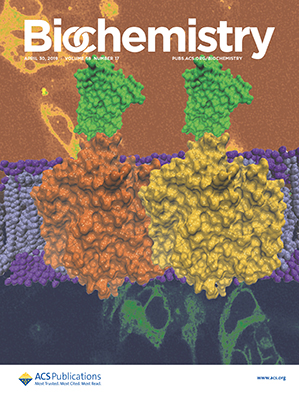
Biochemistry provides an international forum for publishing exceptional, rigorous, high-impact research across all of biological chemistry. This broad scope includes studies on the chemical, physical, mechanistic, and/or structural basis of biological or cell function, and encompasses the fields of chemical biology, synthetic biology, disease biology, cell biology, nucleic acid biology, neuroscience, structural biology, and biophysics. In addition to traditional Research Articles, Biochemistry also publishes Communications, Viewpoints, and Perspectives, as well as From the Bench articles that report new methods of particular interest to the biological chemistry community.



 京公网安备 11010802042870号
京ICP备2023020795号-1
京公网安备 11010802042870号
京ICP备2023020795号-1

 分享
分享
 求助内容:
求助内容: 应助结果提醒方式:
 扫码关注我们
