{"title":"Prognostic significance of systemic immune inflammation index for ovarian cancer: An updated systematic review and meta-analysis.","authors":"Boliang Chu, Yingying Chen, Jiewei Pan","doi":"10.1186/s13048-025-01626-1","DOIUrl":null,"url":null,"abstract":"<p><strong>Objective: </strong>Several inflammatory indices have been used to assess the prognosis of ovarian cancer, with variable results. This review assessed whether the systemic immune inflammation index (SII) can predict outcomes in patients with ovarian cancer.</p><p><strong>Methods: </strong>Embase, PubMed, CENTRAL, Web of Science, and Scopus databases were searched by the two reviewers from inception to 15th October 2024 for studies assessing the relationship between SII and overall survival (OS) or disease-free survival (DFS).</p><p><strong>Results: </strong>Ten studies with eleven cohorts were included. Pooled analysis showed that higher SII was a significant predictor of poor OS (HR: 2.35 95% CI: 1.56, 3.55 I<sup>2</sup> = 88%) and worse DFS (HR: 2.51 95% CI: 1.71, 3.67 I<sup>2</sup> = 80%) after ovarian cancer. Sensitivity analysis failed to change the significance of the results. No publication bias was noted. Most results remained significant on subgroup analyses based on location, sample size, FIGO stage, treatment, adjusted outcomes, cut-off of SII, method of determining cut-off, and quality score.</p><p><strong>Conclusions: </strong>SII can be a potential predictor of OS and DFS after ovarian cancer. Further studies are required to improve the evidence.</p>","PeriodicalId":16610,"journal":{"name":"Journal of Ovarian Research","volume":"18 1","pages":"41"},"PeriodicalIF":4.2000,"publicationDate":"2025-02-27","publicationTypes":"Journal Article","fieldsOfStudy":null,"isOpenAccess":false,"openAccessPdf":"https://www.ncbi.nlm.nih.gov/pmc/articles/PMC11869409/pdf/","citationCount":"0","resultStr":null,"platform":"Semanticscholar","paperid":null,"PeriodicalName":"Journal of Ovarian Research","FirstCategoryId":"3","ListUrlMain":"https://doi.org/10.1186/s13048-025-01626-1","RegionNum":3,"RegionCategory":"医学","ArticlePicture":[],"TitleCN":null,"AbstractTextCN":null,"PMCID":null,"EPubDate":"","PubModel":"","JCR":"Q1","JCRName":"REPRODUCTIVE BIOLOGY","Score":null,"Total":0}
引用次数: 0
Abstract
Objective: Several inflammatory indices have been used to assess the prognosis of ovarian cancer, with variable results. This review assessed whether the systemic immune inflammation index (SII) can predict outcomes in patients with ovarian cancer.
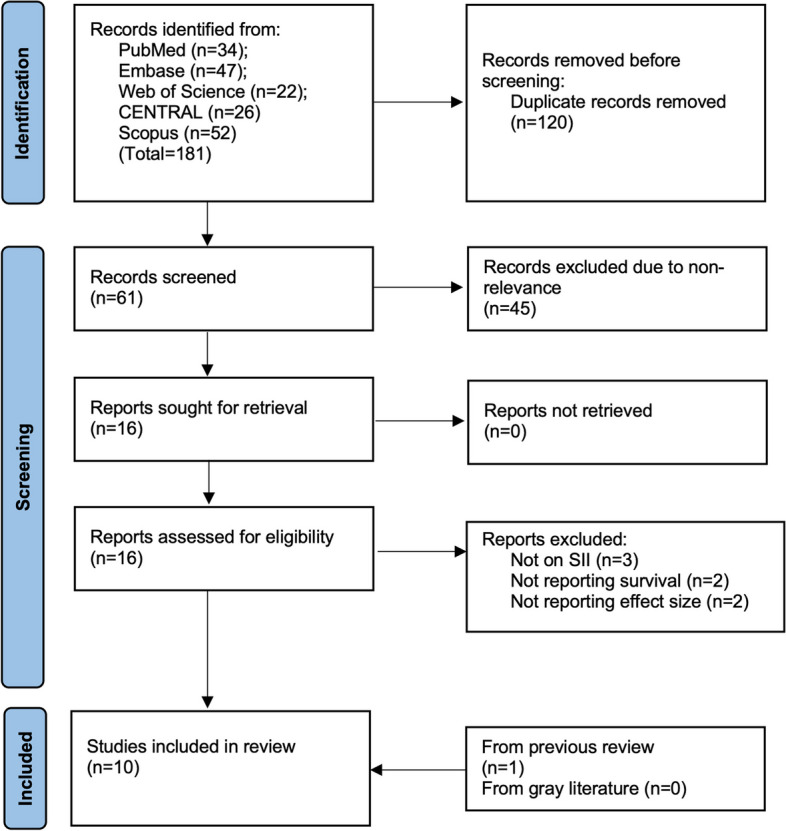
Methods: Embase, PubMed, CENTRAL, Web of Science, and Scopus databases were searched by the two reviewers from inception to 15th October 2024 for studies assessing the relationship between SII and overall survival (OS) or disease-free survival (DFS).
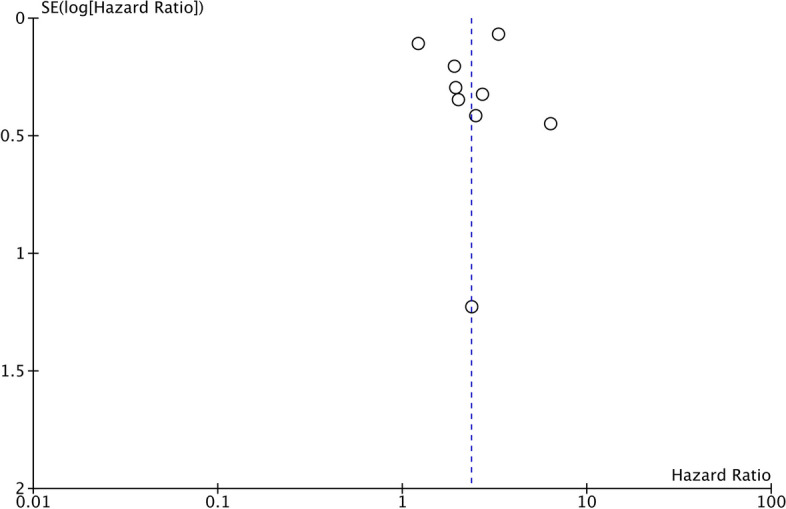
Results: Ten studies with eleven cohorts were included. Pooled analysis showed that higher SII was a significant predictor of poor OS (HR: 2.35 95% CI: 1.56, 3.55 I2 = 88%) and worse DFS (HR: 2.51 95% CI: 1.71, 3.67 I2 = 80%) after ovarian cancer. Sensitivity analysis failed to change the significance of the results. No publication bias was noted. Most results remained significant on subgroup analyses based on location, sample size, FIGO stage, treatment, adjusted outcomes, cut-off of SII, method of determining cut-off, and quality score.
Conclusions: SII can be a potential predictor of OS and DFS after ovarian cancer. Further studies are required to improve the evidence.
期刊介绍:
Journal of Ovarian Research is an open access, peer reviewed, online journal that aims to provide a forum for high-quality basic and clinical research on ovarian function, abnormalities, and cancer. The journal focuses on research that provides new insights into ovarian functions as well as prevention and treatment of diseases afflicting the organ.
Topical areas include, but are not restricted to:
Ovary development, hormone secretion and regulation
Follicle growth and ovulation
Infertility and Polycystic ovarian syndrome
Regulation of pituitary and other biological functions by ovarian hormones
Ovarian cancer, its prevention, diagnosis and treatment
Drug development and screening
Role of stem cells in ovary development and function.




 京公网安备 11010802042870号
京ICP备2023020795号-1
京公网安备 11010802042870号
京ICP备2023020795号-1

 分享
分享
 求助内容:
求助内容: 应助结果提醒方式:
 扫码关注我们
