Raeesha Rajan, Roman Dovbenyuk, Maya Kshatriya, Sezgi Yanikomeroglu, Laura Banfield, Uma Athale, Lehana Thabane, M Constantine Samaan
{"title":"The Impact of Virtual Care on Health-Related Quality of Life in Pediatric Diabetes Mellitus: A Systematic Review.","authors":"Raeesha Rajan, Roman Dovbenyuk, Maya Kshatriya, Sezgi Yanikomeroglu, Laura Banfield, Uma Athale, Lehana Thabane, M Constantine Samaan","doi":"10.2147/AHMT.S482859","DOIUrl":null,"url":null,"abstract":"<p><strong>Background: </strong>The COVID-19 pandemic has escalated the utilization of virtual care platforms in pediatric diabetes mellitus. The impact of these interventions on the health-related quality of life (HRQOL) is unclear.</p><p><strong>Objective: </strong>This systematic review evaluated the impact of virtual care, including eHealth and mHealth modalities, when compared to in-person care, on HRQOL in children with diabetes.</p><p><strong>Methods: </strong>MEDLINE, EMBASE, EMCare, PsycInfo, and Web of Science, ProQuest Dissertations and Theses A&I, and ClinicalTrials.gov databases and registries were searched from database inception to October 2<sup>nd</sup>, 2023. Randomized and non-randomized comparative studies were eligible for inclusion.</p><p><strong>Results: </strong>Thirteen studies were identified (12 randomized controlled trials, 1 cross-sectional study) involving 1566 children with type 1 diabetes mellitus (T1DM). The supplemental virtual care interventions utilized either web- or mobile-based platforms for intervention implementation. No interventions were detrimental to HRQOL, and a few improved the short-term HRQOL. No interventions worsened glycemic control. Patients and family's satisfaction with virtual care was high, perceiving it to be equal to or better than in-person care. There was no evidence for the use of virtual care and its effect on HRQOL in pediatric type 2 diabetes mellitus patients.</p><p><strong>Conclusion: </strong>Virtual care is associated with a stable or improved HRQOL and patient and family satisfaction in pediatric T1DM. Decision makers need to consider expanding virtual access to pediatric diabetes care that can improve equitable access to quality care across healthcare systems globally.</p>","PeriodicalId":46639,"journal":{"name":"Adolescent Health Medicine and Therapeutics","volume":"15 ","pages":"109-117"},"PeriodicalIF":1.7000,"publicationDate":"2025-02-21","publicationTypes":"Journal Article","fieldsOfStudy":null,"isOpenAccess":false,"openAccessPdf":"https://www.ncbi.nlm.nih.gov/pmc/articles/PMC11865916/pdf/","citationCount":"0","resultStr":null,"platform":"Semanticscholar","paperid":null,"PeriodicalName":"Adolescent Health Medicine and Therapeutics","FirstCategoryId":"1085","ListUrlMain":"https://doi.org/10.2147/AHMT.S482859","RegionNum":0,"RegionCategory":null,"ArticlePicture":[],"TitleCN":null,"AbstractTextCN":null,"PMCID":null,"EPubDate":"2024/1/1 0:00:00","PubModel":"eCollection","JCR":"Q2","JCRName":"PEDIATRICS","Score":null,"Total":0}
引用次数: 0
Abstract
Background: The COVID-19 pandemic has escalated the utilization of virtual care platforms in pediatric diabetes mellitus. The impact of these interventions on the health-related quality of life (HRQOL) is unclear.
Objective: This systematic review evaluated the impact of virtual care, including eHealth and mHealth modalities, when compared to in-person care, on HRQOL in children with diabetes.
Methods: MEDLINE, EMBASE, EMCare, PsycInfo, and Web of Science, ProQuest Dissertations and Theses A&I, and ClinicalTrials.gov databases and registries were searched from database inception to October 2nd, 2023. Randomized and non-randomized comparative studies were eligible for inclusion.
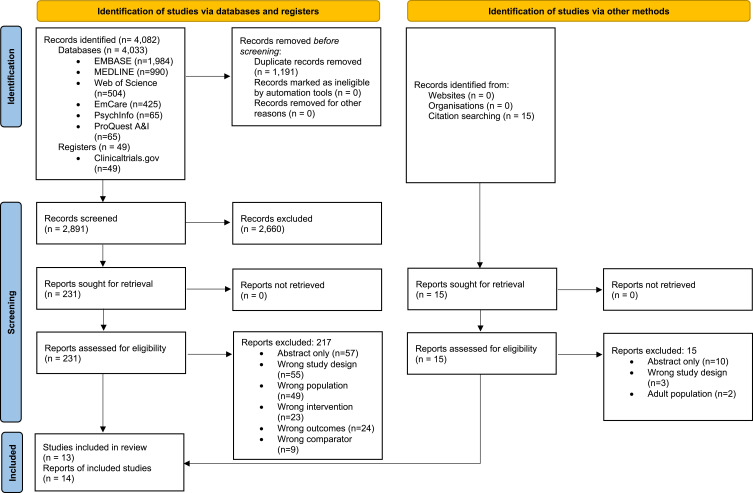
Results: Thirteen studies were identified (12 randomized controlled trials, 1 cross-sectional study) involving 1566 children with type 1 diabetes mellitus (T1DM). The supplemental virtual care interventions utilized either web- or mobile-based platforms for intervention implementation. No interventions were detrimental to HRQOL, and a few improved the short-term HRQOL. No interventions worsened glycemic control. Patients and family's satisfaction with virtual care was high, perceiving it to be equal to or better than in-person care. There was no evidence for the use of virtual care and its effect on HRQOL in pediatric type 2 diabetes mellitus patients.
Conclusion: Virtual care is associated with a stable or improved HRQOL and patient and family satisfaction in pediatric T1DM. Decision makers need to consider expanding virtual access to pediatric diabetes care that can improve equitable access to quality care across healthcare systems globally.
背景:2019冠状病毒病疫情加大了儿童糖尿病虚拟护理平台的使用。这些干预措施对健康相关生活质量(HRQOL)的影响尚不清楚。目的:本系统综述评估了虚拟护理(包括电子健康和移动健康模式)与面对面护理相比对糖尿病儿童HRQOL的影响。方法:检索自建库至2023年10月2日的MEDLINE、EMBASE、EMCare、PsycInfo、Web of Science、ProQuest disserthesis and Theses A&I、ClinicalTrials.gov等数据库和注册库。随机和非随机比较研究符合纳入条件。结果:共纳入13项研究(12项随机对照试验,1项横断面研究),涉及1566例1型糖尿病(T1DM)患儿。辅助虚拟护理干预利用网络或移动平台实施干预。没有干预措施对HRQOL不利,少数干预措施改善了短期HRQOL。没有干预会使血糖控制恶化。患者和家属对虚拟护理的满意度较高,认为虚拟护理等于或优于面对面护理。儿童2型糖尿病患者使用虚拟护理及其对HRQOL的影响尚无证据。结论:虚拟护理与儿童T1DM患者稳定或改善的HRQOL以及患者和家属满意度相关。决策者需要考虑扩大儿童糖尿病护理的虚拟可及性,以改善全球卫生保健系统对优质护理的公平可及性。
期刊介绍:
Adolescent Health, Medicine and Therapeutics is an international, peer reviewed, open access journal focusing on health, pathology, and treatment issues specific to the adolescent age group, including health issues affecting young people with cancer. Original research, reports, editorials, reviews, commentaries and adolescent-focused clinical trial design are welcomed. All aspects of health maintenance, preventative measures, disease treatment interventions, studies investigating the poor outcomes for some treatments in this group of patients, and the challenges when transitioning from adolescent to adult care are addressed within the journal. Practitioners from all disciplines are invited to submit their work as well as health care researchers and patient support groups. Areas covered include: Physical and mental development in the adolescent period, Behavioral issues, Pathologies and treatment interventions specific to this age group, Prevalence and incidence studies, Diet and nutrition, Specific drug handling, efficacy, and safety issues, Drug development programs, Outcome studies, patient satisfaction, compliance, and adherence, Patient and health education programs and studies.




 京公网安备 11010802042870号
京ICP备2023020795号-1
京公网安备 11010802042870号
京ICP备2023020795号-1

 分享
分享
 求助内容:
求助内容: 应助结果提醒方式:
 扫码关注我们
