Neil Bate, Dan Lane, Sian E Evans, Farah Salim, Natalie S Allcock, Richard Haigh, Julian E Sale, Donald J L Jones, Nicholas P J Brindle
{"title":"Engineered Receptor Capture Combined with Mass Spectrometry Enables High-Throughput Detection and Quantitation of SARS-CoV-2 Spike Protein.","authors":"Neil Bate, Dan Lane, Sian E Evans, Farah Salim, Natalie S Allcock, Richard Haigh, Julian E Sale, Donald J L Jones, Nicholas P J Brindle","doi":"10.1021/jacsau.4c00980","DOIUrl":null,"url":null,"abstract":"<p><p>Mass spectrometry (MS) is a potentially powerful approach for the diagnostic detection of SARS-CoV-2 and other viruses. However, MS detection is compromised when viral antigens are present at low concentrations, especially in complex biological media. We hypothesized that viral receptors could be used for viral target capture to enable detection by MS under such conditions. This was tested using the extracellular domain of the SARS-CoV-2 receptor ACE2. To maximize recovery of the target protein, directed protein evolution was first used to increase the affinity of ACE2 for spike protein. This generated an evolved ACE2 with increased binding affinity for the spike protein receptor-binding domain (RBD). However, as with other affinity-enhanced evolved forms of ACE2, binding was sensitive to mutations in variant RBDs. As an alternative strategy to maximize capture, the native ACE2 extracellular domain was engineered for increased binding by the addition of an oligomerization scaffold to create pentameric ACE2. This bound extremely tightly to SARS-CoV-2 RBD, with an increase in apparent affinity of several thousand-fold over monomeric ACE2, and RBD retention of more than 8 h. Immobilization of multimeric ACE2 enabled quantitative enrichment of viral spike protein from saliva and increased the sensitivity of detection by MS. These data show that capture by engineered receptors combined with MS can be an effective, rapid method for detection and quantitation of target protein. A similar approach could be used for attachment proteins of other viruses or any target protein for which there are suitable receptors.</p>","PeriodicalId":94060,"journal":{"name":"JACS Au","volume":"5 2","pages":"747-755"},"PeriodicalIF":8.7000,"publicationDate":"2025-02-04","publicationTypes":"Journal Article","fieldsOfStudy":null,"isOpenAccess":false,"openAccessPdf":"https://www.ncbi.nlm.nih.gov/pmc/articles/PMC11862925/pdf/","citationCount":"0","resultStr":null,"platform":"Semanticscholar","paperid":null,"PeriodicalName":"JACS Au","FirstCategoryId":"1085","ListUrlMain":"https://doi.org/10.1021/jacsau.4c00980","RegionNum":0,"RegionCategory":null,"ArticlePicture":[],"TitleCN":null,"AbstractTextCN":null,"PMCID":null,"EPubDate":"2025/2/24 0:00:00","PubModel":"eCollection","JCR":"Q1","JCRName":"CHEMISTRY, MULTIDISCIPLINARY","Score":null,"Total":0}
引用次数: 0
Abstract
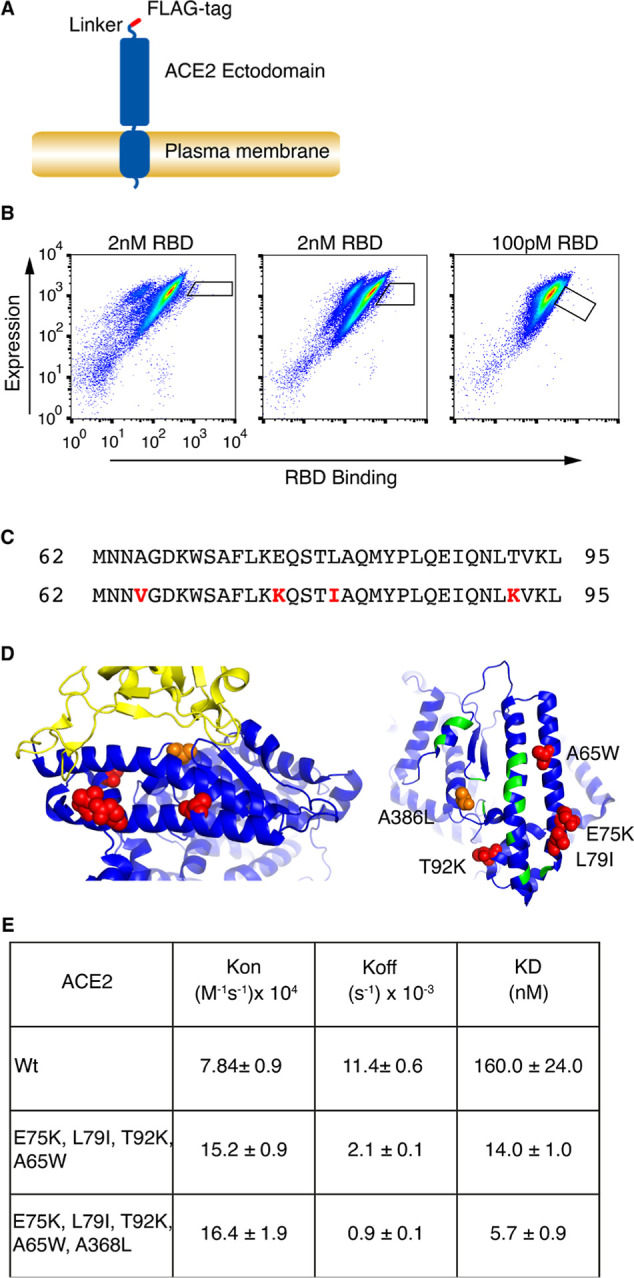
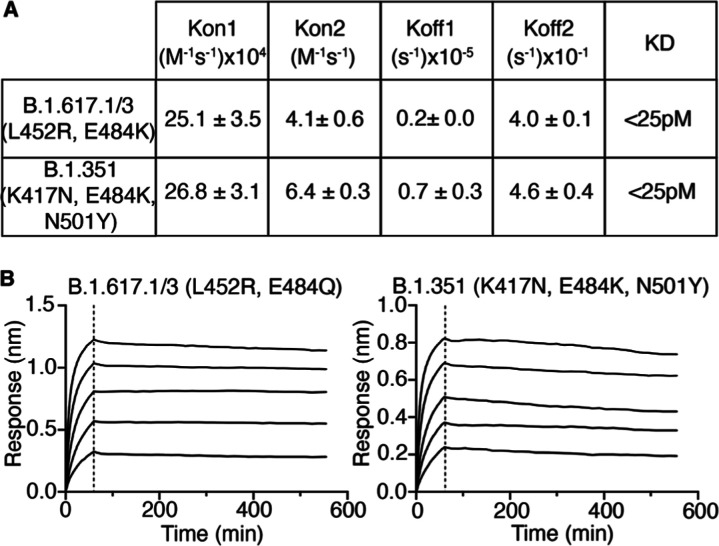
Mass spectrometry (MS) is a potentially powerful approach for the diagnostic detection of SARS-CoV-2 and other viruses. However, MS detection is compromised when viral antigens are present at low concentrations, especially in complex biological media. We hypothesized that viral receptors could be used for viral target capture to enable detection by MS under such conditions. This was tested using the extracellular domain of the SARS-CoV-2 receptor ACE2. To maximize recovery of the target protein, directed protein evolution was first used to increase the affinity of ACE2 for spike protein. This generated an evolved ACE2 with increased binding affinity for the spike protein receptor-binding domain (RBD). However, as with other affinity-enhanced evolved forms of ACE2, binding was sensitive to mutations in variant RBDs. As an alternative strategy to maximize capture, the native ACE2 extracellular domain was engineered for increased binding by the addition of an oligomerization scaffold to create pentameric ACE2. This bound extremely tightly to SARS-CoV-2 RBD, with an increase in apparent affinity of several thousand-fold over monomeric ACE2, and RBD retention of more than 8 h. Immobilization of multimeric ACE2 enabled quantitative enrichment of viral spike protein from saliva and increased the sensitivity of detection by MS. These data show that capture by engineered receptors combined with MS can be an effective, rapid method for detection and quantitation of target protein. A similar approach could be used for attachment proteins of other viruses or any target protein for which there are suitable receptors.




 京公网安备 11010802042870号
京ICP备2023020795号-1
京公网安备 11010802042870号
京ICP备2023020795号-1

 分享
分享

 求助内容:
求助内容: 应助结果提醒方式:
 扫码关注我们
