Christine Archimbaud, Marie-Aliette Dommergues, Jeremy Lafolie, Bruno Pereira, Matthieu Verdan, Marie Noelle Adam, Fouad Madhi, Anne-Sophie L'Honneur, Audrey Mirand, Jean-Luc Bailly, Cécile Henquell, Stéphanie Marque-Juillet
{"title":"Blood Parechovirus RT-PCR Testing in Neonates and Infants: Comparison of Clinical and Biologic Features With Those of Enterovirus Infections.","authors":"Christine Archimbaud, Marie-Aliette Dommergues, Jeremy Lafolie, Bruno Pereira, Matthieu Verdan, Marie Noelle Adam, Fouad Madhi, Anne-Sophie L'Honneur, Audrey Mirand, Jean-Luc Bailly, Cécile Henquell, Stéphanie Marque-Juillet","doi":"10.1097/INF.0000000000004772","DOIUrl":null,"url":null,"abstract":"<p><strong>Background: </strong>To assess human parechovirus (HPeV) detection by real-time polymerase chain reaction in blood with or without cerebrospinal fluid samples in neonates and infants and compare the clinical and biological characteristics of HPeV patients with those of patients with or without enterovirus (EV) infection.</p><p><strong>Methods: </strong>In all, 92 HPeV-infected patients (40 newborns and 52 infants) presenting with fever without source, sepsis-like disease or suspected meningitis were evaluated in 2 French hospitals from 2007 to 2018. The clinical and biological characteristics of HPeV patients were compared with those of 100 EV-infected patients and of 95 control patients with fever without source or sepsis-like disease.</p><p><strong>Results: </strong>HPeV was detected more frequently in blood [100% (51/51)] than in cerebrospinal fluid specimens [89% (67/75), P = 0.02]. Genotyping identified HPeV3 in 76/85 (89%) positive specimens. HPeV-infected patients were more likely than EV-infected or control patients to have sepsis-like disease and required more frequent vascular filling (39% in newborns and 26% in infants) and empirical antibiotics (91% in newborns and 69% in infants). HPeV patients had lower peripheral white blood cell counts and lower lymphocyte levels ( P = 0.002) and longer lengths of hospital stay than EV or control patients ( P = 0.03). A white blood cell count <7×10 9 /L can be helpful in differentiating HPeV patients from control patients.</p><p><strong>Conclusions: </strong>Detection of HPeV should be part of the differential diagnosis of EV infections. The use of small automata to perform real-time polymerase chain reaction assays in emergency units should allow faster diagnosis and, if the result is positive, avoid prolonged length of hospital stay and unnecessary administration of antibiotics in patients without virus-bacteria co-infection.</p>","PeriodicalId":19858,"journal":{"name":"Pediatric Infectious Disease Journal","volume":" ","pages":"599-608"},"PeriodicalIF":2.2000,"publicationDate":"2025-02-28","publicationTypes":"Journal Article","fieldsOfStudy":null,"isOpenAccess":false,"openAccessPdf":"https://www.ncbi.nlm.nih.gov/pmc/articles/PMC12150790/pdf/","citationCount":"0","resultStr":null,"platform":"Semanticscholar","paperid":null,"PeriodicalName":"Pediatric Infectious Disease Journal","FirstCategoryId":"3","ListUrlMain":"https://doi.org/10.1097/INF.0000000000004772","RegionNum":4,"RegionCategory":"医学","ArticlePicture":[],"TitleCN":null,"AbstractTextCN":null,"PMCID":null,"EPubDate":"","PubModel":"","JCR":"Q3","JCRName":"IMMUNOLOGY","Score":null,"Total":0}
引用次数: 0
Abstract
Background: To assess human parechovirus (HPeV) detection by real-time polymerase chain reaction in blood with or without cerebrospinal fluid samples in neonates and infants and compare the clinical and biological characteristics of HPeV patients with those of patients with or without enterovirus (EV) infection.
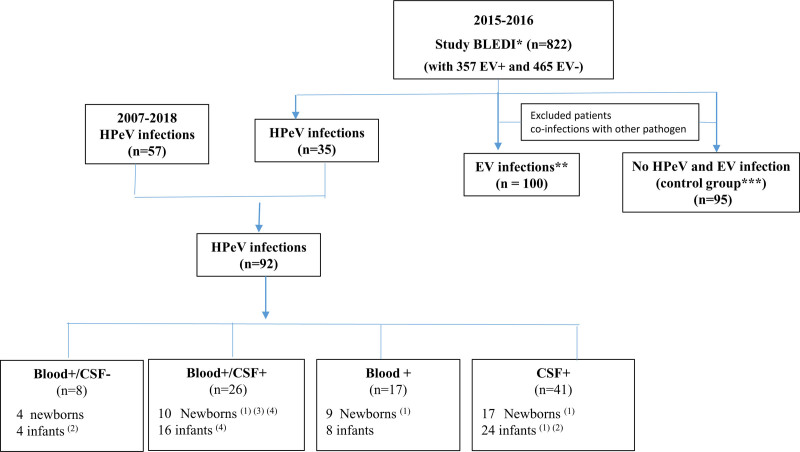
Methods: In all, 92 HPeV-infected patients (40 newborns and 52 infants) presenting with fever without source, sepsis-like disease or suspected meningitis were evaluated in 2 French hospitals from 2007 to 2018. The clinical and biological characteristics of HPeV patients were compared with those of 100 EV-infected patients and of 95 control patients with fever without source or sepsis-like disease.
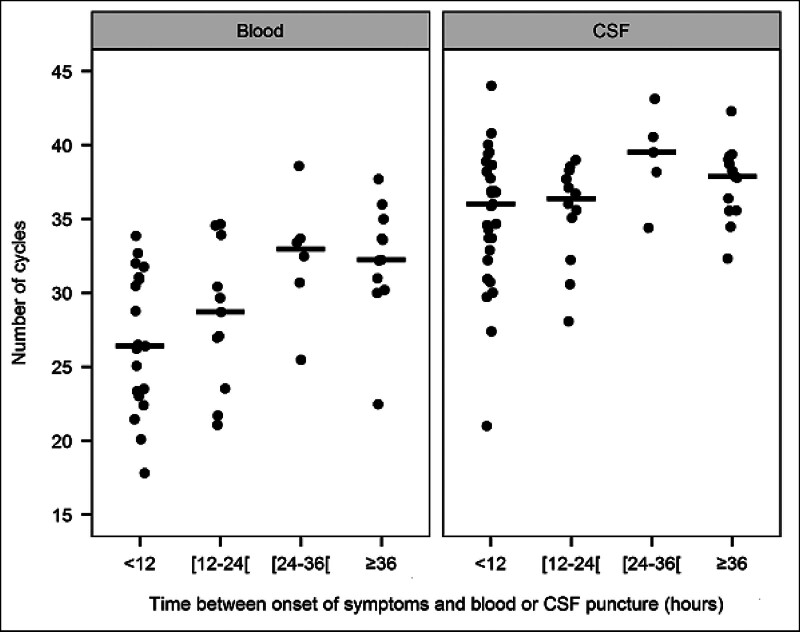
Results: HPeV was detected more frequently in blood [100% (51/51)] than in cerebrospinal fluid specimens [89% (67/75), P = 0.02]. Genotyping identified HPeV3 in 76/85 (89%) positive specimens. HPeV-infected patients were more likely than EV-infected or control patients to have sepsis-like disease and required more frequent vascular filling (39% in newborns and 26% in infants) and empirical antibiotics (91% in newborns and 69% in infants). HPeV patients had lower peripheral white blood cell counts and lower lymphocyte levels ( P = 0.002) and longer lengths of hospital stay than EV or control patients ( P = 0.03). A white blood cell count <7×10 9 /L can be helpful in differentiating HPeV patients from control patients.
Conclusions: Detection of HPeV should be part of the differential diagnosis of EV infections. The use of small automata to perform real-time polymerase chain reaction assays in emergency units should allow faster diagnosis and, if the result is positive, avoid prolonged length of hospital stay and unnecessary administration of antibiotics in patients without virus-bacteria co-infection.
期刊介绍:
The Pediatric Infectious Disease Journal® (PIDJ) is a complete, up-to-the-minute resource on infectious diseases in children. Through a mix of original studies, informative review articles, and unique case reports, PIDJ delivers the latest insights on combating disease in children — from state-of-the-art diagnostic techniques to the most effective drug therapies and other treatment protocols. It is a resource that can improve patient care and stimulate your personal research.



 京公网安备 11010802042870号
京ICP备2023020795号-1
京公网安备 11010802042870号
京ICP备2023020795号-1

 分享
分享
 求助内容:
求助内容: 应助结果提醒方式:
 扫码关注我们
