{"title":"From landfill to natural vegetation – An exploration of available land use LCIA models and application in a specific case","authors":"Ingunn Saur Modahl, Kari-Anne Lyng","doi":"10.1016/j.jclepro.2025.145202","DOIUrl":null,"url":null,"abstract":"<div><div>Anthropogenic land use is of increasing concern due to its negative impacts on food security, ecosystem services and biodiversity. While most products and services lead to negative impacts from land occupation and transformation, some contribute to a positive transformation through active land restoration. Currently, several life cycle impact assessment models denoted as ‘land use’ exist, but transparency is limited with regard to the environmental problems they address. The purpose of this paper is to study the available LCIA models with respect to ecosystems and resources, from an LCA practitioner's perspective by testing the practical application of each model on a specific case and by assessing if and how the models address positive land transformation. 48 life cycle impact assessment (LCIA) models were identified. The scope and methodological foundation of the models were examined and compared. The practical application of nine models were then tested by assessing inert landfilling, including land restoration in the post-operation phase. The functional unit was treatment and landfilling of 1 tonne of inert hazardous waste. The life cycle stages include the transport of the waste, the neutralisation process, the operation of landfill and active restoration. The active restoration of land involves the conversion of the land from craters, caused by previous limestone quarrying at the location of the landfill, to a more natural landscape. The results show that the examined land use LCIA models award restoration of land to varying extents. These differences can mainly be explained by the fact that different models address different environmental issues associated with land use. In more recently developed models, however, positive land transformation (active restoration of land) is considered more frequently compared to older ones. It is problematic that many of the examined LCIA models have similar names when presented for the LCA practitioner, when they in fact address different damage pathways and areas of protection. Most of the examined LCIA models do not address active land restoration, and they fail to address the rapid decrease in untouched nature, which is an important environmental challenge related to land use. This study shows that it is possible to utilise existing impact assessment models to address active land restoration, and that land use related LCIA models can be employed as decision support for alternative locations. The current models do, however, have some shortcomings, and more research and method development are required with regard to land classification, intensities and management practices, to address intervention in untouched nature and transformation of land from one man-made situation to another. To avoid misunderstandings among LCA practitioners and increase the quality of results, land use related models in LCIA should be more transparent in identifying which environmental problems they address, and the units used ought to be relatable and easily interpreted. If possible, one should aim for a diverse use of environmental indicators and LCIA models in LCA. For future studies, when land use models are in focus, the authors recommend using the LANCA Land use model in combination with the Land competition model in CML-IA non-baseline and one of the models Land use biodiversity (Chaudhary et al., 2015), Land stress in LC-IMPACT or the sum of Land transformation, biodiversity and Land occupation, biodiversity in IMPACT World + Endpoint.</div></div>","PeriodicalId":349,"journal":{"name":"Journal of Cleaner Production","volume":"498 ","pages":"Article 145202"},"PeriodicalIF":10.0000,"publicationDate":"2025-03-20","publicationTypes":"Journal Article","fieldsOfStudy":null,"isOpenAccess":false,"openAccessPdf":"","citationCount":"0","resultStr":null,"platform":"Semanticscholar","paperid":null,"PeriodicalName":"Journal of Cleaner Production","FirstCategoryId":"93","ListUrlMain":"https://www.sciencedirect.com/science/article/pii/S0959652625005529","RegionNum":1,"RegionCategory":"环境科学与生态学","ArticlePicture":[],"TitleCN":null,"AbstractTextCN":null,"PMCID":null,"EPubDate":"2025/3/4 0:00:00","PubModel":"Epub","JCR":"Q1","JCRName":"ENGINEERING, ENVIRONMENTAL","Score":null,"Total":0}
引用次数: 0
Abstract
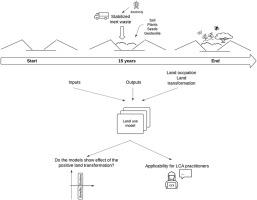
Anthropogenic land use is of increasing concern due to its negative impacts on food security, ecosystem services and biodiversity. While most products and services lead to negative impacts from land occupation and transformation, some contribute to a positive transformation through active land restoration. Currently, several life cycle impact assessment models denoted as ‘land use’ exist, but transparency is limited with regard to the environmental problems they address. The purpose of this paper is to study the available LCIA models with respect to ecosystems and resources, from an LCA practitioner's perspective by testing the practical application of each model on a specific case and by assessing if and how the models address positive land transformation. 48 life cycle impact assessment (LCIA) models were identified. The scope and methodological foundation of the models were examined and compared. The practical application of nine models were then tested by assessing inert landfilling, including land restoration in the post-operation phase. The functional unit was treatment and landfilling of 1 tonne of inert hazardous waste. The life cycle stages include the transport of the waste, the neutralisation process, the operation of landfill and active restoration. The active restoration of land involves the conversion of the land from craters, caused by previous limestone quarrying at the location of the landfill, to a more natural landscape. The results show that the examined land use LCIA models award restoration of land to varying extents. These differences can mainly be explained by the fact that different models address different environmental issues associated with land use. In more recently developed models, however, positive land transformation (active restoration of land) is considered more frequently compared to older ones. It is problematic that many of the examined LCIA models have similar names when presented for the LCA practitioner, when they in fact address different damage pathways and areas of protection. Most of the examined LCIA models do not address active land restoration, and they fail to address the rapid decrease in untouched nature, which is an important environmental challenge related to land use. This study shows that it is possible to utilise existing impact assessment models to address active land restoration, and that land use related LCIA models can be employed as decision support for alternative locations. The current models do, however, have some shortcomings, and more research and method development are required with regard to land classification, intensities and management practices, to address intervention in untouched nature and transformation of land from one man-made situation to another. To avoid misunderstandings among LCA practitioners and increase the quality of results, land use related models in LCIA should be more transparent in identifying which environmental problems they address, and the units used ought to be relatable and easily interpreted. If possible, one should aim for a diverse use of environmental indicators and LCIA models in LCA. For future studies, when land use models are in focus, the authors recommend using the LANCA Land use model in combination with the Land competition model in CML-IA non-baseline and one of the models Land use biodiversity (Chaudhary et al., 2015), Land stress in LC-IMPACT or the sum of Land transformation, biodiversity and Land occupation, biodiversity in IMPACT World + Endpoint.
由于对粮食安全、生态系统服务和生物多样性的负面影响,人为土地利用日益受到关注。虽然大多数产品和服务导致土地占用和改造的负面影响,但有些产品和服务通过积极的土地恢复有助于积极的转变。目前,有几个被称为“土地利用”的生命周期影响评估模型,但它们所处理的环境问题的透明度有限。本文的目的是从LCA从业者的角度,通过测试每个模型在特定案例中的实际应用,并评估模型是否以及如何解决积极的土地转型,来研究生态系统和资源方面可用的LCIA模型。确定了48个生命周期影响评估模型。对模型的范围和方法基础进行了检验和比较。然后,通过评估惰性堆填(包括工程后阶段的土地修复),测试九个模型的实际应用。该功能单元是1吨惰性危险废物的处理和填埋。生命周期阶段包括废物运输、中和过程、堆填区运作和主动修复。积极的土地恢复包括将以前在垃圾填埋场所在地开采石灰石造成的陨石坑转化为更自然的景观。结果表明,所检验的土地利用LCIA模型对土地的恢复给予不同程度的奖励。这些差异的主要原因是不同的模式处理与土地利用相关的不同环境问题。然而,在最近开发的模型中,与旧模型相比,更经常考虑积极的土地改造(土地的主动恢复)。这是一个问题,许多被检查的LCIA模型在提供给LCA从业者时具有相似的名称,而实际上它们处理不同的损害途径和保护区域。大多数LCIA模型没有考虑到主动土地恢复问题,也没有考虑到未受影响自然资源的迅速减少,这是与土地利用相关的一个重要环境挑战。该研究表明,利用现有的影响评估模型来解决积极的土地恢复是可能的,与土地利用相关的LCIA模型可以作为备选地点的决策支持。然而,目前的模式确实存在一些缺点,需要在土地分类、强度和管理实践方面进行更多的研究和方法开发,以解决对未受影响自然的干预和土地从一种人为情况到另一种人为情况的转变。为了避免LCA从业者之间的误解并提高结果的质量,LCIA中与土地利用相关的模型在确定它们所解决的环境问题方面应该更加透明,使用的单位应该是相关的和易于解释的。如果可能的话,应该力求在LCA中多样化地使用环境指标和LCIA模型。对于未来的研究,当重点是土地利用模型时,作者建议将LANCA土地利用模型与CML-IA非基线中的土地竞争模型和土地利用生物多样性模型之一(Chaudhary et al., 2015)、LC-IMPACT中的土地压力或土地转化、生物多样性和土地占用的总和、IMPACT世界中的生物多样性+端点相结合。
期刊介绍:
The Journal of Cleaner Production is an international, transdisciplinary journal that addresses and discusses theoretical and practical Cleaner Production, Environmental, and Sustainability issues. It aims to help societies become more sustainable by focusing on the concept of 'Cleaner Production', which aims at preventing waste production and increasing efficiencies in energy, water, resources, and human capital use. The journal serves as a platform for corporations, governments, education institutions, regions, and societies to engage in discussions and research related to Cleaner Production, environmental, and sustainability practices.




 京公网安备 11010802042870号
京ICP备2023020795号-1
京公网安备 11010802042870号
京ICP备2023020795号-1

 分享
分享
 求助内容:
求助内容: 应助结果提醒方式:
 扫码关注我们
