{"title":"Biofunctionalized nanomaterials for Parkinson's disease theranostics: potential for efficient PD biomarker detection and effective therapy","authors":"Saheli Sabnam, Raj Kumar and Pranav","doi":"10.1039/D5BM00179J","DOIUrl":null,"url":null,"abstract":"<p >α-Synuclein (α-Syn) is a primary pathological indicator for Parkinson's disease (PD). The α-Syn oligomer is even more toxic and is responsible for PD. Hence, identifying α-Syn and its oligomers is an interesting approach to diagnosing PD. The prevention strategies for oligomer formation could be therapeutic in treating PD. Various conventional strategies have been developed for the management of PD. However, their clinical applications are limited due to toxicity, off-targeting, side effects, and poor bioavailability. Recently, nanomaterials have gained significant attention due to unique physicochemical characteristics such as nanoscale size, large surface area, flexibility of functionalization, and ability to protect and control a loaded payload. Functionalizing the surface of nanoparticles with a desired targeting agent could offer targeted delivery of the payload at the site of action due to specificity and selectivity against complementary molecules. Among various functionalization approaches, biomolecule-functionalized nanomaterials offer benefits such as enhanced bioavailability, improved internalization into target cells through receptor-mediated endocytosis, and delivery of therapeutics across the BBB (blood–brain barrier). In this review, we initially discussed the major milestones related to PD and highlighted the therapeutic strategies focused on clinical trials. The strategies of biomolecule functionalization of nanomaterials and their application in detecting and preventing α-Syn oligomer for the diagnosis and therapy of PD, respectively, have been reviewed comprehensively. Ultimately, we have outlined the conclusions, highlighted the limitations and challenges, and provided insight into future perspectives and alternative approaches that must be investigated.</p>","PeriodicalId":65,"journal":{"name":"Biomaterials Science","volume":" 9","pages":" 2201-2234"},"PeriodicalIF":5.7000,"publicationDate":"2025-02-19","publicationTypes":"Journal Article","fieldsOfStudy":null,"isOpenAccess":false,"openAccessPdf":"","citationCount":"0","resultStr":null,"platform":"Semanticscholar","paperid":null,"PeriodicalName":"Biomaterials Science","FirstCategoryId":"5","ListUrlMain":"https://pubs.rsc.org/en/content/articlelanding/2025/bm/d5bm00179j","RegionNum":3,"RegionCategory":"医学","ArticlePicture":[],"TitleCN":null,"AbstractTextCN":null,"PMCID":null,"EPubDate":"","PubModel":"","JCR":"Q1","JCRName":"MATERIALS SCIENCE, BIOMATERIALS","Score":null,"Total":0}
引用次数: 0
Abstract
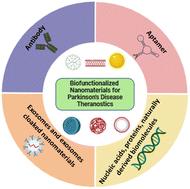
α-Synuclein (α-Syn) is a primary pathological indicator for Parkinson's disease (PD). The α-Syn oligomer is even more toxic and is responsible for PD. Hence, identifying α-Syn and its oligomers is an interesting approach to diagnosing PD. The prevention strategies for oligomer formation could be therapeutic in treating PD. Various conventional strategies have been developed for the management of PD. However, their clinical applications are limited due to toxicity, off-targeting, side effects, and poor bioavailability. Recently, nanomaterials have gained significant attention due to unique physicochemical characteristics such as nanoscale size, large surface area, flexibility of functionalization, and ability to protect and control a loaded payload. Functionalizing the surface of nanoparticles with a desired targeting agent could offer targeted delivery of the payload at the site of action due to specificity and selectivity against complementary molecules. Among various functionalization approaches, biomolecule-functionalized nanomaterials offer benefits such as enhanced bioavailability, improved internalization into target cells through receptor-mediated endocytosis, and delivery of therapeutics across the BBB (blood–brain barrier). In this review, we initially discussed the major milestones related to PD and highlighted the therapeutic strategies focused on clinical trials. The strategies of biomolecule functionalization of nanomaterials and their application in detecting and preventing α-Syn oligomer for the diagnosis and therapy of PD, respectively, have been reviewed comprehensively. Ultimately, we have outlined the conclusions, highlighted the limitations and challenges, and provided insight into future perspectives and alternative approaches that must be investigated.
期刊介绍:
Biomaterials Science is an international high impact journal exploring the science of biomaterials and their translation towards clinical use. Its scope encompasses new concepts in biomaterials design, studies into the interaction of biomaterials with the body, and the use of materials to answer fundamental biological questions.



 京公网安备 11010802042870号
京ICP备2023020795号-1
京公网安备 11010802042870号
京ICP备2023020795号-1

 分享
分享
 求助内容:
求助内容: 应助结果提醒方式:
 扫码关注我们
