{"title":"Psychosocial Correlates of Childhood Body Mass Index: Racial and Ethnic Differences.","authors":"Shervin Assari, Hossein Zare","doi":"10.31586/gjcd.2025.1180","DOIUrl":null,"url":null,"abstract":"<p><strong>Objective: </strong>To examine racial/ethnic differences in the associations of family socioeconomic status (SES), neighborhood SES, and inhibitory control with body mass index (BMI) in 9-10-year-old children using data from the Adolescent Brain Cognitive Development (ABCD) study.</p><p><strong>Methods: </strong>This cross-sectional study included a diverse sample of children aged 9-10 years, representing non-Latino White, Black, Latino, Asian, and Other racial/ethnic groups. BMI was the primary outcome. Key predictors were family SES, neighborhood SES, and inhibitory control. Multivariable regression models were stratified by race/ethnicity to identify group-specific associations.</p><p><strong>Results: </strong>Race/ethnic groups differed in psychosocial correlates of childhood BMI at age 9 and 10. Among non-Latino White children, higher family income (B = -0.086, p < 0.001), higher parental education (B = -0.069, p < 0.001), and living in a married household (B = -0.079, p < 0.001) were associated with lower BMI. Additionally, the presence of healthy food options in the zip code (B = -0.030, p = 0.032) was linked to lower BMI, while lack of planning (B = 0.032, p = 0.030) was associated with higher BMI. For non-Latino Black children, positive urgency (B = -0.068, p = 0.022) was negatively associated with BMI, while other factors such as family SES and neighborhood SES did not show significant associations. For Latino children, higher family income (B = -0.093, p = 0.001) and parental education (B = -0.099, p < 0.001) were associated with lower BMI. In this group, male gender (B = 0.043, p = 0.033) was associated with higher BMI. Among Asian children, higher family income (B = -0.199, p = 0.006) and parental education (B = -0.144, p = 0.037) were significantly associated with lower BMI. For children in the \"Other\" racial/ethnic category, higher family income (B = -0.101, p = 0.023), living in a married household (B = -0.076, p = 0.026), and higher median income in the zip code (B = -0.083, p = 0.013) were associated with lower BMI. In this group, male children had lower BMI compared to females (B = -0.089, p = 0.001).</p><p><strong>Conclusion: </strong>The findings highlight substantial racial/ethnic differences in the psychosocial and socioeconomic correlates of BMI in children. There is a need for tailored interventions that target social determinants of childhood high BMI. One size does not fit all.</p>","PeriodicalId":520306,"journal":{"name":"Global journal of cardiovascular diseases","volume":"4 1","pages":"34-49"},"PeriodicalIF":0.0000,"publicationDate":"2025-01-01","publicationTypes":"Journal Article","fieldsOfStudy":null,"isOpenAccess":false,"openAccessPdf":"https://www.ncbi.nlm.nih.gov/pmc/articles/PMC11870657/pdf/","citationCount":"0","resultStr":null,"platform":"Semanticscholar","paperid":null,"PeriodicalName":"Global journal of cardiovascular diseases","FirstCategoryId":"1085","ListUrlMain":"https://doi.org/10.31586/gjcd.2025.1180","RegionNum":0,"RegionCategory":null,"ArticlePicture":[],"TitleCN":null,"AbstractTextCN":null,"PMCID":null,"EPubDate":"2025/2/13 0:00:00","PubModel":"Epub","JCR":"","JCRName":"","Score":null,"Total":0}
引用次数: 0
Abstract
Objective: To examine racial/ethnic differences in the associations of family socioeconomic status (SES), neighborhood SES, and inhibitory control with body mass index (BMI) in 9-10-year-old children using data from the Adolescent Brain Cognitive Development (ABCD) study.
Methods: This cross-sectional study included a diverse sample of children aged 9-10 years, representing non-Latino White, Black, Latino, Asian, and Other racial/ethnic groups. BMI was the primary outcome. Key predictors were family SES, neighborhood SES, and inhibitory control. Multivariable regression models were stratified by race/ethnicity to identify group-specific associations.
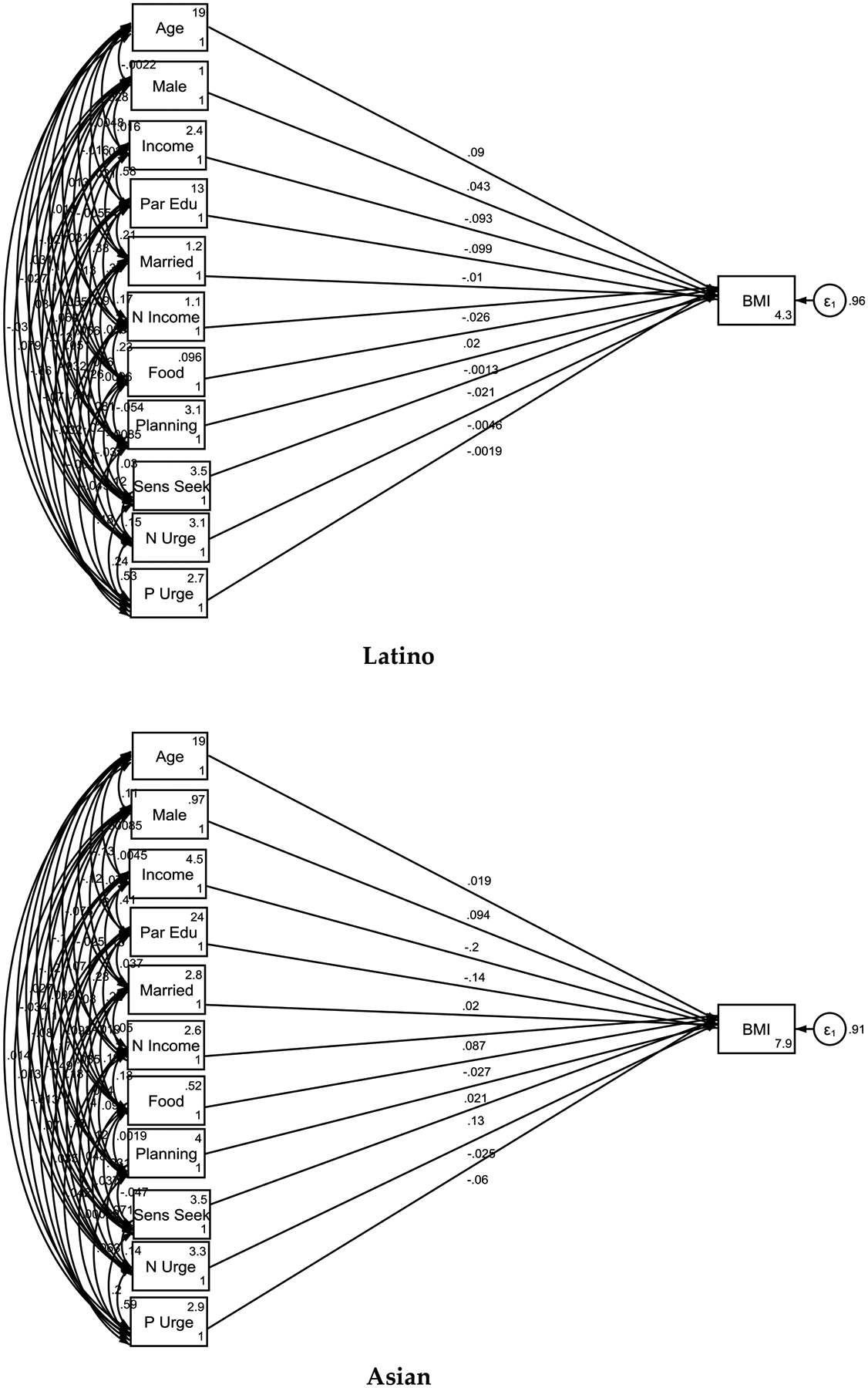
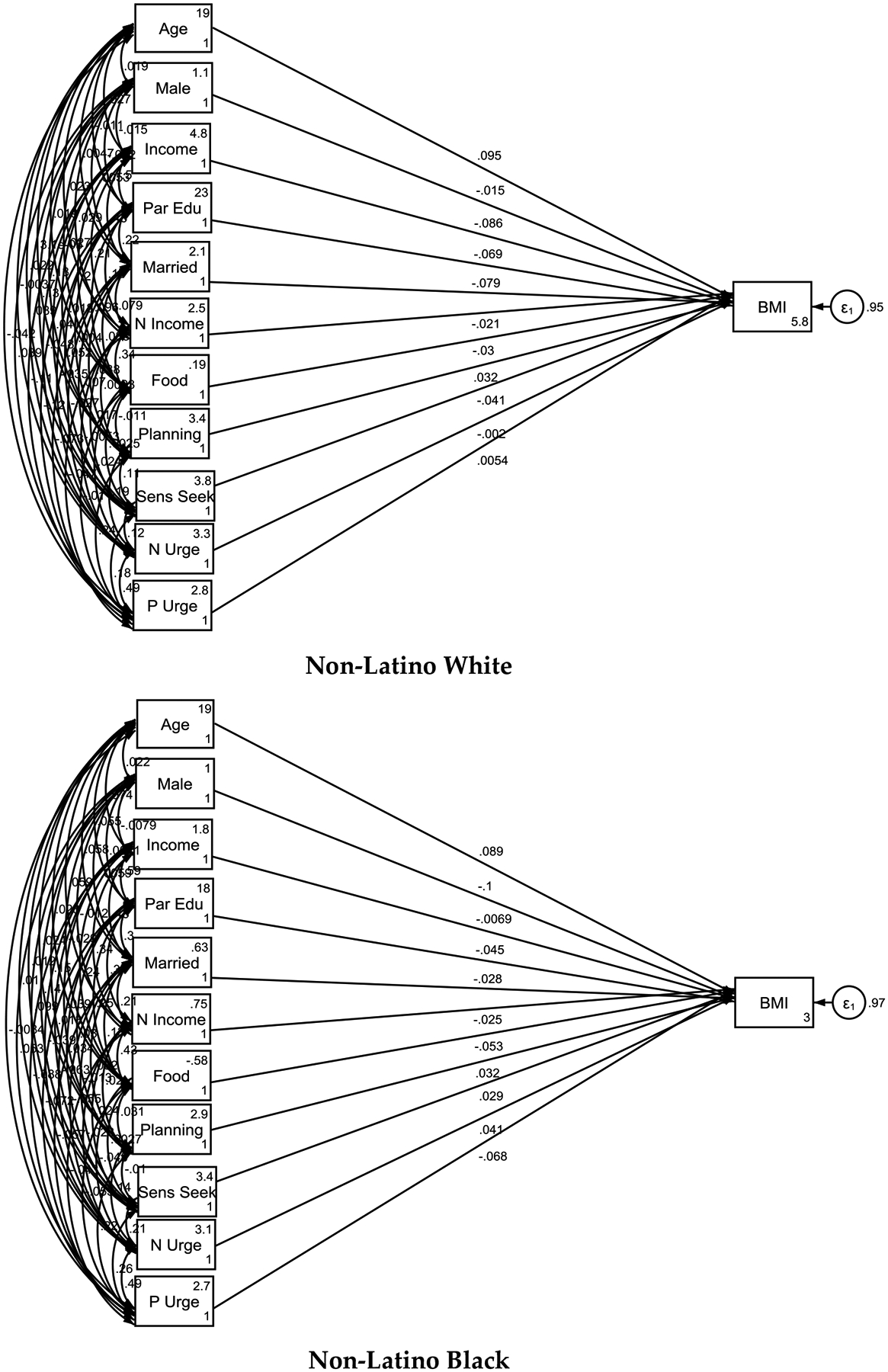
Results: Race/ethnic groups differed in psychosocial correlates of childhood BMI at age 9 and 10. Among non-Latino White children, higher family income (B = -0.086, p < 0.001), higher parental education (B = -0.069, p < 0.001), and living in a married household (B = -0.079, p < 0.001) were associated with lower BMI. Additionally, the presence of healthy food options in the zip code (B = -0.030, p = 0.032) was linked to lower BMI, while lack of planning (B = 0.032, p = 0.030) was associated with higher BMI. For non-Latino Black children, positive urgency (B = -0.068, p = 0.022) was negatively associated with BMI, while other factors such as family SES and neighborhood SES did not show significant associations. For Latino children, higher family income (B = -0.093, p = 0.001) and parental education (B = -0.099, p < 0.001) were associated with lower BMI. In this group, male gender (B = 0.043, p = 0.033) was associated with higher BMI. Among Asian children, higher family income (B = -0.199, p = 0.006) and parental education (B = -0.144, p = 0.037) were significantly associated with lower BMI. For children in the "Other" racial/ethnic category, higher family income (B = -0.101, p = 0.023), living in a married household (B = -0.076, p = 0.026), and higher median income in the zip code (B = -0.083, p = 0.013) were associated with lower BMI. In this group, male children had lower BMI compared to females (B = -0.089, p = 0.001).
Conclusion: The findings highlight substantial racial/ethnic differences in the psychosocial and socioeconomic correlates of BMI in children. There is a need for tailored interventions that target social determinants of childhood high BMI. One size does not fit all.




 京公网安备 11010802042870号
京ICP备2023020795号-1
京公网安备 11010802042870号
京ICP备2023020795号-1

 分享
分享

 求助内容:
求助内容: 应助结果提醒方式:
 扫码关注我们
