{"title":"The Influence of Different Garlic Genotypes on Yogurt Production","authors":"H. Ceren Akal, Gökçe Eminoğlu, Selen Akan","doi":"10.1002/fsn3.4606","DOIUrl":null,"url":null,"abstract":"<p>Genotypic differences influence many characteristics of garlic. These differences are particularly prominent in antioxidant, phenolic, and volatile compounds. Therefore, garlics obtained from four different regions of Turkey (Ankara, Mersin, Maraş, Taşköprü) were used in yogurt production. Gross composition, acidity, antioxidant capacity, phenolic compounds, water-holding capacity, volatile compound profile, microbiological, textural, and sensory properties of the samples were determined during 30-day storage period. The addition of garlic did not significantly change the composition, acidity, water-holding capacity, and textural properties of the samples. However, the count of lactic acid bacteria was lower in the samples with garlic compared to the control sample. In addition, depending on the garlic genotype, the addition of garlic increased the antioxidant and phenolic contents of yogurts at varying levels. Yogurt with Taşköprü garlic (sample coded D) showed the highest phenolic compound and antioxidant capacity. Similarly, sulfur compounds were detected in garlic-added yogurts at varying levels depending on the genotype. Among these compounds, diallyl disulfide was found to be at the highest level. All sulfur compounds were found at the highest levels in yogurt with Ankara and Taşköprü garlics. These yogurt samples (coded samples A and D), which were identified with high amounts of diallyl sulfide, diallyl disulfide, and diallyl trisulfide, received significantly lower taste scores from the panelists compared to the control sample due to their strong and pungent taste. This study revealed that garlic obtained from different genotypes had different effects on yogurt properties.</p>","PeriodicalId":12418,"journal":{"name":"Food Science & Nutrition","volume":"13 3","pages":""},"PeriodicalIF":3.8000,"publicationDate":"2025-03-04","publicationTypes":"Journal Article","fieldsOfStudy":null,"isOpenAccess":false,"openAccessPdf":"https://onlinelibrary.wiley.com/doi/epdf/10.1002/fsn3.4606","citationCount":"0","resultStr":null,"platform":"Semanticscholar","paperid":null,"PeriodicalName":"Food Science & Nutrition","FirstCategoryId":"97","ListUrlMain":"https://onlinelibrary.wiley.com/doi/10.1002/fsn3.4606","RegionNum":2,"RegionCategory":"农林科学","ArticlePicture":[],"TitleCN":null,"AbstractTextCN":null,"PMCID":null,"EPubDate":"","PubModel":"","JCR":"Q2","JCRName":"FOOD SCIENCE & TECHNOLOGY","Score":null,"Total":0}
引用次数: 0
Abstract
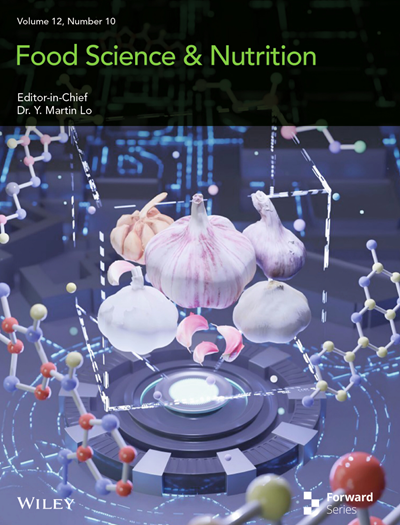
Genotypic differences influence many characteristics of garlic. These differences are particularly prominent in antioxidant, phenolic, and volatile compounds. Therefore, garlics obtained from four different regions of Turkey (Ankara, Mersin, Maraş, Taşköprü) were used in yogurt production. Gross composition, acidity, antioxidant capacity, phenolic compounds, water-holding capacity, volatile compound profile, microbiological, textural, and sensory properties of the samples were determined during 30-day storage period. The addition of garlic did not significantly change the composition, acidity, water-holding capacity, and textural properties of the samples. However, the count of lactic acid bacteria was lower in the samples with garlic compared to the control sample. In addition, depending on the garlic genotype, the addition of garlic increased the antioxidant and phenolic contents of yogurts at varying levels. Yogurt with Taşköprü garlic (sample coded D) showed the highest phenolic compound and antioxidant capacity. Similarly, sulfur compounds were detected in garlic-added yogurts at varying levels depending on the genotype. Among these compounds, diallyl disulfide was found to be at the highest level. All sulfur compounds were found at the highest levels in yogurt with Ankara and Taşköprü garlics. These yogurt samples (coded samples A and D), which were identified with high amounts of diallyl sulfide, diallyl disulfide, and diallyl trisulfide, received significantly lower taste scores from the panelists compared to the control sample due to their strong and pungent taste. This study revealed that garlic obtained from different genotypes had different effects on yogurt properties.
期刊介绍:
Food Science & Nutrition is the peer-reviewed journal for rapid dissemination of research in all areas of food science and nutrition. The Journal will consider submissions of quality papers describing the results of fundamental and applied research related to all aspects of human food and nutrition, as well as interdisciplinary research that spans these two fields.




 京公网安备 11010802042870号
京ICP备2023020795号-1
京公网安备 11010802042870号
京ICP备2023020795号-1

 分享
分享
 求助内容:
求助内容: 应助结果提醒方式:
 扫码关注我们
