Burcu Oltu, Selda Güney, Seniha Esen Yuksel, Berna Dengiz
{"title":"Automated classification of chest X-rays: a deep learning approach with attention mechanisms.","authors":"Burcu Oltu, Selda Güney, Seniha Esen Yuksel, Berna Dengiz","doi":"10.1186/s12880-025-01604-5","DOIUrl":null,"url":null,"abstract":"<p><strong>Background: </strong>Pulmonary diseases such as COVID-19 and pneumonia, are life-threatening conditions, that require prompt and accurate diagnosis for effective treatment. Chest X-ray (CXR) has become the most common alternative method for detecting pulmonary diseases such as COVID-19, pneumonia, and lung opacity due to their availability, cost-effectiveness, and ability to facilitate comparative analysis. However, the interpretation of CXRs is a challenging task.</p><p><strong>Methods: </strong>This study presents an automated deep learning (DL) model that outperforms multiple state-of-the-art methods in diagnosing COVID-19, Lung Opacity, and Viral Pneumonia. Using a dataset of 21,165 CXRs, the proposed framework introduces a seamless combination of the Vision Transformer (ViT) for capturing long-range dependencies, DenseNet201 for powerful feature extraction, and global average pooling (GAP) for retaining critical spatial details. This combination results in a robust classification system, achieving remarkable accuracy.</p><p><strong>Results: </strong>The proposed methodology delivers outstanding results across all categories: achieving 99.4% accuracy and an F1-score of 98.43% for COVID-19, 96.45% accuracy and an F1-score of 93.64% for Lung Opacity, 99.63% accuracy and an F1-score of 97.05% for Viral Pneumonia, and 95.97% accuracy with an F1-score of 95.87% for Normal subjects.</p><p><strong>Conclusion: </strong>The proposed framework achieves a remarkable overall accuracy of 97.87%, surpassing several state-of-the-art methods with reproducible and objective outcomes. To ensure robustness and minimize variability in train-test splits, our study employs five-fold cross-validation, providing reliable and consistent performance evaluation. For transparency and to facilitate future comparisons, the specific training and testing splits have been made publicly accessible. Furthermore, Grad-CAM-based visualizations are integrated to enhance the interpretability of the model, offering valuable insights into its decision-making process. This innovative framework not only boosts classification accuracy but also sets a new benchmark in CXR-based disease diagnosis.</p>","PeriodicalId":9020,"journal":{"name":"BMC Medical Imaging","volume":"25 1","pages":"71"},"PeriodicalIF":3.2000,"publicationDate":"2025-03-04","publicationTypes":"Journal Article","fieldsOfStudy":null,"isOpenAccess":false,"openAccessPdf":"https://www.ncbi.nlm.nih.gov/pmc/articles/PMC11877751/pdf/","citationCount":"0","resultStr":null,"platform":"Semanticscholar","paperid":null,"PeriodicalName":"BMC Medical Imaging","FirstCategoryId":"3","ListUrlMain":"https://doi.org/10.1186/s12880-025-01604-5","RegionNum":3,"RegionCategory":"医学","ArticlePicture":[],"TitleCN":null,"AbstractTextCN":null,"PMCID":null,"EPubDate":"","PubModel":"","JCR":"Q2","JCRName":"RADIOLOGY, NUCLEAR MEDICINE & MEDICAL IMAGING","Score":null,"Total":0}
引用次数: 0
Abstract
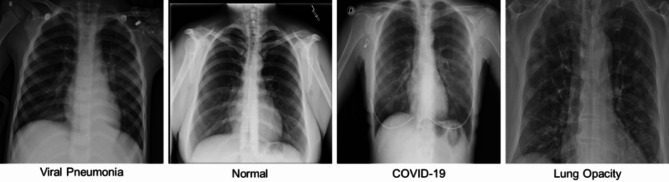
Background: Pulmonary diseases such as COVID-19 and pneumonia, are life-threatening conditions, that require prompt and accurate diagnosis for effective treatment. Chest X-ray (CXR) has become the most common alternative method for detecting pulmonary diseases such as COVID-19, pneumonia, and lung opacity due to their availability, cost-effectiveness, and ability to facilitate comparative analysis. However, the interpretation of CXRs is a challenging task.
Methods: This study presents an automated deep learning (DL) model that outperforms multiple state-of-the-art methods in diagnosing COVID-19, Lung Opacity, and Viral Pneumonia. Using a dataset of 21,165 CXRs, the proposed framework introduces a seamless combination of the Vision Transformer (ViT) for capturing long-range dependencies, DenseNet201 for powerful feature extraction, and global average pooling (GAP) for retaining critical spatial details. This combination results in a robust classification system, achieving remarkable accuracy.
Results: The proposed methodology delivers outstanding results across all categories: achieving 99.4% accuracy and an F1-score of 98.43% for COVID-19, 96.45% accuracy and an F1-score of 93.64% for Lung Opacity, 99.63% accuracy and an F1-score of 97.05% for Viral Pneumonia, and 95.97% accuracy with an F1-score of 95.87% for Normal subjects.
Conclusion: The proposed framework achieves a remarkable overall accuracy of 97.87%, surpassing several state-of-the-art methods with reproducible and objective outcomes. To ensure robustness and minimize variability in train-test splits, our study employs five-fold cross-validation, providing reliable and consistent performance evaluation. For transparency and to facilitate future comparisons, the specific training and testing splits have been made publicly accessible. Furthermore, Grad-CAM-based visualizations are integrated to enhance the interpretability of the model, offering valuable insights into its decision-making process. This innovative framework not only boosts classification accuracy but also sets a new benchmark in CXR-based disease diagnosis.
期刊介绍:
BMC Medical Imaging is an open access journal publishing original peer-reviewed research articles in the development, evaluation, and use of imaging techniques and image processing tools to diagnose and manage disease.





 京公网安备 11010802042870号
京ICP备2023020795号-1
京公网安备 11010802042870号
京ICP备2023020795号-1

 分享
分享
 求助内容:
求助内容: 应助结果提醒方式:
 扫码关注我们
