Glucosafe 2-A new tool for nutritional management and insulin-therapy in the intensive care unit: Randomized controlled study (the Glucosafe 2 protocol).
Aude de Watteville, Ulrike Pielmeier, Mariagrazia Di Marco, Angèle Gayet-Ageron, Nils Siegenthaler, Nicolas Parel, Hannah Wozniak, Steve Primmaz, Jérôme Pugin, Steen Andreassen, Claudia Paula Heidegger
{"title":"Glucosafe 2-A new tool for nutritional management and insulin-therapy in the intensive care unit: Randomized controlled study (the Glucosafe 2 protocol).","authors":"Aude de Watteville, Ulrike Pielmeier, Mariagrazia Di Marco, Angèle Gayet-Ageron, Nils Siegenthaler, Nicolas Parel, Hannah Wozniak, Steve Primmaz, Jérôme Pugin, Steen Andreassen, Claudia Paula Heidegger","doi":"10.1371/journal.pone.0316624","DOIUrl":null,"url":null,"abstract":"<p><strong>Background: </strong>Patients admitted to the Intensive Care Unit (ICU) can experience significant fluctuations in blood glucose levels, even if they do not have a history of diabetes. Such variations may arise from multiple causes and are part of the adaptative stress-response to critical illness. To support their nutritional needs, these patients might also need parenteral feeding. Glucose and metabolic fluctuations can lead to serious consequences, including increased infection rates, loss in protein and muscle mass and increased morbi-mortality. This justifies precise and constant monitoring. The management of insulin therapy and nutritional therapy strongly impacts the outcomes of critically ill patients. Glucosafe 2 (GS2) is an innovative medical device designed to address these needs. It offers real-time recommendations to healthcare professionals regarding blood glucose control and nutritional inputs among ICU patients. The goal is to ensure that blood glucose levels remain within the desired range of targeted values, and consequently to minimize the risk of both hypo- and hyperglycemia.</p><p><strong>Method and design: </strong>This study is an unblinded randomized controlled study with: (1) the intervention group, which uses the GS2 device for nutritional therapy and blood glucose advice until discharge from the ICU or up until 15 days after study enrolment; (2) the control group, which uses standard care according to local ICU protocols. We also collected data of a third historical control group using retrospective data from a sample of ICU patients exposed to the standard of care 2 years before the start of the prospective trial; it aims first to validate the predictive accuracy of the GS2 model before the start of the prospective parts and to interpret the existence of possible bias by assessing the potential cross-contamination effects between intervention and control group, due to the fact that caregivers can take more care of patients in the control group, which will dilute the effect of GS2. We planned to enrol 71 patients per group (total = 213 patients). The primary objective is to compare the time spent within a predetermined range of glycemia (5.0 - 8.5 mmol/l) between the intervention group (GS2) and the control group (standard local ICU protocols).</p><p><strong>Discussion: </strong>This study aims to evaluate the performance and safety of the GS2 medical device software to monitor and guide blood glucose management and nutritional therapy in critically ill patients in comparison to current standard of care. If proven successful, GS2 could be used to optimize nutritional and blood glucose management. The clinical data gathered from this study will also contribute to the Clinical Evaluation Report (CER), a regulatory document that provides an assessment of the clinical safety and performance of a medical device throughout its intended lifecycle. GS2 has the potential to optimize the quality of nutritional and blood glucose management and improve compliance with international guidelines.</p><p><strong>Trial registration: </strong>ClinicalTrials.gov, NCT03890432, Registered on 26 March 2019.</p>","PeriodicalId":20189,"journal":{"name":"PLoS ONE","volume":"20 3","pages":"e0316624"},"PeriodicalIF":2.6000,"publicationDate":"2025-03-04","publicationTypes":"Journal Article","fieldsOfStudy":null,"isOpenAccess":false,"openAccessPdf":"https://www.ncbi.nlm.nih.gov/pmc/articles/PMC11878923/pdf/","citationCount":"0","resultStr":null,"platform":"Semanticscholar","paperid":null,"PeriodicalName":"PLoS ONE","FirstCategoryId":"103","ListUrlMain":"https://doi.org/10.1371/journal.pone.0316624","RegionNum":3,"RegionCategory":"综合性期刊","ArticlePicture":[],"TitleCN":null,"AbstractTextCN":null,"PMCID":null,"EPubDate":"2025/1/1 0:00:00","PubModel":"eCollection","JCR":"Q1","JCRName":"MULTIDISCIPLINARY SCIENCES","Score":null,"Total":0}
引用次数: 0
Abstract
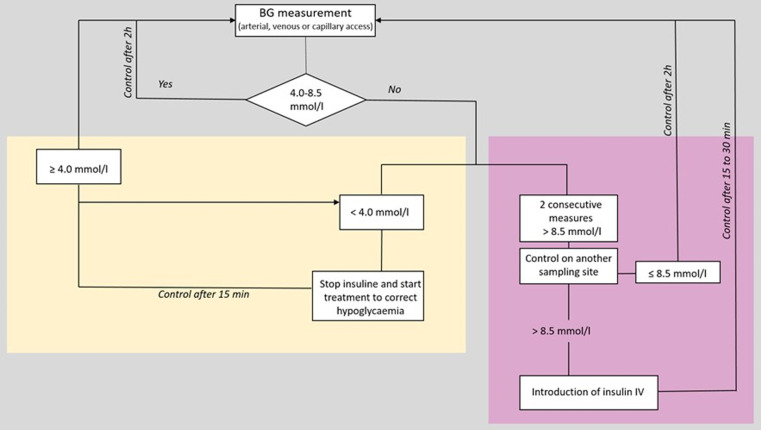
Background: Patients admitted to the Intensive Care Unit (ICU) can experience significant fluctuations in blood glucose levels, even if they do not have a history of diabetes. Such variations may arise from multiple causes and are part of the adaptative stress-response to critical illness. To support their nutritional needs, these patients might also need parenteral feeding. Glucose and metabolic fluctuations can lead to serious consequences, including increased infection rates, loss in protein and muscle mass and increased morbi-mortality. This justifies precise and constant monitoring. The management of insulin therapy and nutritional therapy strongly impacts the outcomes of critically ill patients. Glucosafe 2 (GS2) is an innovative medical device designed to address these needs. It offers real-time recommendations to healthcare professionals regarding blood glucose control and nutritional inputs among ICU patients. The goal is to ensure that blood glucose levels remain within the desired range of targeted values, and consequently to minimize the risk of both hypo- and hyperglycemia.
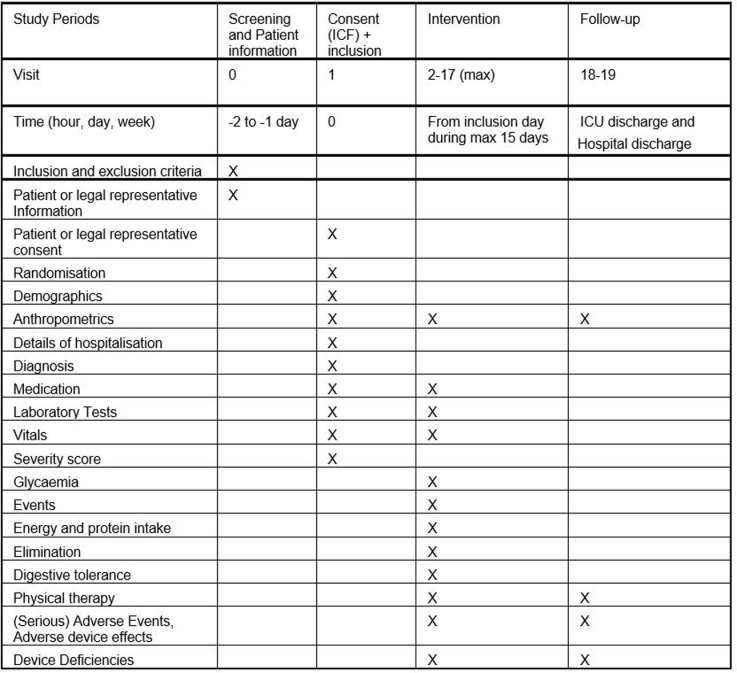
Method and design: This study is an unblinded randomized controlled study with: (1) the intervention group, which uses the GS2 device for nutritional therapy and blood glucose advice until discharge from the ICU or up until 15 days after study enrolment; (2) the control group, which uses standard care according to local ICU protocols. We also collected data of a third historical control group using retrospective data from a sample of ICU patients exposed to the standard of care 2 years before the start of the prospective trial; it aims first to validate the predictive accuracy of the GS2 model before the start of the prospective parts and to interpret the existence of possible bias by assessing the potential cross-contamination effects between intervention and control group, due to the fact that caregivers can take more care of patients in the control group, which will dilute the effect of GS2. We planned to enrol 71 patients per group (total = 213 patients). The primary objective is to compare the time spent within a predetermined range of glycemia (5.0 - 8.5 mmol/l) between the intervention group (GS2) and the control group (standard local ICU protocols).
Discussion: This study aims to evaluate the performance and safety of the GS2 medical device software to monitor and guide blood glucose management and nutritional therapy in critically ill patients in comparison to current standard of care. If proven successful, GS2 could be used to optimize nutritional and blood glucose management. The clinical data gathered from this study will also contribute to the Clinical Evaluation Report (CER), a regulatory document that provides an assessment of the clinical safety and performance of a medical device throughout its intended lifecycle. GS2 has the potential to optimize the quality of nutritional and blood glucose management and improve compliance with international guidelines.
Trial registration: ClinicalTrials.gov, NCT03890432, Registered on 26 March 2019.
期刊介绍:
PLOS ONE is an international, peer-reviewed, open-access, online publication. PLOS ONE welcomes reports on primary research from any scientific discipline. It provides:
* Open-access—freely accessible online, authors retain copyright
* Fast publication times
* Peer review by expert, practicing researchers
* Post-publication tools to indicate quality and impact
* Community-based dialogue on articles
* Worldwide media coverage






 京公网安备 11010802042870号
京ICP备2023020795号-1
京公网安备 11010802042870号
京ICP备2023020795号-1

 分享
分享
 求助内容:
求助内容: 应助结果提醒方式:
 扫码关注我们
