Christin M Zwolski, Grant R Poston, Laine A Anthony, Kristin L Bastian, Megan M Sayre, Kathleen M Hugentobler, Alyson R Filipa
{"title":"Isokinetic Strength Profiles Among Youth after Medial Patellofemoral Ligament Reconstruction.","authors":"Christin M Zwolski, Grant R Poston, Laine A Anthony, Kristin L Bastian, Megan M Sayre, Kathleen M Hugentobler, Alyson R Filipa","doi":"10.26603/001c.129257","DOIUrl":null,"url":null,"abstract":"<p><strong>Background: </strong>Knee strength is a critical measure of successful rehabilitation following medial patellofemoral ligament reconstruction (MPFLR). Yet, strength outcomes of youth following MPFLR are not widely reported.</p><p><strong>Hypothesis/purpose: </strong>The primary purpose was to profile isokinetic strength outcomes by sex and age among youth following MPFLR. A secondary purpose was to determine the relationship between normalized isokinetic strength values and patient-reported outcome scores by age and sex. The hypotheses were that 1) males would demonstrate higher normalized strength, and that 2) a higher proportion of males would achieve ≥90% limb symmetry when compared to females.</p><p><strong>Study design: </strong>Cross-sectional.</p><p><strong>Methods: </strong>At 6.9±2.1 months after MPFLR, 162 patients completed isokinetic assessment of knee extension (KE) and flexion (KF) strength at 180°/s and 300°/s on both limbs (uninvolved [UN], involved [INV]). Strength data and patient-reported outcome scores, including the International Knee Documentation Committee (IKDC) Subjective Knee Form and Pediatric Quality of Life Inventory (PedsQL) were extracted from electronic medical records. Descriptive statistics were used to categorize data by age (Pre-adolescent, Early Adolescent, Late Adolescent, Young Adult) and sex. Independent-samples t-tests and chi-square analyses were used to determine sex-based differences in strength. Multiple linear regression analyses were used to determine the relationship between strength and patient-reported function.</p><p><strong>Results: </strong>Among Early Adolescents, males demonstrated higher normalized KE strength at 300°/s compared to females (UN: 1.27±0.3 vs. 1.07±0.3 [p=0.01]; INV: 1.07±0.2 vs. 0.92±0.3 [p=0.03]). Among Late Adolescents, males demonstrated higher INV limb strength for KE 180°/s (1.55±0.53 vs. 1.24±0.5; p=0.02), KE 300°/s (1.25±0.4 vs. 1.00±0.4; p=0.01), and KF 180°/s (0.98±0.4 vs. 0.82±0.3; p=0.05). A higher proportion of Late Adolescent and Young Adult males achieved ≥90% LSI compared to females (p=<0.01-0.04). Regression models estimating IKDC and PedsQL scores were significant with INV KE strength as an independent variable (p=0.01-0.03).</p><p><strong>Conclusions: </strong>Males demonstrated higher normalized strength and symmetry compared to females following MPFLR. Higher INV KE strength was associated with higher patient-reported function.</p><p><strong>Level of evidence: </strong>2b.</p>","PeriodicalId":47892,"journal":{"name":"International Journal of Sports Physical Therapy","volume":"20 3","pages":"333-343"},"PeriodicalIF":2.1000,"publicationDate":"2025-03-01","publicationTypes":"Journal Article","fieldsOfStudy":null,"isOpenAccess":false,"openAccessPdf":"https://www.ncbi.nlm.nih.gov/pmc/articles/PMC11872563/pdf/","citationCount":"0","resultStr":null,"platform":"Semanticscholar","paperid":null,"PeriodicalName":"International Journal of Sports Physical Therapy","FirstCategoryId":"1085","ListUrlMain":"https://doi.org/10.26603/001c.129257","RegionNum":0,"RegionCategory":null,"ArticlePicture":[],"TitleCN":null,"AbstractTextCN":null,"PMCID":null,"EPubDate":"2025/1/1 0:00:00","PubModel":"eCollection","JCR":"Q3","JCRName":"SPORT SCIENCES","Score":null,"Total":0}
引用次数: 0
Abstract
Background: Knee strength is a critical measure of successful rehabilitation following medial patellofemoral ligament reconstruction (MPFLR). Yet, strength outcomes of youth following MPFLR are not widely reported.
Hypothesis/purpose: The primary purpose was to profile isokinetic strength outcomes by sex and age among youth following MPFLR. A secondary purpose was to determine the relationship between normalized isokinetic strength values and patient-reported outcome scores by age and sex. The hypotheses were that 1) males would demonstrate higher normalized strength, and that 2) a higher proportion of males would achieve ≥90% limb symmetry when compared to females.
Study design: Cross-sectional.
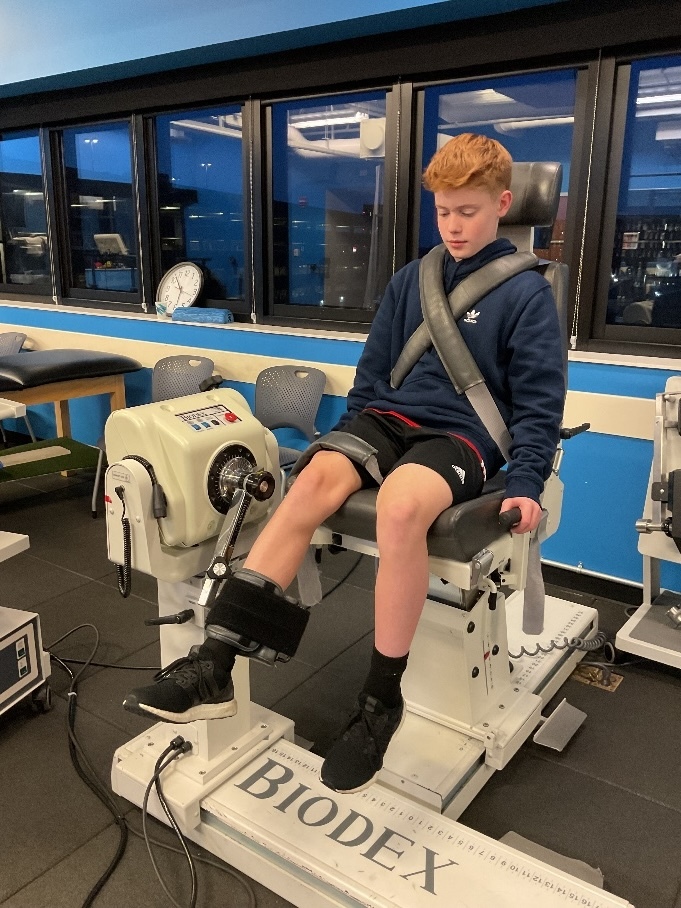
Methods: At 6.9±2.1 months after MPFLR, 162 patients completed isokinetic assessment of knee extension (KE) and flexion (KF) strength at 180°/s and 300°/s on both limbs (uninvolved [UN], involved [INV]). Strength data and patient-reported outcome scores, including the International Knee Documentation Committee (IKDC) Subjective Knee Form and Pediatric Quality of Life Inventory (PedsQL) were extracted from electronic medical records. Descriptive statistics were used to categorize data by age (Pre-adolescent, Early Adolescent, Late Adolescent, Young Adult) and sex. Independent-samples t-tests and chi-square analyses were used to determine sex-based differences in strength. Multiple linear regression analyses were used to determine the relationship between strength and patient-reported function.
Results: Among Early Adolescents, males demonstrated higher normalized KE strength at 300°/s compared to females (UN: 1.27±0.3 vs. 1.07±0.3 [p=0.01]; INV: 1.07±0.2 vs. 0.92±0.3 [p=0.03]). Among Late Adolescents, males demonstrated higher INV limb strength for KE 180°/s (1.55±0.53 vs. 1.24±0.5; p=0.02), KE 300°/s (1.25±0.4 vs. 1.00±0.4; p=0.01), and KF 180°/s (0.98±0.4 vs. 0.82±0.3; p=0.05). A higher proportion of Late Adolescent and Young Adult males achieved ≥90% LSI compared to females (p=<0.01-0.04). Regression models estimating IKDC and PedsQL scores were significant with INV KE strength as an independent variable (p=0.01-0.03).
Conclusions: Males demonstrated higher normalized strength and symmetry compared to females following MPFLR. Higher INV KE strength was associated with higher patient-reported function.




 京公网安备 11010802042870号
京ICP备2023020795号-1
京公网安备 11010802042870号
京ICP备2023020795号-1

 分享
分享
 求助内容:
求助内容: 应助结果提醒方式:
 扫码关注我们
