Xiaochun Tan, Wenyi Zhou, Shunyou Jing, Weifeng Shen, Binbin Lu
{"title":"Decoding codon usage in human papillomavirus type 59.","authors":"Xiaochun Tan, Wenyi Zhou, Shunyou Jing, Weifeng Shen, Binbin Lu","doi":"10.1007/s11262-025-02148-0","DOIUrl":null,"url":null,"abstract":"<p><p>Human Papillomavirus Type 59 (HPV-59) is a high-risk subtype linked to cervical and other cancers. However, its codon usage patterns remain underexplored despite their importance in understanding viral behavior and vaccine optimization. This study reveals a mild codon usage bias in HPV-59, with a notable preference for A/T-ending codons and 29 favored codons, primarily ending in A or T. Additionally, CpG dinucleotides were significantly underrepresented, potentially aiding immune evasion. Analyses using the Parity Rule 2, Effective Number of Codons plot, and neutrality plot indicate that both mutational pressure and natural selection shape codon usage, with natural selection playing a dominant role. The virus's codon usage moderately aligns with human translational machinery, as shown by the Isoacceptor tRNA pool, Codon Adaptation Index, and Relative Codon Deoptimization Index, reflecting an evolutionary balance between protein synthesis efficiency and host compatibility. These findings provide valuable insights into HPV-59 biology, offering guidance for developing optimized vaccines.</p>","PeriodicalId":51212,"journal":{"name":"Virus Genes","volume":" ","pages":"313-323"},"PeriodicalIF":1.9000,"publicationDate":"2025-06-01","publicationTypes":"Journal Article","fieldsOfStudy":null,"isOpenAccess":false,"openAccessPdf":"https://www.ncbi.nlm.nih.gov/pmc/articles/PMC12052745/pdf/","citationCount":"0","resultStr":null,"platform":"Semanticscholar","paperid":null,"PeriodicalName":"Virus Genes","FirstCategoryId":"3","ListUrlMain":"https://doi.org/10.1007/s11262-025-02148-0","RegionNum":4,"RegionCategory":"医学","ArticlePicture":[],"TitleCN":null,"AbstractTextCN":null,"PMCID":null,"EPubDate":"2025/3/4 0:00:00","PubModel":"Epub","JCR":"Q3","JCRName":"GENETICS & HEREDITY","Score":null,"Total":0}
引用次数: 0
Abstract
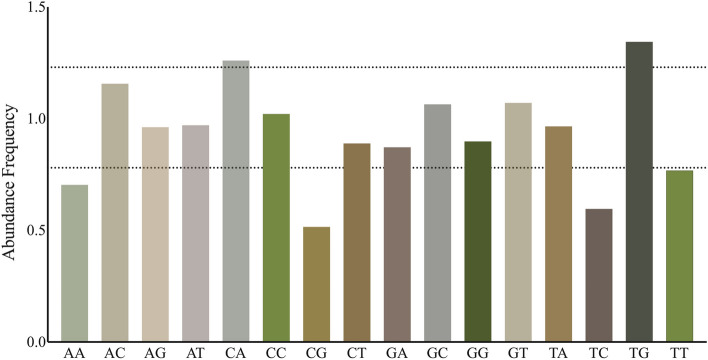
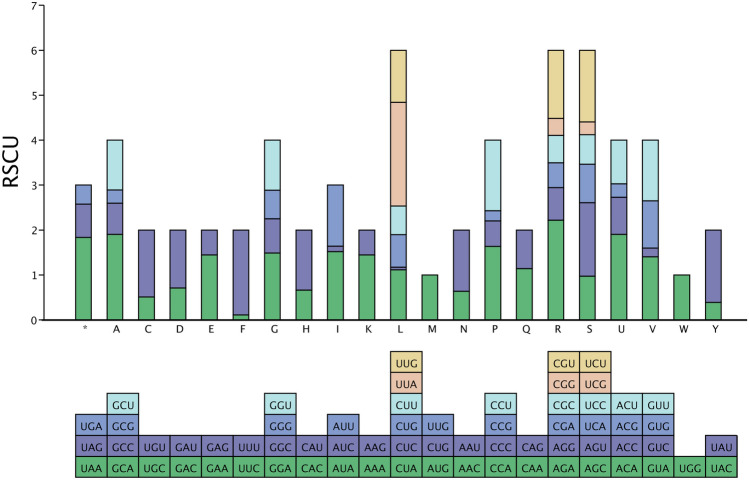
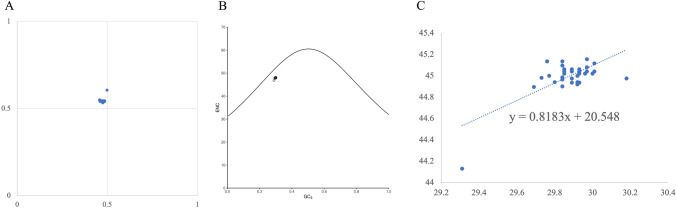
Human Papillomavirus Type 59 (HPV-59) is a high-risk subtype linked to cervical and other cancers. However, its codon usage patterns remain underexplored despite their importance in understanding viral behavior and vaccine optimization. This study reveals a mild codon usage bias in HPV-59, with a notable preference for A/T-ending codons and 29 favored codons, primarily ending in A or T. Additionally, CpG dinucleotides were significantly underrepresented, potentially aiding immune evasion. Analyses using the Parity Rule 2, Effective Number of Codons plot, and neutrality plot indicate that both mutational pressure and natural selection shape codon usage, with natural selection playing a dominant role. The virus's codon usage moderately aligns with human translational machinery, as shown by the Isoacceptor tRNA pool, Codon Adaptation Index, and Relative Codon Deoptimization Index, reflecting an evolutionary balance between protein synthesis efficiency and host compatibility. These findings provide valuable insights into HPV-59 biology, offering guidance for developing optimized vaccines.
期刊介绍:
Viruses are convenient models for the elucidation of life processes. The study of viruses is again on the cutting edge of biological sciences: systems biology, genomics, proteomics, metagenomics, using the newest most powerful tools.
Huge amounts of new details on virus interactions with the cell, other pathogens and the hosts – animal (including human), insect, fungal, plant, bacterial, and archaeal - and their role in infection and disease are forthcoming in perplexing details requiring analysis and comments.
Virus Genes is dedicated to the publication of studies on the structure and function of viruses and their genes, the molecular and systems interactions with the host and all applications derived thereof, providing a forum for the analysis of data and discussion of its implications, and the development of new hypotheses.



 京公网安备 11010802042870号
京ICP备2023020795号-1
京公网安备 11010802042870号
京ICP备2023020795号-1

 分享
分享
 求助内容:
求助内容: 应助结果提醒方式:
 扫码关注我们
