{"title":"Effect of different solvents on biological attributes of olive leaves extracts of newly cultivated varieties:GC–MS based investigations","authors":"Sami Ullah , Muhammad Azhar Iqbal","doi":"10.1016/j.microc.2025.113281","DOIUrl":null,"url":null,"abstract":"<div><div>This study investigates the optimal solvents for extraction of bioactives from olive leaves, analyzing the yield, phenolic and flavonoid content, antioxidant, thrombolytic, antimicrobial activities, and chemical profiles of extracts from three olive varieties: Kalamata, Sikitita, and Chietina. During ultrasonic-assisted extraction, the highest extract yield (472.96 mg/g) was achieved with water, while the lowest (224.31 mg/g) antioxidant extract yield was obtained with absolute methanol. On the other hand, aqueous ethanolic extracts (AEEs) demonstrated the highest total phenolics (28.17 mg GAE/g DW) and flavonoids (170.67 mg RE/g DW) contents, along with significant antioxidant activities as measured by 2,2-diphenyl-1-picrylhydrazyl (DPPH) radical scavenging and ferric reducing antioxidant power (FRAP) assays. Gas chromatography–mass spectrometry (GC–MS) analysis of these extracts revealed the presence of high-valuebioactive compounds such as oleic acid, <em>β</em>-sitosterol, and 2-methoxy-4-vinylphenol, known for their health benefits. Moreover, hemolytic and thrombolytic activities revealed the safer and health-promoting potential of tested extracts. Carbohydrate analysis identified glucose as the most abundant sugar, while organic acid profiling highlighted tartaric acid as predominant. The AEEs extracts were the most effective against Gram-positive pathogens, particularly <em>Staphylococcus aureus</em>, but were less effective against Gram-negative bacteria. These findings highlight the importance of solvent choice in maximizing the extraction of bioactives and suggest the potential of olive leaf extracts for developing nutraceuticals and functional foods.</div></div>","PeriodicalId":391,"journal":{"name":"Microchemical Journal","volume":"212 ","pages":"Article 113281"},"PeriodicalIF":4.9000,"publicationDate":"2025-05-01","publicationTypes":"Journal Article","fieldsOfStudy":null,"isOpenAccess":false,"openAccessPdf":"","citationCount":"0","resultStr":null,"platform":"Semanticscholar","paperid":null,"PeriodicalName":"Microchemical Journal","FirstCategoryId":"92","ListUrlMain":"https://www.sciencedirect.com/science/article/pii/S0026265X25006368","RegionNum":2,"RegionCategory":"化学","ArticlePicture":[],"TitleCN":null,"AbstractTextCN":null,"PMCID":null,"EPubDate":"2025/3/6 0:00:00","PubModel":"Epub","JCR":"Q1","JCRName":"CHEMISTRY, ANALYTICAL","Score":null,"Total":0}
引用次数: 0
Abstract
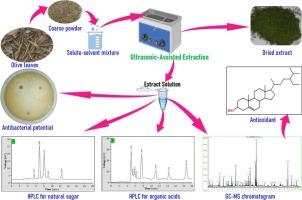
This study investigates the optimal solvents for extraction of bioactives from olive leaves, analyzing the yield, phenolic and flavonoid content, antioxidant, thrombolytic, antimicrobial activities, and chemical profiles of extracts from three olive varieties: Kalamata, Sikitita, and Chietina. During ultrasonic-assisted extraction, the highest extract yield (472.96 mg/g) was achieved with water, while the lowest (224.31 mg/g) antioxidant extract yield was obtained with absolute methanol. On the other hand, aqueous ethanolic extracts (AEEs) demonstrated the highest total phenolics (28.17 mg GAE/g DW) and flavonoids (170.67 mg RE/g DW) contents, along with significant antioxidant activities as measured by 2,2-diphenyl-1-picrylhydrazyl (DPPH) radical scavenging and ferric reducing antioxidant power (FRAP) assays. Gas chromatography–mass spectrometry (GC–MS) analysis of these extracts revealed the presence of high-valuebioactive compounds such as oleic acid, β-sitosterol, and 2-methoxy-4-vinylphenol, known for their health benefits. Moreover, hemolytic and thrombolytic activities revealed the safer and health-promoting potential of tested extracts. Carbohydrate analysis identified glucose as the most abundant sugar, while organic acid profiling highlighted tartaric acid as predominant. The AEEs extracts were the most effective against Gram-positive pathogens, particularly Staphylococcus aureus, but were less effective against Gram-negative bacteria. These findings highlight the importance of solvent choice in maximizing the extraction of bioactives and suggest the potential of olive leaf extracts for developing nutraceuticals and functional foods.
期刊介绍:
The Microchemical Journal is a peer reviewed journal devoted to all aspects and phases of analytical chemistry and chemical analysis. The Microchemical Journal publishes articles which are at the forefront of modern analytical chemistry and cover innovations in the techniques to the finest possible limits. This includes fundamental aspects, instrumentation, new developments, innovative and novel methods and applications including environmental and clinical field.
Traditional classical analytical methods such as spectrophotometry and titrimetry as well as established instrumentation methods such as flame and graphite furnace atomic absorption spectrometry, gas chromatography, and modified glassy or carbon electrode electrochemical methods will be considered, provided they show significant improvements and novelty compared to the established methods.



 京公网安备 11010802042870号
京ICP备2023020795号-1
京公网安备 11010802042870号
京ICP备2023020795号-1

 分享
分享
 求助内容:
求助内容: 应助结果提醒方式:
 扫码关注我们
