Conghui Li , Junlin Yuan , Hui Zhang , Nan Liu , Zengming Wang , Aiping Zheng , Xiaochen Bo
{"title":"Taste-masking mechanism of brivaracetam oral solution using cyclodextrin and sodium carboxymethyl cellulose","authors":"Conghui Li , Junlin Yuan , Hui Zhang , Nan Liu , Zengming Wang , Aiping Zheng , Xiaochen Bo","doi":"10.1016/j.ijpharm.2025.125368","DOIUrl":null,"url":null,"abstract":"<div><div>Brivaracetam is a novel antiepileptic medication that can be indicated for the management of epilepsy in pediatric patients over one month old. To facilitate its administration to children, an oral solution is the most suitable option. However, the inherently bitter taste of brivaracetam poses a challenge in terms of palatability, necessitating the development of a taste masking strategy for the solution. In this study, a palatable brivaracetam oral solution was prepared by meticulously screening various taste masking techniques. Then the interaction relationship between brivaracetam and pivotal excipients (sodium carboxymethyl cellulose (CMC-Na) and 2-Hydroxypropyl-β-cyclodextrin (HP-β-CD)) within the optimized formulation was investigated by molecular dynamics simulations. It turned out that brivaracetam did not encapsulate within HP-β-CD, but instead forms a robust association through hydrogen bonding and π-stacking interactions, facilitated by the presence of CMC-Na. Further exploration through molecular docking elucidated that the optimized formulation effectively masks the bitter taste by diminishing the binding affinity of brivaracetam to bitter taste receptors. In summary, this study achieved taste masking of brivaracetam under solution conditions by investigated the interactions of brivaracetam and key excipient interactions as well as the mechanisms of taste masking of optimized formulations, providing valuable insights for similar pharmaceutical applications.</div></div>","PeriodicalId":14187,"journal":{"name":"International Journal of Pharmaceutics","volume":"675 ","pages":"Article 125368"},"PeriodicalIF":5.2000,"publicationDate":"2025-03-03","publicationTypes":"Journal Article","fieldsOfStudy":null,"isOpenAccess":false,"openAccessPdf":"","citationCount":"0","resultStr":null,"platform":"Semanticscholar","paperid":null,"PeriodicalName":"International Journal of Pharmaceutics","FirstCategoryId":"3","ListUrlMain":"https://www.sciencedirect.com/science/article/pii/S0378517325002042","RegionNum":2,"RegionCategory":"医学","ArticlePicture":[],"TitleCN":null,"AbstractTextCN":null,"PMCID":null,"EPubDate":"","PubModel":"","JCR":"Q1","JCRName":"PHARMACOLOGY & PHARMACY","Score":null,"Total":0}
引用次数: 0
Abstract
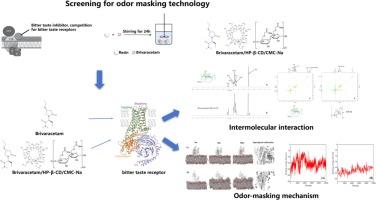
Brivaracetam is a novel antiepileptic medication that can be indicated for the management of epilepsy in pediatric patients over one month old. To facilitate its administration to children, an oral solution is the most suitable option. However, the inherently bitter taste of brivaracetam poses a challenge in terms of palatability, necessitating the development of a taste masking strategy for the solution. In this study, a palatable brivaracetam oral solution was prepared by meticulously screening various taste masking techniques. Then the interaction relationship between brivaracetam and pivotal excipients (sodium carboxymethyl cellulose (CMC-Na) and 2-Hydroxypropyl-β-cyclodextrin (HP-β-CD)) within the optimized formulation was investigated by molecular dynamics simulations. It turned out that brivaracetam did not encapsulate within HP-β-CD, but instead forms a robust association through hydrogen bonding and π-stacking interactions, facilitated by the presence of CMC-Na. Further exploration through molecular docking elucidated that the optimized formulation effectively masks the bitter taste by diminishing the binding affinity of brivaracetam to bitter taste receptors. In summary, this study achieved taste masking of brivaracetam under solution conditions by investigated the interactions of brivaracetam and key excipient interactions as well as the mechanisms of taste masking of optimized formulations, providing valuable insights for similar pharmaceutical applications.
期刊介绍:
The International Journal of Pharmaceutics is the third most cited journal in the "Pharmacy & Pharmacology" category out of 366 journals, being the true home for pharmaceutical scientists concerned with the physical, chemical and biological properties of devices and delivery systems for drugs, vaccines and biologicals, including their design, manufacture and evaluation. This includes evaluation of the properties of drugs, excipients such as surfactants and polymers and novel materials. The journal has special sections on pharmaceutical nanotechnology and personalized medicines, and publishes research papers, reviews, commentaries and letters to the editor as well as special issues.



 京公网安备 11010802042870号
京ICP备2023020795号-1
京公网安备 11010802042870号
京ICP备2023020795号-1

 分享
分享
 求助内容:
求助内容: 应助结果提醒方式:
 扫码关注我们
