{"title":"The amelioration effect of sesamoside on inflammatory response in septic shock.","authors":"Dan Song, Xinjie Zhao, Yanru Zhang, Mengjie Wang, Haojie Tang, Jing Fang, Zhuoyang Song, Qingyang Ma, Jing Geng","doi":"10.1186/s12865-025-00695-7","DOIUrl":null,"url":null,"abstract":"<p><p>Sepsis shock is caused by a systemic infection characterized by circulatory disorders and metabolic abnormalities. Microorganisms or their toxins enter the bloodstream, releasing inflammatory mediators and triggering systemic inflammatory reactions, leading to multiple organ dysfunction and even failure. To explore new treatment methods, we studied the improvement effect of sesamoside on the inflammatory response in septic shock. We performed in vitro experiments and animal models. We found that sesamoside reduced inflammatory cytokines such as TNF-α, IL-6, IL-1β, iNOS, and NO. Sesamoside inhibited the LPS-induced phosphorylation of ERK and JNK and downregulated the expression of NLRP3, reducing the systemic inflammatory response. In addition, sesamoside reduces multi-organ injuries in LPS-induced septic shock and restricts the nuclear localization of P65 to regulate the immune response, enhance immune function, and help restore cell metabolism and organ function. This study reveals the improved effect of sesamoside on inflammatory response in septic shock, providing new ideas and methods for treating septic shock. Future research will explore the mechanism of action of sesamoside and its clinical application value in the treatment of septic shock. Clinical trial number: Not applicable.</p>","PeriodicalId":9040,"journal":{"name":"BMC Immunology","volume":"26 1","pages":"15"},"PeriodicalIF":2.7000,"publicationDate":"2025-03-06","publicationTypes":"Journal Article","fieldsOfStudy":null,"isOpenAccess":false,"openAccessPdf":"https://www.ncbi.nlm.nih.gov/pmc/articles/PMC11884088/pdf/","citationCount":"0","resultStr":null,"platform":"Semanticscholar","paperid":null,"PeriodicalName":"BMC Immunology","FirstCategoryId":"3","ListUrlMain":"https://doi.org/10.1186/s12865-025-00695-7","RegionNum":4,"RegionCategory":"医学","ArticlePicture":[],"TitleCN":null,"AbstractTextCN":null,"PMCID":null,"EPubDate":"","PubModel":"","JCR":"Q3","JCRName":"IMMUNOLOGY","Score":null,"Total":0}
引用次数: 0
Abstract
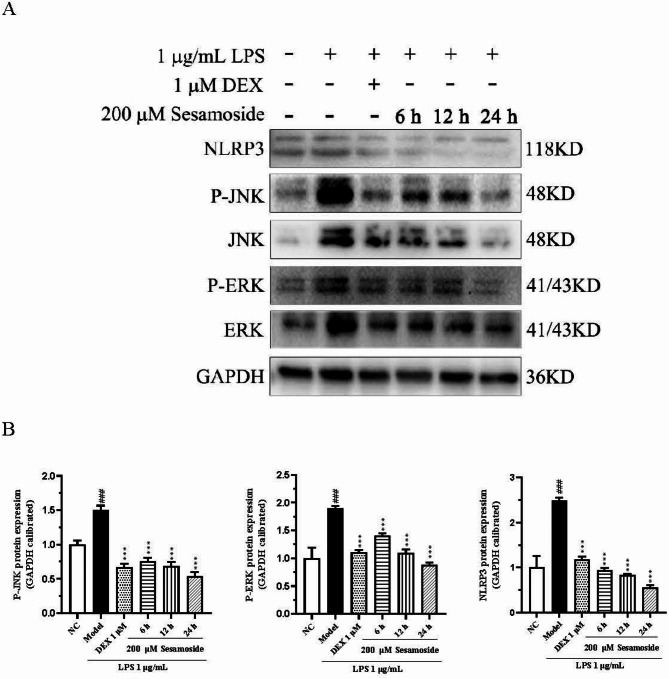
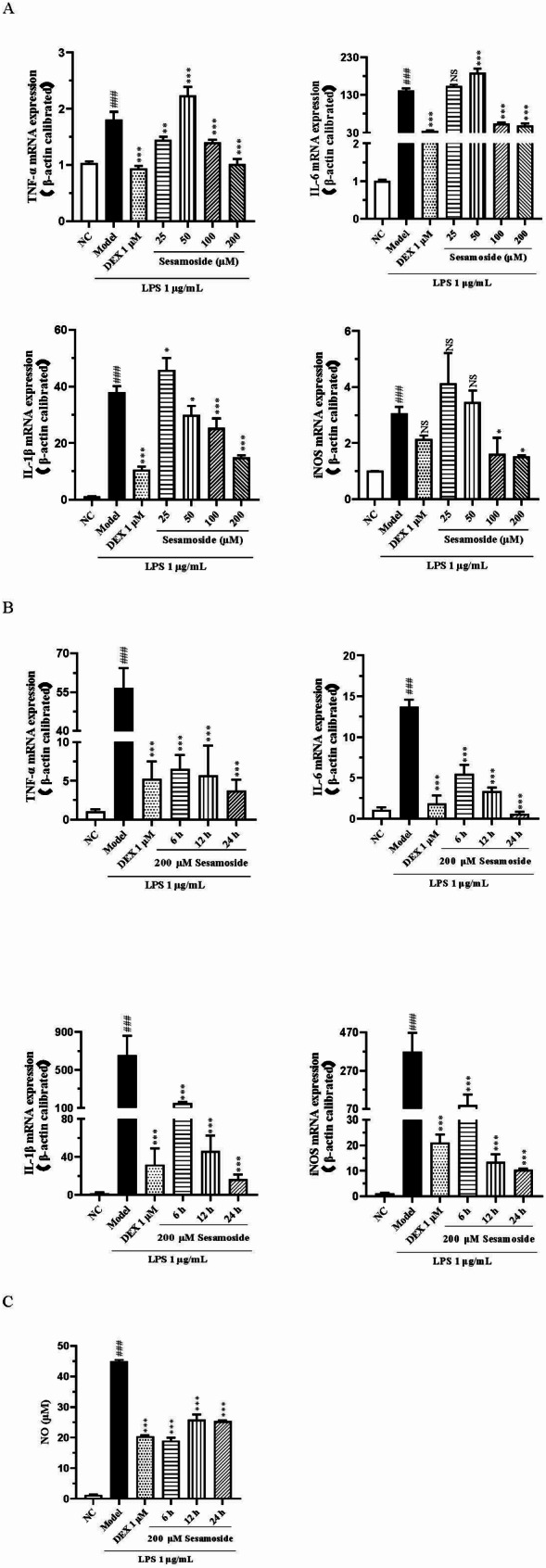
Sepsis shock is caused by a systemic infection characterized by circulatory disorders and metabolic abnormalities. Microorganisms or their toxins enter the bloodstream, releasing inflammatory mediators and triggering systemic inflammatory reactions, leading to multiple organ dysfunction and even failure. To explore new treatment methods, we studied the improvement effect of sesamoside on the inflammatory response in septic shock. We performed in vitro experiments and animal models. We found that sesamoside reduced inflammatory cytokines such as TNF-α, IL-6, IL-1β, iNOS, and NO. Sesamoside inhibited the LPS-induced phosphorylation of ERK and JNK and downregulated the expression of NLRP3, reducing the systemic inflammatory response. In addition, sesamoside reduces multi-organ injuries in LPS-induced septic shock and restricts the nuclear localization of P65 to regulate the immune response, enhance immune function, and help restore cell metabolism and organ function. This study reveals the improved effect of sesamoside on inflammatory response in septic shock, providing new ideas and methods for treating septic shock. Future research will explore the mechanism of action of sesamoside and its clinical application value in the treatment of septic shock. Clinical trial number: Not applicable.
期刊介绍:
BMC Immunology is an open access journal publishing original peer-reviewed research articles in molecular, cellular, tissue-level, organismal, functional, and developmental aspects of the immune system as well as clinical studies and animal models of human diseases.



 京公网安备 11010802042870号
京ICP备2023020795号-1
京公网安备 11010802042870号
京ICP备2023020795号-1

 分享
分享
 求助内容:
求助内容: 应助结果提醒方式:
 扫码关注我们
