Céline Gélinas, Shiva Shahiri T, Han Ting Wang, Maria Cecilia Gallani, Walid Oulehri, Denny Laporta, Philippe Richebé
{"title":"Validation of the Nociception Level Index for the Detection of Nociception and Pain in Critically Ill Adults: Protocol for an Observational Study.","authors":"Céline Gélinas, Shiva Shahiri T, Han Ting Wang, Maria Cecilia Gallani, Walid Oulehri, Denny Laporta, Philippe Richebé","doi":"10.2196/60672","DOIUrl":null,"url":null,"abstract":"<p><strong>Background: </strong>In the intensive care unit (ICU), many patients are unable to communicate their pain through self-reporting or behaviors due to their critical care condition, mechanical ventilation, and medication (eg, heavily sedated or chemically paralyzed). Therefore, alternative pain assessment methods are urgently needed for this vulnerable patient population. The Nociception Level (NOL) index is a multiparameter technology initially developed for the monitoring of nociception and related pain in anesthetized patients, and its use in the ICU is new.</p><p><strong>Objective: </strong>This study aims to validate the NOL for the assessment of nociception and related pain in critically ill adults in the ICU. Specific objectives are to examine the ability of the NOL to: (1) detect pain using standard criteria (ie, self-report and behavioral measures), (2) discriminate between nociceptive and nonnociceptive procedures, and (3) generate consistent values when patients are at rest.</p><p><strong>Methods: </strong>The NOL will be monitored in three ICU patient groups: (1) Group A, participants able to self-report their pain (the reference standard criterion using the 0-10 Faces Pain Thermometer) and express behaviors; (2) Group B, participants unable to self-report but able to express behaviors (the alternative standard criterion using the Critical-Care Pain Observation Tool); and (3) Group C, participants unable to self-report and express behaviors. The NOL will be tested before, during, and after two types of standard care procedures: (1) nonnociceptive (eg, cuff inflation to measure blood pressure, soft touch) and (2) nociceptive (eg, tube or drain removal, endotracheal or tracheal suctioning). Receiver operating characteristic curve analysis of the NOL will be performed for Groups A and B using pain standard measures as reference criteria. Mixed linear models for repeated measures will be used to compare time points, procedures, and their interaction in each group (A, B, and C). Based on power analyses and considering an attrition rate of 25%, a total sample size of 146 patients (68 in Group A, 62 in Group B, and 16 in Group C) is targeted.</p><p><strong>Results: </strong>This study was funded in April 2020 but could not be launched until 2022 due to the COVID-19 pandemic. Recruitment and data collection began at the primary site in July 2022 and has been implemented at the secondary sites in 2023 and 2024 and is planned to continue until 2026.</p><p><strong>Conclusions: </strong>The primary strength of this study protocol is that it is based on rigorous validation strategies with the use of pain standard criteria (ie, self-report and behavioral measures). If found to be valid, the NOL could be used as an alternative physiologic measure of pain in critically ill adults for whom no other pain assessment methods are available.</p><p><strong>Trial registration: </strong>ClinicalTrials.gov NCT05339737; https://clinicaltrials.gov/study/NCT05339737.</p><p><strong>International registered report identifier (irrid): </strong>DERR1-10.2196/60672.</p>","PeriodicalId":14755,"journal":{"name":"JMIR Research Protocols","volume":"14 ","pages":"e60672"},"PeriodicalIF":1.5000,"publicationDate":"2025-02-28","publicationTypes":"Journal Article","fieldsOfStudy":null,"isOpenAccess":false,"openAccessPdf":"https://www.ncbi.nlm.nih.gov/pmc/articles/PMC11909487/pdf/","citationCount":"0","resultStr":null,"platform":"Semanticscholar","paperid":null,"PeriodicalName":"JMIR Research Protocols","FirstCategoryId":"1085","ListUrlMain":"https://doi.org/10.2196/60672","RegionNum":0,"RegionCategory":null,"ArticlePicture":[],"TitleCN":null,"AbstractTextCN":null,"PMCID":null,"EPubDate":"","PubModel":"","JCR":"Q3","JCRName":"HEALTH CARE SCIENCES & SERVICES","Score":null,"Total":0}
引用次数: 0
Abstract
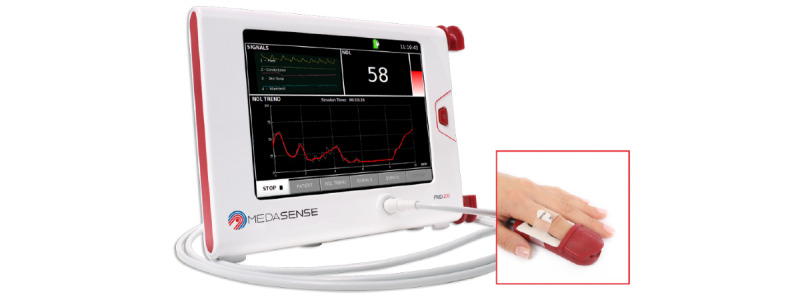
Background: In the intensive care unit (ICU), many patients are unable to communicate their pain through self-reporting or behaviors due to their critical care condition, mechanical ventilation, and medication (eg, heavily sedated or chemically paralyzed). Therefore, alternative pain assessment methods are urgently needed for this vulnerable patient population. The Nociception Level (NOL) index is a multiparameter technology initially developed for the monitoring of nociception and related pain in anesthetized patients, and its use in the ICU is new.
Objective: This study aims to validate the NOL for the assessment of nociception and related pain in critically ill adults in the ICU. Specific objectives are to examine the ability of the NOL to: (1) detect pain using standard criteria (ie, self-report and behavioral measures), (2) discriminate between nociceptive and nonnociceptive procedures, and (3) generate consistent values when patients are at rest.
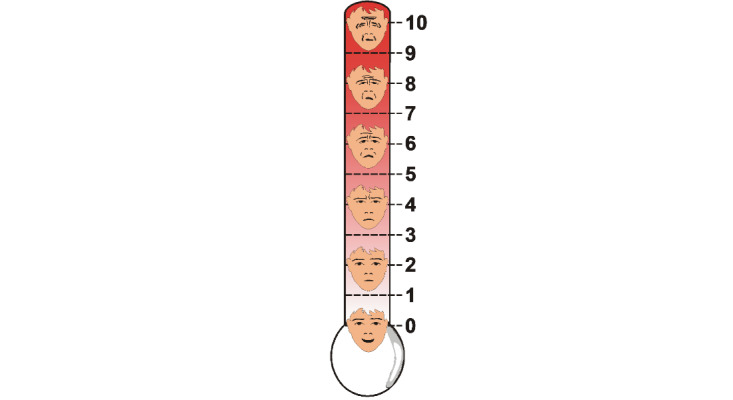
Methods: The NOL will be monitored in three ICU patient groups: (1) Group A, participants able to self-report their pain (the reference standard criterion using the 0-10 Faces Pain Thermometer) and express behaviors; (2) Group B, participants unable to self-report but able to express behaviors (the alternative standard criterion using the Critical-Care Pain Observation Tool); and (3) Group C, participants unable to self-report and express behaviors. The NOL will be tested before, during, and after two types of standard care procedures: (1) nonnociceptive (eg, cuff inflation to measure blood pressure, soft touch) and (2) nociceptive (eg, tube or drain removal, endotracheal or tracheal suctioning). Receiver operating characteristic curve analysis of the NOL will be performed for Groups A and B using pain standard measures as reference criteria. Mixed linear models for repeated measures will be used to compare time points, procedures, and their interaction in each group (A, B, and C). Based on power analyses and considering an attrition rate of 25%, a total sample size of 146 patients (68 in Group A, 62 in Group B, and 16 in Group C) is targeted.
Results: This study was funded in April 2020 but could not be launched until 2022 due to the COVID-19 pandemic. Recruitment and data collection began at the primary site in July 2022 and has been implemented at the secondary sites in 2023 and 2024 and is planned to continue until 2026.
Conclusions: The primary strength of this study protocol is that it is based on rigorous validation strategies with the use of pain standard criteria (ie, self-report and behavioral measures). If found to be valid, the NOL could be used as an alternative physiologic measure of pain in critically ill adults for whom no other pain assessment methods are available.




 京公网安备 11010802042870号
京ICP备2023020795号-1
京公网安备 11010802042870号
京ICP备2023020795号-1

 分享
分享
 求助内容:
求助内容: 应助结果提醒方式:
 扫码关注我们
