Amit Haim Shmilovitch, Mark Katson, Michal Cohen-Shelly, Shlomi Peretz, Dvir Aran, Shahar Shelly
{"title":"GPT-4 as a Clinical Decision Support Tool in Ischemic Stroke Management: Evaluation Study.","authors":"Amit Haim Shmilovitch, Mark Katson, Michal Cohen-Shelly, Shlomi Peretz, Dvir Aran, Shahar Shelly","doi":"10.2196/60391","DOIUrl":null,"url":null,"abstract":"<p><strong>Background: </strong>Cerebrovascular diseases are the second most common cause of death worldwide and one of the major causes of disability burden. Advancements in artificial intelligence have the potential to revolutionize health care delivery, particularly in critical decision-making scenarios such as ischemic stroke management.</p><p><strong>Objective: </strong>This study aims to evaluate the effectiveness of GPT-4 in providing clinical support for emergency department neurologists by comparing its recommendations with expert opinions and real-world outcomes in acute ischemic stroke management.</p><p><strong>Methods: </strong>A cohort of 100 patients with acute stroke symptoms was retrospectively reviewed. Data used for decision-making included patients' history, clinical evaluation, imaging study results, and other relevant details. Each case was independently presented to GPT-4, which provided scaled recommendations (1-7) regarding the appropriateness of treatment, the use of tissue plasminogen activator, and the need for endovascular thrombectomy. Additionally, GPT-4 estimated the 90-day mortality probability for each patient and elucidated its reasoning for each recommendation. The recommendations were then compared with a stroke specialist's opinion and actual treatment decisions.</p><p><strong>Results: </strong>In our cohort of 100 patients, treatment recommendations by GPT-4 showed strong agreement with expert opinion (area under the curve [AUC] 0.85, 95% CI 0.77-0.93) and real-world treatment decisions (AUC 0.80, 95% CI 0.69-0.91). GPT-4 showed near-perfect agreement with real-world decisions in recommending endovascular thrombectomy (AUC 0.94, 95% CI 0.89-0.98) and strong agreement for tissue plasminogen activator treatment (AUC 0.77, 95% CI 0.68-0.86). Notably, in some cases, GPT-4 recommended more aggressive treatment than human experts, with 11 instances where GPT-4 suggested tissue plasminogen activator use against expert opinion. For mortality prediction, GPT-4 accurately identified 10 (77%) out of 13 deaths within its top 25 high-risk predictions (AUC 0.89, 95% CI 0.8077-0.9739; hazard ratio 6.98, 95% CI 2.88-16.9; P<.001), outperforming supervised machine learning models such as PRACTICE (AUC 0.70; log-rank P=.02) and PREMISE (AUC 0.77; P=.07).</p><p><strong>Conclusions: </strong>This study demonstrates the potential of GPT-4 as a viable clinical decision-support tool in the management of acute stroke. Its ability to provide explainable recommendations without requiring structured data input aligns well with the routine workflows of treating physicians. However, the tendency toward more aggressive treatment recommendations highlights the importance of human oversight in clinical decision-making. Future studies should focus on prospective validations and exploring the safe integration of such artificial intelligence tools into clinical practice.</p>","PeriodicalId":73551,"journal":{"name":"JMIR AI","volume":"4 ","pages":"e60391"},"PeriodicalIF":2.0000,"publicationDate":"2025-03-07","publicationTypes":"Journal Article","fieldsOfStudy":null,"isOpenAccess":false,"openAccessPdf":"https://www.ncbi.nlm.nih.gov/pmc/articles/PMC11928773/pdf/","citationCount":"0","resultStr":null,"platform":"Semanticscholar","paperid":null,"PeriodicalName":"JMIR AI","FirstCategoryId":"1085","ListUrlMain":"https://doi.org/10.2196/60391","RegionNum":0,"RegionCategory":null,"ArticlePicture":[],"TitleCN":null,"AbstractTextCN":null,"PMCID":null,"EPubDate":"","PubModel":"","JCR":"","JCRName":"","Score":null,"Total":0}
引用次数: 0
Abstract
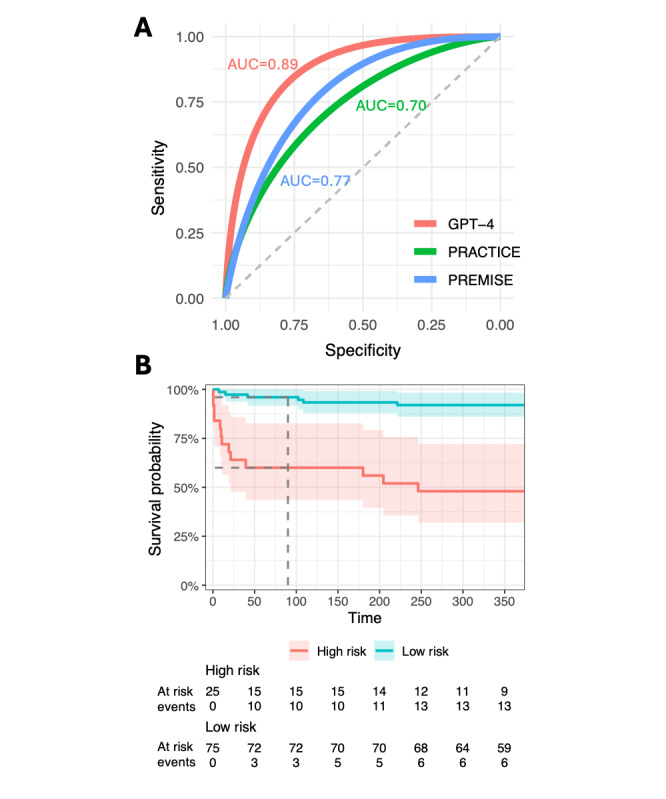
Background: Cerebrovascular diseases are the second most common cause of death worldwide and one of the major causes of disability burden. Advancements in artificial intelligence have the potential to revolutionize health care delivery, particularly in critical decision-making scenarios such as ischemic stroke management.
Objective: This study aims to evaluate the effectiveness of GPT-4 in providing clinical support for emergency department neurologists by comparing its recommendations with expert opinions and real-world outcomes in acute ischemic stroke management.
Methods: A cohort of 100 patients with acute stroke symptoms was retrospectively reviewed. Data used for decision-making included patients' history, clinical evaluation, imaging study results, and other relevant details. Each case was independently presented to GPT-4, which provided scaled recommendations (1-7) regarding the appropriateness of treatment, the use of tissue plasminogen activator, and the need for endovascular thrombectomy. Additionally, GPT-4 estimated the 90-day mortality probability for each patient and elucidated its reasoning for each recommendation. The recommendations were then compared with a stroke specialist's opinion and actual treatment decisions.
Results: In our cohort of 100 patients, treatment recommendations by GPT-4 showed strong agreement with expert opinion (area under the curve [AUC] 0.85, 95% CI 0.77-0.93) and real-world treatment decisions (AUC 0.80, 95% CI 0.69-0.91). GPT-4 showed near-perfect agreement with real-world decisions in recommending endovascular thrombectomy (AUC 0.94, 95% CI 0.89-0.98) and strong agreement for tissue plasminogen activator treatment (AUC 0.77, 95% CI 0.68-0.86). Notably, in some cases, GPT-4 recommended more aggressive treatment than human experts, with 11 instances where GPT-4 suggested tissue plasminogen activator use against expert opinion. For mortality prediction, GPT-4 accurately identified 10 (77%) out of 13 deaths within its top 25 high-risk predictions (AUC 0.89, 95% CI 0.8077-0.9739; hazard ratio 6.98, 95% CI 2.88-16.9; P<.001), outperforming supervised machine learning models such as PRACTICE (AUC 0.70; log-rank P=.02) and PREMISE (AUC 0.77; P=.07).
Conclusions: This study demonstrates the potential of GPT-4 as a viable clinical decision-support tool in the management of acute stroke. Its ability to provide explainable recommendations without requiring structured data input aligns well with the routine workflows of treating physicians. However, the tendency toward more aggressive treatment recommendations highlights the importance of human oversight in clinical decision-making. Future studies should focus on prospective validations and exploring the safe integration of such artificial intelligence tools into clinical practice.
背景:脑血管病是全球第二大常见死亡原因,也是造成残疾负担的主要原因之一。人工智能的进步有可能彻底改变医疗保健服务,特别是在缺血性中风管理等关键决策场景中。目的:本研究旨在通过比较GPT-4在急性缺血性脑卒中治疗中的建议与专家意见和实际结果,评估GPT-4在为急诊科神经科医生提供临床支持方面的有效性。方法:对100例急性脑卒中患者进行回顾性分析。用于决策的数据包括患者病史、临床评价、影像学研究结果和其他相关细节。每个病例都独立提交给GPT-4, GPT-4提供了关于治疗的适当性、组织纤溶酶原激活剂的使用和血管内血栓切除术的必要性的分级建议(1-7)。此外,GPT-4估计了每个患者90天的死亡概率,并阐明了每项建议的理由。然后将这些建议与中风专家的意见和实际治疗决定进行比较。结果:在我们的100例患者队列中,GPT-4的治疗建议与专家意见(曲线下面积[AUC] 0.85, 95% CI 0.77-0.93)和实际治疗决策(AUC 0.80, 95% CI 0.69-0.91)非常一致。GPT-4在推荐血管内血栓切除术方面与现实世界的决定几乎完全一致(AUC 0.94, 95% CI 0.89-0.98),在组织型纤溶酶原激活剂治疗方面与现实世界的决定非常一致(AUC 0.77, 95% CI 0.68-0.86)。值得注意的是,在某些情况下,GPT-4建议比人类专家更积极的治疗,有11例GPT-4建议使用组织纤溶酶原激活剂与专家意见相反。对于死亡率预测,GPT-4在其前25个高风险预测中准确识别了13例死亡中的10例(77%)(AUC 0.89, 95% CI 0.8077-0.9739;风险比6.98,95% CI 2.88 ~ 16.9;结论:本研究证明了GPT-4在急性卒中治疗中作为一种可行的临床决策支持工具的潜力。它在不需要结构化数据输入的情况下提供可解释的建议的能力与治疗医生的日常工作流程很好地一致。然而,倾向于更积极的治疗建议强调了人类监督在临床决策中的重要性。未来的研究应侧重于前瞻性验证,并探索将此类人工智能工具安全整合到临床实践中。





 京公网安备 11010802042870号
京ICP备2023020795号-1
京公网安备 11010802042870号
京ICP备2023020795号-1

 分享
分享

 求助内容:
求助内容: 应助结果提醒方式:
 扫码关注我们
