A clustering approach based on high-resolution ecological vulnerability index reveals spatial patterns of per- and polyfluoroalkyl substances pollution in lakes on the Tibetan Plateau
Xu Han , Baozhu Pan , Zhile Pan , Nan Xu , Jiang Wu , Weiling Sun , Bowen Hou , Yanran Dong
{"title":"A clustering approach based on high-resolution ecological vulnerability index reveals spatial patterns of per- and polyfluoroalkyl substances pollution in lakes on the Tibetan Plateau","authors":"Xu Han , Baozhu Pan , Zhile Pan , Nan Xu , Jiang Wu , Weiling Sun , Bowen Hou , Yanran Dong","doi":"10.1016/j.watres.2025.123461","DOIUrl":null,"url":null,"abstract":"<div><div>Per- and polyfluoroalkyl substances (PFAS) are persistent organic pollutants (POPs) with toxicity, chemical stability, and long-range transport potential. The transport and accumulation mechanisms of PFAS in specific or typical lakes have been reported. In the wake of global PFAS pollution, it is more important to unravel the distribution patterns of PFAS across larger-scale, multi-lake systems. However, traditional lake classification methods are often overly simplistic and inflexible to adapt to large lake systems with complex ecological characteristics. Here, an improved ecological vulnerability index (EVI) was introduced and applied for the first time to classify lakes in a regional, multi-lake study of PFAS pollution. We evaluated the effectiveness of EVI that integrated multi-dimensional environmental factors in revealing PFAS distribution in 12 lakes on the Tibetan Plateau. The results showed that the composition, concentration, and diversity of PFAS in water and sediment samples significantly differed between high-vulnerability lakes (HVL) and low-vulnerability lakes (LVL) clustered by EVI. The linear regression of PFAS concentration and diversity on EVI was most pronounced at the 1-km buffer zone scale compared to larger scales. EVI was strongly associated with PFAS concentration and diversity in HVL dominated by natural factors, and these associations were weakened in LVL with prevalent human interference. Our findings indicate the greater potential of EVI to predict the spatial patterns of PFAS in lakes at smaller scales and across regions with comparable dominance of natural factors. The proposed clustering approach is adaptable, as the indicators and weights in the EVI system can be adjusted based on regional ecological characteristics. This study provides a tool for unveiling the distribution patterns of PFAS and their driving mechanisms in complex lake environments.</div></div>","PeriodicalId":443,"journal":{"name":"Water Research","volume":"279 ","pages":"Article 123461"},"PeriodicalIF":12.4000,"publicationDate":"2025-07-01","publicationTypes":"Journal Article","fieldsOfStudy":null,"isOpenAccess":false,"openAccessPdf":"","citationCount":"0","resultStr":null,"platform":"Semanticscholar","paperid":null,"PeriodicalName":"Water Research","FirstCategoryId":"93","ListUrlMain":"https://www.sciencedirect.com/science/article/pii/S0043135425003744","RegionNum":1,"RegionCategory":"环境科学与生态学","ArticlePicture":[],"TitleCN":null,"AbstractTextCN":null,"PMCID":null,"EPubDate":"2025/3/8 0:00:00","PubModel":"Epub","JCR":"Q1","JCRName":"ENGINEERING, ENVIRONMENTAL","Score":null,"Total":0}
引用次数: 0
Abstract
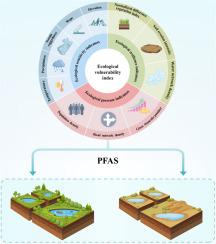
Per- and polyfluoroalkyl substances (PFAS) are persistent organic pollutants (POPs) with toxicity, chemical stability, and long-range transport potential. The transport and accumulation mechanisms of PFAS in specific or typical lakes have been reported. In the wake of global PFAS pollution, it is more important to unravel the distribution patterns of PFAS across larger-scale, multi-lake systems. However, traditional lake classification methods are often overly simplistic and inflexible to adapt to large lake systems with complex ecological characteristics. Here, an improved ecological vulnerability index (EVI) was introduced and applied for the first time to classify lakes in a regional, multi-lake study of PFAS pollution. We evaluated the effectiveness of EVI that integrated multi-dimensional environmental factors in revealing PFAS distribution in 12 lakes on the Tibetan Plateau. The results showed that the composition, concentration, and diversity of PFAS in water and sediment samples significantly differed between high-vulnerability lakes (HVL) and low-vulnerability lakes (LVL) clustered by EVI. The linear regression of PFAS concentration and diversity on EVI was most pronounced at the 1-km buffer zone scale compared to larger scales. EVI was strongly associated with PFAS concentration and diversity in HVL dominated by natural factors, and these associations were weakened in LVL with prevalent human interference. Our findings indicate the greater potential of EVI to predict the spatial patterns of PFAS in lakes at smaller scales and across regions with comparable dominance of natural factors. The proposed clustering approach is adaptable, as the indicators and weights in the EVI system can be adjusted based on regional ecological characteristics. This study provides a tool for unveiling the distribution patterns of PFAS and their driving mechanisms in complex lake environments.
期刊介绍:
Water Research, along with its open access companion journal Water Research X, serves as a platform for publishing original research papers covering various aspects of the science and technology related to the anthropogenic water cycle, water quality, and its management worldwide. The audience targeted by the journal comprises biologists, chemical engineers, chemists, civil engineers, environmental engineers, limnologists, and microbiologists. The scope of the journal include:
•Treatment processes for water and wastewaters (municipal, agricultural, industrial, and on-site treatment), including resource recovery and residuals management;
•Urban hydrology including sewer systems, stormwater management, and green infrastructure;
•Drinking water treatment and distribution;
•Potable and non-potable water reuse;
•Sanitation, public health, and risk assessment;
•Anaerobic digestion, solid and hazardous waste management, including source characterization and the effects and control of leachates and gaseous emissions;
•Contaminants (chemical, microbial, anthropogenic particles such as nanoparticles or microplastics) and related water quality sensing, monitoring, fate, and assessment;
•Anthropogenic impacts on inland, tidal, coastal and urban waters, focusing on surface and ground waters, and point and non-point sources of pollution;
•Environmental restoration, linked to surface water, groundwater and groundwater remediation;
•Analysis of the interfaces between sediments and water, and between water and atmosphere, focusing specifically on anthropogenic impacts;
•Mathematical modelling, systems analysis, machine learning, and beneficial use of big data related to the anthropogenic water cycle;
•Socio-economic, policy, and regulations studies.




 京公网安备 11010802042870号
京ICP备2023020795号-1
京公网安备 11010802042870号
京ICP备2023020795号-1

 分享
分享
 求助内容:
求助内容: 应助结果提醒方式:
 扫码关注我们
