Deciphering the anti-neoplastic potential of Allium ascalonicum in averting the proliferation and epithelial-mesenchymal transition of triple-negative breast cancer through virtual docking and In Vitro approaches.
{"title":"Deciphering the anti-neoplastic potential of Allium ascalonicum in averting the proliferation and epithelial-mesenchymal transition of triple-negative breast cancer through virtual docking and In Vitro approaches.","authors":"Karunya Jenin Ravindranath, Hemalatha Srinivasan","doi":"10.1186/s12885-025-13796-8","DOIUrl":null,"url":null,"abstract":"<p><strong>Background: </strong>Universally, Allium ascalonicum (Shallots) is a well-known flavouring agent in many cuisines. Though, it's been proved for its health benefits due to the presence of alkaloids, flavonoids, terpenoids, phenols and coumarins, its role as an anti-neoplastic agent still requires comprehensive investigation. In our study, we have investigated the presence of potential anti-neoplastic phytocompounds, anti-inflammatory, cytotoxicity and anti-metastatic activity of Shallots against Triple-Negative Breast Cancer cell line, MDA-MB-231.</p><p><strong>Methods: </strong>Phytocompounds of aqueous Allium ascalonicum extract (AAE) derived from GC-MS and LC-MS analysis were docked with an inflammatory marker, Interleukin-18 (IL-18); anti-apoptotic proteins, B-cell Lymphoma-2 (BCL-2) and Myeloid Cell Leukemia-1 (MCL-1); and metastatic marker, Vimentin using PyRx (Version 0.9.9). Subsequently, the anti-inflammatory property of AAE was determined using Bovine Serum Albumin (BSA) Denaturation Assay and the chemotherapeutic potential of AAE was determined using 3-(4,5-Dimethylthiazol-2-yl)-2,5-Diphenyltetrazolium Bromide (MTT) assay on MDA-MB-231 and HEK293T cell lines. Additionally, to determine the synergistic effect of Doxorubicin Hydrochloride (Standard) and AAE, MTT assay was performed on MDA-MB-231 cell lines treated with the combination therapy. Furthermore, the anti-metastatic property of AAE was determined using cell migration and clonogenic assays. Finally, Dual Acridine Orange/Ethidium Bromide fluorescence staining method was used to determine if AAE has the ability to induce apoptosis and necrosis in MDA-MB-231 cells.</p><p><strong>Results: </strong>Molecular docking results using the compounds obtained from LC-MS and GC-MS with the target proteins revealed promising anti-neoplastic bioactive compounds. BSA Denaturation assay proved that AAE has anti-inflammatory property, with the highest, 85.78% observed at 2 mg/ml of AAE. Moreover, MTT assay proved that AAE exhibited cytotoxic effect on MDA-MB-231 in a dose-dependent manner, with an IC<sub>50</sub> observed at 1.23 mg/ml (**p ≤ 0.005) and non-toxic to HEK293T cells. Combination therapy of the standard with AAE reduced the IC<sub>50</sub> of the standard by 65.5%. Consecutively, the anti-metastatic property of AAE was proved using cell migration and clonogenic assays, suggesting suppression of epithelial-mesenchymal transition. Finally, Dual Acridine Orange/Ethidium Bromide fluorescence staining method displayed that, AAE has the ability to induce apoptosis and necrosis in TNBC cells.</p><p><strong>Conclusion: </strong>The outcomes from in vitro assays corroborated with the molecular docking results and hence, on authenticating the potentiality of AAE's anti-neoplastic effect via. in vivo models, pre-clinical and clinical trials, Allium ascalonicum can be articulated to a prospective anti-neoplastic drug for treating TNBC.</p>","PeriodicalId":9131,"journal":{"name":"BMC Cancer","volume":"25 1","pages":"414"},"PeriodicalIF":3.4000,"publicationDate":"2025-03-07","publicationTypes":"Journal Article","fieldsOfStudy":null,"isOpenAccess":false,"openAccessPdf":"https://www.ncbi.nlm.nih.gov/pmc/articles/PMC11887337/pdf/","citationCount":"0","resultStr":null,"platform":"Semanticscholar","paperid":null,"PeriodicalName":"BMC Cancer","FirstCategoryId":"3","ListUrlMain":"https://doi.org/10.1186/s12885-025-13796-8","RegionNum":2,"RegionCategory":"医学","ArticlePicture":[],"TitleCN":null,"AbstractTextCN":null,"PMCID":null,"EPubDate":"","PubModel":"","JCR":"Q2","JCRName":"ONCOLOGY","Score":null,"Total":0}
引用次数: 0
Abstract
Background: Universally, Allium ascalonicum (Shallots) is a well-known flavouring agent in many cuisines. Though, it's been proved for its health benefits due to the presence of alkaloids, flavonoids, terpenoids, phenols and coumarins, its role as an anti-neoplastic agent still requires comprehensive investigation. In our study, we have investigated the presence of potential anti-neoplastic phytocompounds, anti-inflammatory, cytotoxicity and anti-metastatic activity of Shallots against Triple-Negative Breast Cancer cell line, MDA-MB-231.
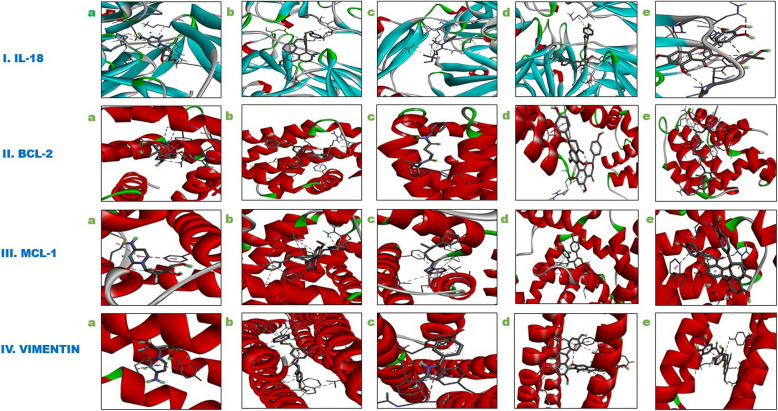
Methods: Phytocompounds of aqueous Allium ascalonicum extract (AAE) derived from GC-MS and LC-MS analysis were docked with an inflammatory marker, Interleukin-18 (IL-18); anti-apoptotic proteins, B-cell Lymphoma-2 (BCL-2) and Myeloid Cell Leukemia-1 (MCL-1); and metastatic marker, Vimentin using PyRx (Version 0.9.9). Subsequently, the anti-inflammatory property of AAE was determined using Bovine Serum Albumin (BSA) Denaturation Assay and the chemotherapeutic potential of AAE was determined using 3-(4,5-Dimethylthiazol-2-yl)-2,5-Diphenyltetrazolium Bromide (MTT) assay on MDA-MB-231 and HEK293T cell lines. Additionally, to determine the synergistic effect of Doxorubicin Hydrochloride (Standard) and AAE, MTT assay was performed on MDA-MB-231 cell lines treated with the combination therapy. Furthermore, the anti-metastatic property of AAE was determined using cell migration and clonogenic assays. Finally, Dual Acridine Orange/Ethidium Bromide fluorescence staining method was used to determine if AAE has the ability to induce apoptosis and necrosis in MDA-MB-231 cells.
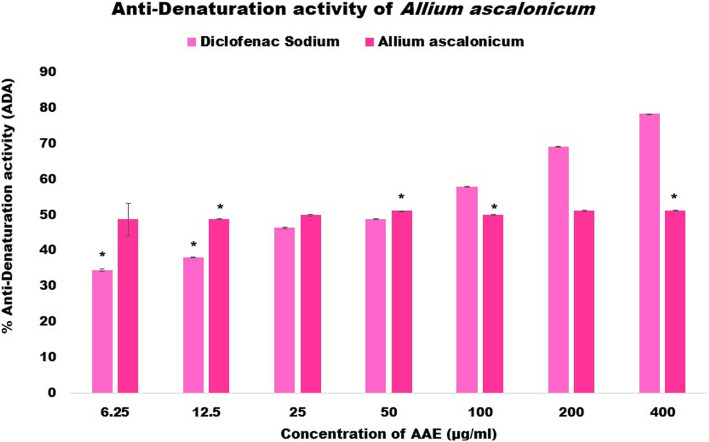
Results: Molecular docking results using the compounds obtained from LC-MS and GC-MS with the target proteins revealed promising anti-neoplastic bioactive compounds. BSA Denaturation assay proved that AAE has anti-inflammatory property, with the highest, 85.78% observed at 2 mg/ml of AAE. Moreover, MTT assay proved that AAE exhibited cytotoxic effect on MDA-MB-231 in a dose-dependent manner, with an IC50 observed at 1.23 mg/ml (**p ≤ 0.005) and non-toxic to HEK293T cells. Combination therapy of the standard with AAE reduced the IC50 of the standard by 65.5%. Consecutively, the anti-metastatic property of AAE was proved using cell migration and clonogenic assays, suggesting suppression of epithelial-mesenchymal transition. Finally, Dual Acridine Orange/Ethidium Bromide fluorescence staining method displayed that, AAE has the ability to induce apoptosis and necrosis in TNBC cells.
Conclusion: The outcomes from in vitro assays corroborated with the molecular docking results and hence, on authenticating the potentiality of AAE's anti-neoplastic effect via. in vivo models, pre-clinical and clinical trials, Allium ascalonicum can be articulated to a prospective anti-neoplastic drug for treating TNBC.
期刊介绍:
BMC Cancer is an open access, peer-reviewed journal that considers articles on all aspects of cancer research, including the pathophysiology, prevention, diagnosis and treatment of cancers. The journal welcomes submissions concerning molecular and cellular biology, genetics, epidemiology, and clinical trials.




 京公网安备 11010802042870号
京ICP备2023020795号-1
京公网安备 11010802042870号
京ICP备2023020795号-1

 分享
分享
 求助内容:
求助内容: 应助结果提醒方式:
 扫码关注我们
