Advances in the diagnosis and management of post-percutaneous coronary intervention coronary microvascular dysfunction: Insights into pathophysiology and metabolic risk interactions.
Nan Tang, Kang-Ming Li, Hao-Ran Li, Qing-Dui Zhang, Ji Hao, Chun-Mei Qi
{"title":"Advances in the diagnosis and management of post-percutaneous coronary intervention coronary microvascular dysfunction: Insights into pathophysiology and metabolic risk interactions.","authors":"Nan Tang, Kang-Ming Li, Hao-Ran Li, Qing-Dui Zhang, Ji Hao, Chun-Mei Qi","doi":"10.4330/wjc.v17.i2.103950","DOIUrl":null,"url":null,"abstract":"<p><p>Percutaneous coronary intervention (PCI), as an essential treatment for coronary artery disease, has significantly improved the prognosis of patients with large coronary artery lesions. However, some patients continue to experience myocardial ischemic symptoms post-procedure, largely due to coronary microvascular dysfunction (CMD). The pathophysiological mechanisms of CMD are complex and involve endothelial dysfunction, microvascular remodeling, reperfusion injury, and metabolic abnormalities. Moreover, components of metabolic syndrome, including obesity, hyperglycemia, hypertension, and dyslipidemia, exacerbate the occurrence and progression of CMD through multiple pathways. This review systematically summarizes the latest research advancements in CMD after PCI, including its pathogenesis, diagnostic techniques, management strategies, and future research directions. For diagnosis, invasive techniques such as coronary flow reserve and the index of microcirculatory resistance, as well as non-invasive imaging modalities (positron emission tomography and cardiac magnetic resonance), provide tools for early CMD detection. In terms of management, a multi-level intervention strategy is emphasized, incorporating lifestyle modifications (diet, exercise, and weight control), pharmacotherapy (vasodilators, hypoglycemic agents, statins, and metabolic modulators), traditional Chinese medicine, and specialized treatments (enhanced external counterpulsation, metabolic surgery, and lipoprotein apheresis). However, challenges remain in CMD treatment, including limitations in diagnostic tools and the lack of personalized treatment strategies. Future research should focus on the complex interactions between CMD and metabolic risks, aiming to optimize diagnostic and therapeutic strategies to improve the long-term prognosis of patients post-PCI.</p>","PeriodicalId":23800,"journal":{"name":"World Journal of Cardiology","volume":"17 2","pages":"103950"},"PeriodicalIF":2.8000,"publicationDate":"2025-02-26","publicationTypes":"Journal Article","fieldsOfStudy":null,"isOpenAccess":false,"openAccessPdf":"https://www.ncbi.nlm.nih.gov/pmc/articles/PMC11886395/pdf/","citationCount":"0","resultStr":null,"platform":"Semanticscholar","paperid":null,"PeriodicalName":"World Journal of Cardiology","FirstCategoryId":"1085","ListUrlMain":"https://doi.org/10.4330/wjc.v17.i2.103950","RegionNum":0,"RegionCategory":null,"ArticlePicture":[],"TitleCN":null,"AbstractTextCN":null,"PMCID":null,"EPubDate":"","PubModel":"","JCR":"Q3","JCRName":"CARDIAC & CARDIOVASCULAR SYSTEMS","Score":null,"Total":0}
引用次数: 0
Abstract
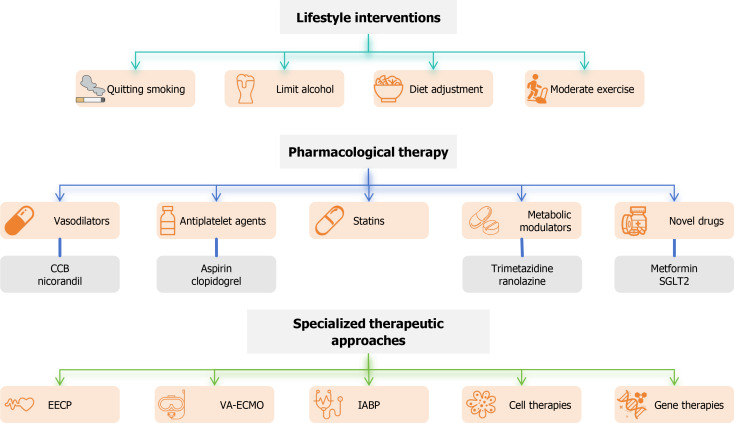
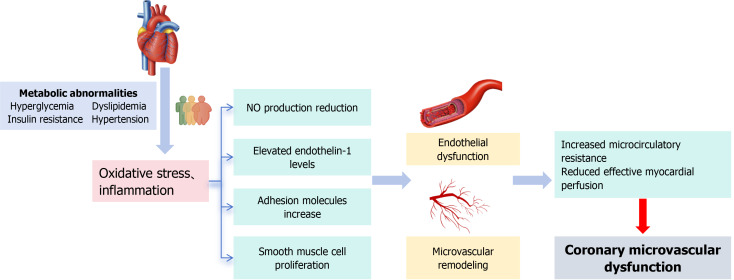
Percutaneous coronary intervention (PCI), as an essential treatment for coronary artery disease, has significantly improved the prognosis of patients with large coronary artery lesions. However, some patients continue to experience myocardial ischemic symptoms post-procedure, largely due to coronary microvascular dysfunction (CMD). The pathophysiological mechanisms of CMD are complex and involve endothelial dysfunction, microvascular remodeling, reperfusion injury, and metabolic abnormalities. Moreover, components of metabolic syndrome, including obesity, hyperglycemia, hypertension, and dyslipidemia, exacerbate the occurrence and progression of CMD through multiple pathways. This review systematically summarizes the latest research advancements in CMD after PCI, including its pathogenesis, diagnostic techniques, management strategies, and future research directions. For diagnosis, invasive techniques such as coronary flow reserve and the index of microcirculatory resistance, as well as non-invasive imaging modalities (positron emission tomography and cardiac magnetic resonance), provide tools for early CMD detection. In terms of management, a multi-level intervention strategy is emphasized, incorporating lifestyle modifications (diet, exercise, and weight control), pharmacotherapy (vasodilators, hypoglycemic agents, statins, and metabolic modulators), traditional Chinese medicine, and specialized treatments (enhanced external counterpulsation, metabolic surgery, and lipoprotein apheresis). However, challenges remain in CMD treatment, including limitations in diagnostic tools and the lack of personalized treatment strategies. Future research should focus on the complex interactions between CMD and metabolic risks, aiming to optimize diagnostic and therapeutic strategies to improve the long-term prognosis of patients post-PCI.




 京公网安备 11010802042870号
京ICP备2023020795号-1
京公网安备 11010802042870号
京ICP备2023020795号-1

 分享
分享
 求助内容:
求助内容: 应助结果提醒方式:
 扫码关注我们
